The Hungary Grand Slam continued in Budapest on Saturday with a day of middleweight judo that delivered four compelling finals. The event, which opened with an official ceremony featuring speeches from International Judo Federation Secretary General Dr Lisa Allan, Hungarian State Secretary for Sport Attila Kálnoki-Kiss, and Hungarian Judo Association President Krisztián Tóth, drew a passionate crowd eager to see their local heroes compete.
Japan's Danno shines at -63kg
The first final of the day saw Slovenia's Kaja Kajzer Zabkar face Japan's Megu Danno in the -63kg category. In a tightly contested match, Danno secured a yuko score that proved decisive, earning her second Grand Slam gold from just four appearances on the World Tour. The medal presentation was handled by Hungary's State Secretary for Sport, Attila Kálnoki-Kiss.
Mammadaliyev's breakthrough at -73kg
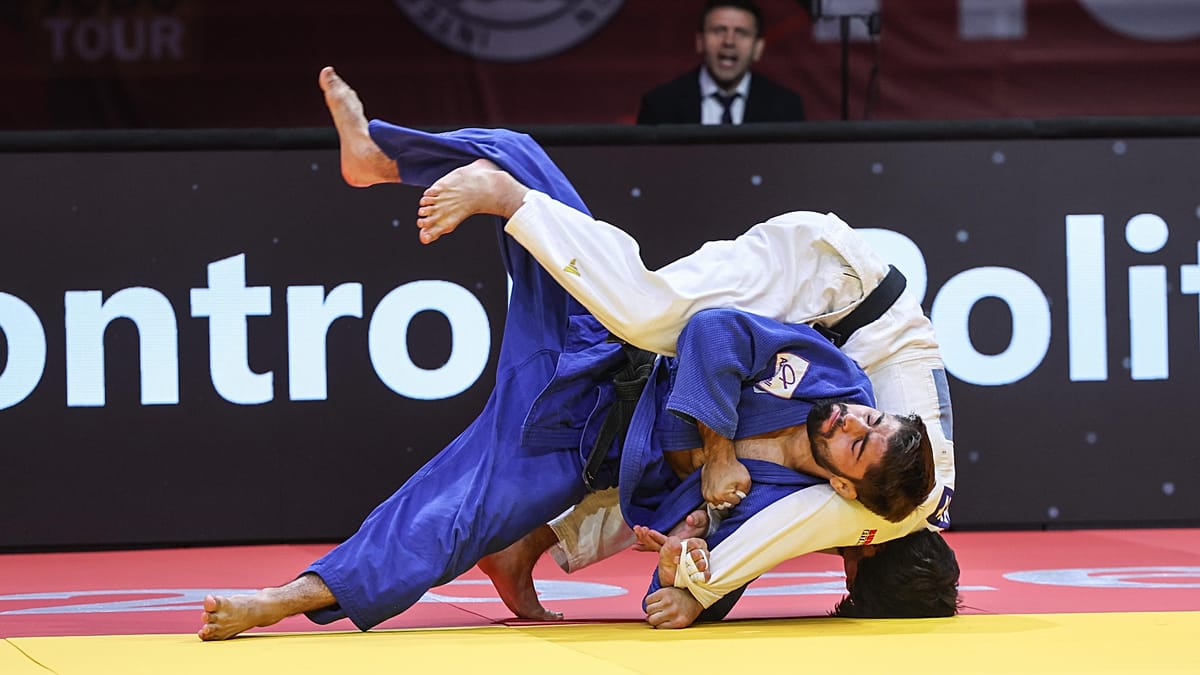
Sweden's Narek Vardanian met Azerbaijan's Rashid Mammadaliyev in the -73kg final. Mammadaliyev produced a beautifully timed seoi nage that scored ippon, securing his first Grand Slam title. Speaking after the match, he acknowledged the crowd's enthusiastic response to his victory. Dr Lisa Allan, Secretary General of the IJF, awarded the medals.
Teltsidou dominates at -70kg
Greece's Elisavet Teltsidou was in formidable form throughout the day. In the preliminaries she looked unstoppable, and in the final she executed her game plan to perfection. A waza-ari score followed by a hold down sealed her fifth Grand Slam gold. IJF Vice President Siteny Randrianasoloniaiko presented the medals.
Hojo wins golden score thriller at -81kg
The final bout of the day in the -81kg category pitted Japan's Yoshito Hojo against an opponent determined to deny him a second Grand Slam gold. The contest went to golden score, where Hojo's technical superiority eventually prevailed, earning him the last gold of the day. IJF Vice President Obaid Al Anzi awarded the medals.
Budapest has become a regular stop on the judo World Tour, and this year's event continues to showcase the sport's depth across Europe and beyond. For more on the tournament's opening, see our coverage of the first day.
The Hungarian capital's ability to host major international sporting events remains strong, even as the country navigates complex relations with the European Union. Recent developments, such as efforts to unlock EU funds, highlight the broader political context in which such events take place.
For judo fans, the action in Budapest has been a reminder of the sport's global appeal and the high level of competition among European athletes. With several more days of competition ahead, the spotlight will shift to other weight categories, but the middleweight finals have already set a high bar.