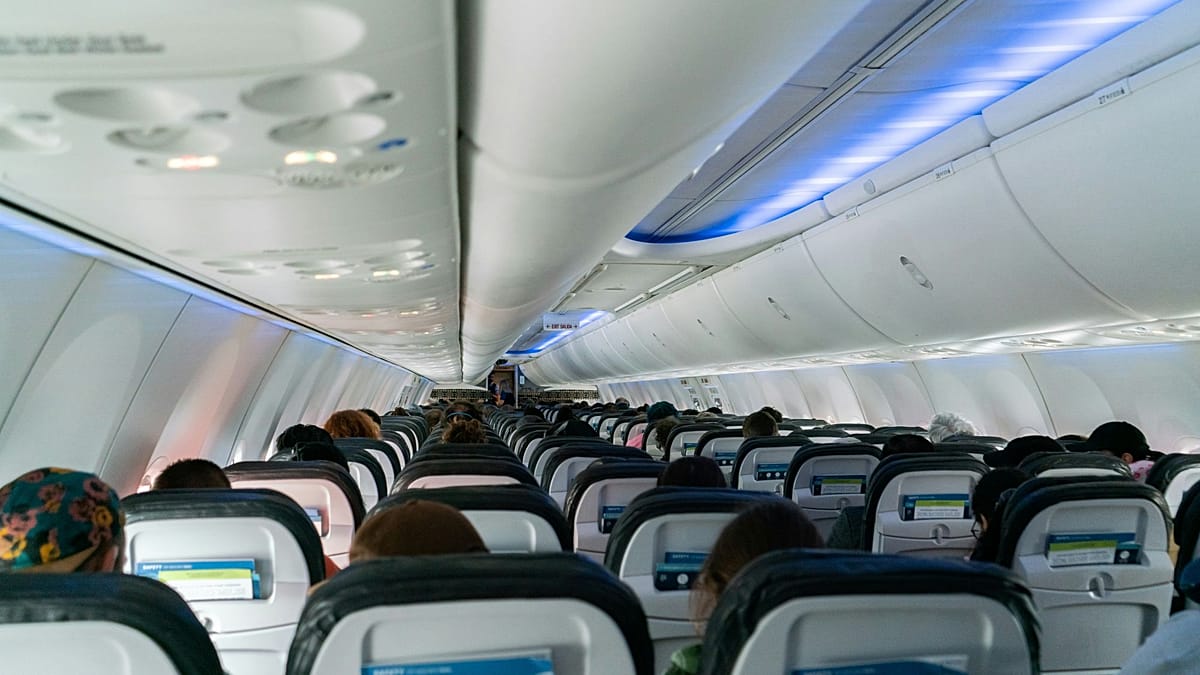
From today, airlines operating in the United Kingdom are no longer permitted to charge passengers for seating children under the age of 14 next to a parent or accompanying adult. The measure, announced by the UK government, also eliminates fees for correcting minor spelling mistakes on bookings—a practice that previously cost travellers up to £40 (€47) per change.
The change, which came into force on 2 October, is part of a broader effort to reduce hidden costs in air travel. Before the new rules, a parent and child could be charged up to £104 (€122) on a return ticket to secure adjacent seats. Transport Secretary Heidi Alexander framed the move as a practical relief for families: “Parents should not have to feel the pinch just to sit next to their child on a flight, or for amending a simple booking error. That’s why we’re scrapping these unnecessary charges for all airlines—another everyday fix to help put money back in people’s pockets and give households more breathing room.”
Alexander also stressed the safety dimension, noting that these “common-sense reforms will make flying safer for staff and passengers and protect people from unnecessary charges, whoever they fly with.” The UK’s decision aligns with broader European trends. Under the EU’s forthcoming air passenger rights rules, which are expected to take effect next year, airlines will be required to seat children under 14 next to their parents free of charge, as well as to provide free adjacent seating for those accompanying pregnant passengers or travellers with disabilities or reduced mobility. The EU rules would also ban fees for correcting spelling errors and for issuing printed boarding passes to checked-in passengers.
Ryanair pushes back
The UK move drew immediate criticism from Ryanair’s outspoken CEO, Michael O’Leary, who denied that such fees exist. In a statement, he claimed that Ryanair already offers a 24-hour grace period for correcting minor spelling mistakes and that no charges are levied for seating children with parents. “There are no fees for children to sit with their parents on UK airlines, and no fees for making minor spelling changes to bookings,” he said.
O’Leary went further, accusing the Labour government of using the announcement to distract from other aviation issues. He pointed to the planned increase in UK Air Passenger Duty (APD) to £15 (€17.63) per ticket in 2026—amounting to £60 (€70.53) for a family of four—and criticised the government’s failure to replace NATS CEO Martin Rolfe, who earns £1.4 million (€1.65 million) annually, despite four air traffic control system collapses in the UK over the past four years. “No other European ATC system has suffered any collapses,” O’Leary said.
Despite the airline’s protestations, the UK government insists the new rules apply to all airlines operating in the country, including low-cost carriers. The move is part of a wider regulatory push across Europe to make air travel more consumer-friendly. Earlier this year, the EU reported a record number of summer flights, and the bloc has been working on harmonising passenger rights. For travellers, the changes are a welcome step, though some industry analysts note that airlines may seek to recoup lost revenue through other fees.
In a related development, the UK government announced it is collaborating with airlines and trade unions to create a shared system for identifying and managing persistently disruptive passengers. Last year, airlines logged more than 1,000 serious incidents involving unruly behaviour, a problem that has drawn increasing attention across the continent. The new information-sharing mechanism aims to help carriers and authorities respond more effectively to such cases.
While the UK’s decision is unilateral, it mirrors the direction of EU policy, suggesting a converging approach to passenger rights on both sides of the Channel. For families flying within Europe, the days of paying extra just to sit together may soon be numbered.