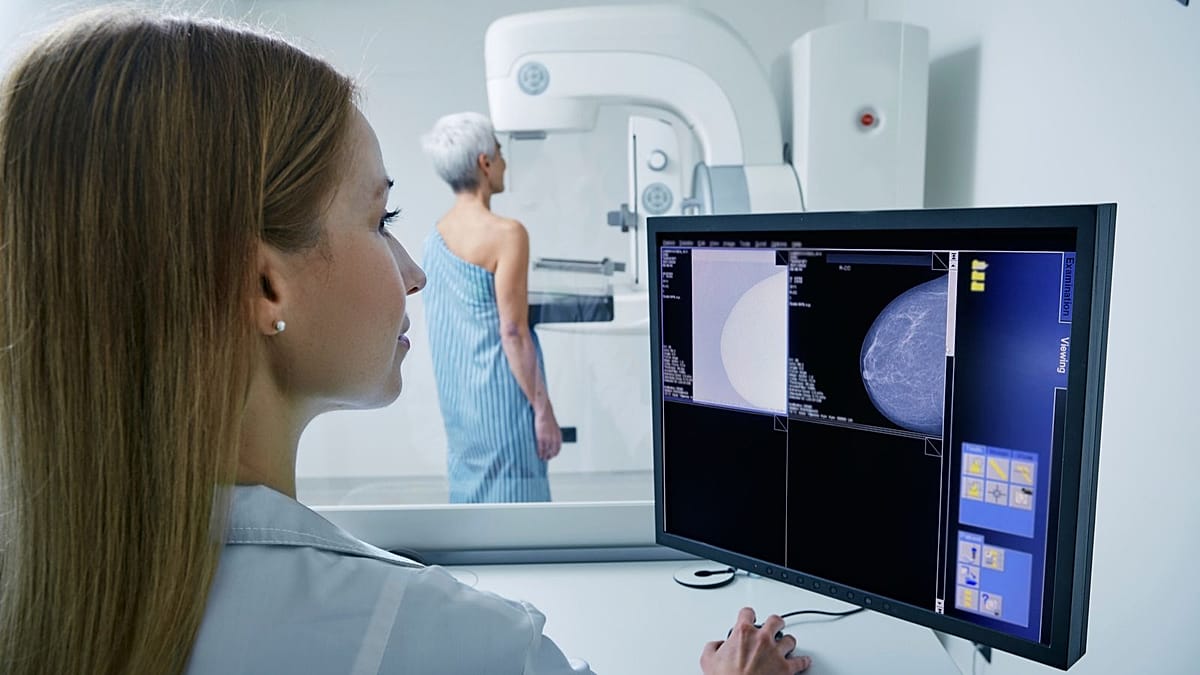
Researchers in the United Kingdom are launching the largest study of its kind to determine whether artificial intelligence can improve breast cancer detection. The trial, named EDITH, will involve around 660,000 women aged 50 to 71 who are due for routine screening, which the National Health Service offers every three years.
Breast cancer is the most common cancer in the European Union, with an estimated 360,000 women diagnosed in 2024, according to EU data. Early detection is critical, but the current process is time-consuming: in the UK, at least two radiologists review every mammogram, yet fewer than 1% of these scans show signs of cancer.
The EDITH trial will test whether an AI-assisted tool can help radiologists spot cancers that are too small to see or feel, potentially freeing up specialists to focus on diagnosing and treating women with the disease. The UK government is backing the study with £10 million (about €12 million).
How the trial works
Women taking part will be divided into three groups. The first will receive the standard screening, with two radiologists reviewing the x-rays. In the second, a radiologist and the AI tool will both examine the mammograms to see if the AI catches anything the human eye might miss. In the third, the AI will take the first look and flag whether the likelihood of cancer is high or low; if low, one radiologist will review the images, but if high, two will check and decide whether to refer the patient for further tests.
Every mammogram will still be reviewed by at least one radiologist, according to the trial announcement. The AI tool will only be integrated into routine screening if the study proves it is as safe and effective as the current programme.
“If successful, this technology could help women get a breast cancer diagnosis and start treatment much more quickly, giving them the best possible chance of recovery,” said Yvette Cooper, the UK’s health and social care secretary.
Fiona Gilbert, a radiology professor at the University of Cambridge and one of the study’s lead researchers, said the AI tool could “help experts review images more efficiently.” She is also investigating whether AI can identify women at higher risk of developing breast cancer.
The trial comes as European health systems grapple with workforce shortages and rising cancer cases. In the UK, around 2.1 million women undergo breast screening each year, preventing an estimated 1,300 deaths. The hope is that AI could ease the burden on radiologists while improving outcomes.
Women can opt out if they do not wish to participate. The study is expected to provide evidence on whether AI can be safely deployed across the continent, where similar screening programmes exist in many member states.
This is not the first time AI has been tested in medical imaging, but the scale of EDITH makes it a landmark. If successful, it could reshape how breast cancer screening is delivered not only in the UK but across Europe, where the disease remains a leading cause of death among women.