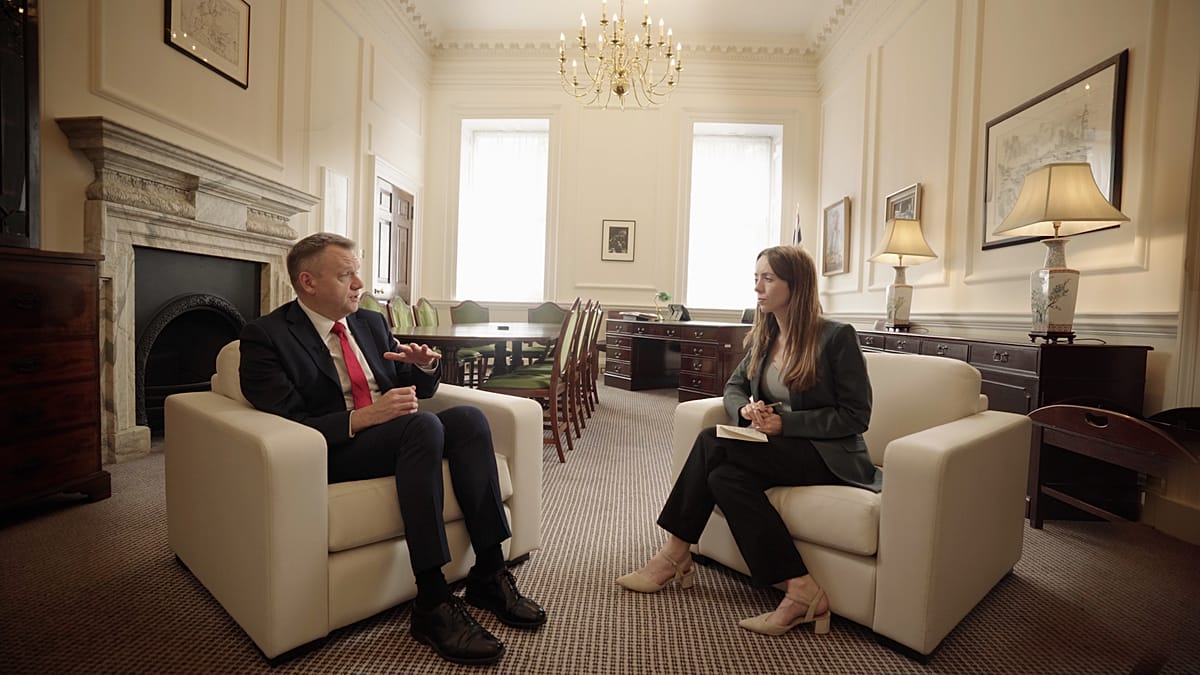
Nick Thomas-Symonds, the United Kingdom's Minister for EU Relations, has expressed strong confidence that a package of three agreements aimed at deepening post-Brexit cooperation will be finalised when London and Brussels meet for a summit on 22 July. The deals would reduce barriers to agri-food trade through alignment on sanitary and phytosanitary rules, reintegrate the UK into the EU's internal electricity market, and create a new youth mobility scheme offering special visas for young Europeans and Britons.
“Of course, we will get moments of difficulty, as you always do in the final parts of the negotiations, but I’m very confident of closing this deal,” Thomas-Symonds said during an appearance on Euronews's 12 Minutes With programme. He is leading the UK side in talks to reset relations with the European Union after the 2016 Brexit referendum.
Youth Mobility Remains a Sticking Point
Negotiations on the youth experience scheme have been particularly fraught, with both EU member states and the UK seeking to cap the number of participants and the duration of their stays. However, the summit was confirmed on Tuesday after talks between European Commission President Ursula von der Leyen and UK Prime Minister Keir Starmer at the G7 summit in Évian. The G7 leaders also forged rare unity on Ukraine, sanctions, and AI at that meeting, as reported in our coverage.
Thomas-Symonds declined to specify the number of young Europeans the UK might accept under the scheme, but suggested it could mirror existing programmes with Australia, Canada, and New Zealand, which received just 21,900 applications in the year to September 2025. EU negotiators have also pressed London to lower university tuition fees for European students—currently around €10,000 per year for domestic students in England and Wales—but the UK has resisted including this in the agreement.
Despite these hurdles, the minister said he expects a “very broad scheme around study, work and travel” to be finalised, calling it something to “celebrate” at the summit. Reflecting on the decade since the Brexit vote, he added: “When I reflect on the last ten years, the post-Brexit consequences, (the loss of) opportunities for young people is one of the things that really bothered me.”
Domestic Turmoil Threatens Starmer's Agenda
The announcement comes as Prime Minister Keir Starmer faces a mounting political crisis at home. The abrupt resignations of his health and defence secretaries have triggered a leadership challenge from former health secretary Wes Streeting, who claims to have secured the backing of 81 Labour lawmakers. Manchester mayor Andy Burnham is also expected to enter the race if he wins a by-election on Thursday.
Streeting has sought to capitalise on public discontent over Brexit, calling it a “catastrophic mistake” that left the UK “less wealthy, less powerful and less in control.” He has argued that the country's future “lies with Europe and one day, back in the European Union,” a position aimed at winning back voters who have defected to the Greens and Liberal Democrats. Recent IPSOS polling suggests 60% of the UK population would support rejoining the EU.
Thomas-Symonds, however, downplayed the gap between public opinion and government policy, asserting that “public opinion is not far from where the government is.” He claimed voters on the doorstep do not want to re-litigate the past but support “a closer UK-EU relationship.” He defended Starmer's “ambitious” reset, which was a key plank of Labour's 2024 election manifesto, and insisted it remains a “top priority” for the prime minister.
The government is also under pressure from Reform UK, the party of arch-Brexiteer Nigel Farage, which is polling at around 26% nationally. Asked whether the deals were designed to be “Farage-proof,” Thomas-Symonds said: “If a party at the next general election wants to put the costs back on businesses or take away the options of young people that this government has delivered, I would relish that debate.” He added that the best way to ensure durability is to deliver for young people, businesses, and the British public—as well as for Europeans.
Thomas-Symonds has served as Minister for EU Relations since July 2024, when Labour ended 14 years of Conservative rule. The July summit will be a key test of whether the government can translate its ambition into tangible results amid a fractious political landscape.