Ukraine has spent nearly four years building a digital state under the constant threat of Russian attacks. Now its government wants the rest of Europe to learn from that experiment — and to use Ukraine as a testing ground for artificial intelligence in public services.
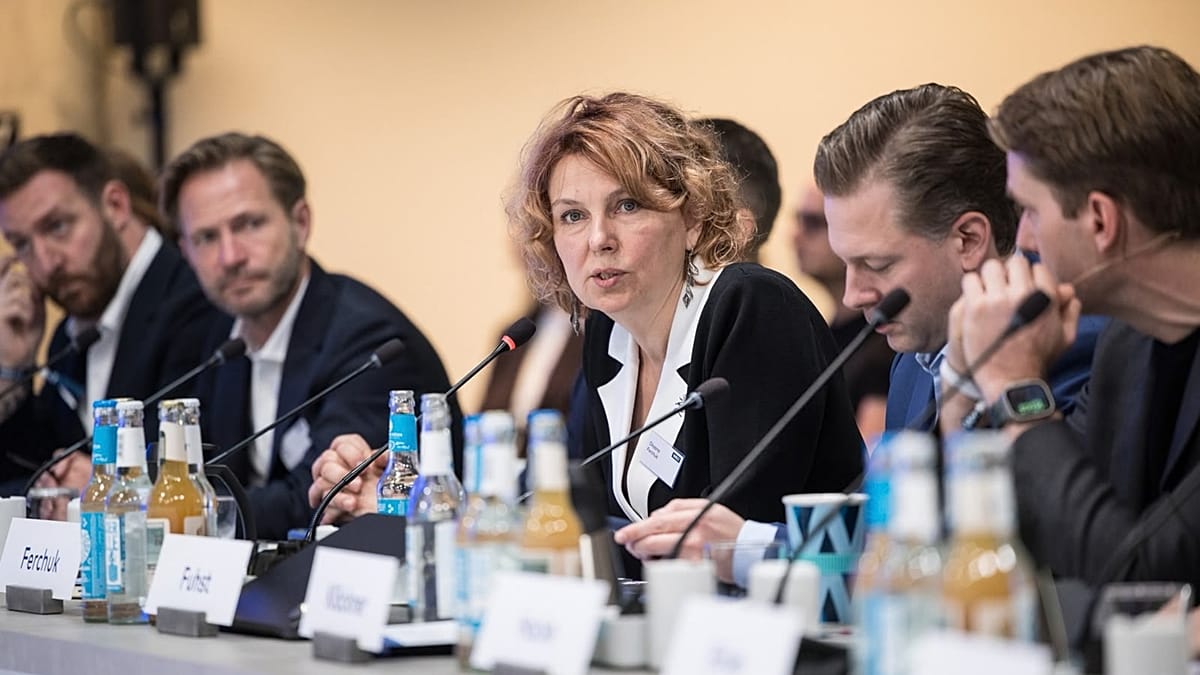
During a visit to Berlin, Ukraine's Minister of Digital Transformation, Oksana Ferchuk, met her German counterpart Karsten Wildberger to discuss how the two countries could share expertise. The talks produced an agreement to form joint teams that will examine Ukraine's digital successes and failures, with an eye to adapting its solutions for Germany.
Speaking to Euronews at the Ukrainian Embassy in Berlin, Ferchuk outlined what she believes Europe can take from Ukraine's experience, from digital identity to cyber resilience. The visit comes as EU ministers seek a joint response to Russian hybrid sabotage, including attacks on digital infrastructure.
Diia: a digital state in your pocket
At the heart of Ukraine's digital government is Diia, a platform that combines a mobile app, a web portal, and physical service centres. The app gives citizens access to more than 30 digital documents — from passports and driving licences to tax IDs and children's records. It also offers around 250 public services, including selling a car, granting driving permission to someone else, and even getting married or divorced online.
For Ukrainians living abroad, Diia allows them to marry under Ukrainian law without visiting a consulate; the official certificate is then sent by post. Ferchuk noted that the EU's own digital identity wallet initiative is moving in a similar direction, and she believes Ukraine's documents could be used across Europe.
“We agreed to analyse these services together with the German ministry team, identify some for service design, and potentially even develop a prototype for Germany,” she said. She also introduced the German side to the GovTech Alliance of Ukraine, a network of IT companies that have built these applications for the government.
Learning from mistakes
One of the biggest differences between Ukraine's approach and traditional government, Ferchuk argued, is the willingness to experiment. “In government, we have to do everything in accordance with the law. But as a government, working together with parliament, we also have the ability to change the law,” she explained.
If a law blocks a user-friendly service, Ukraine changes it. “To give people the freedom to innovate, you have to give them permission to make mistakes,” she said. “Those mistakes should never compromise data protection or security, and they should never breach the law. But you have to give your IT teams the freedom to make mistakes. Otherwise, they will simply follow what is already set out in the legislation, and there will be no real innovation.”
This mindset is something Ferchuk wants to export. “We want Europe to use Ukraine as an AI sandbox,” she said, arguing that the country's experience in building digital services under wartime conditions offers a unique testing ground for new technologies.
Building digital resilience
As winter approaches, Ukraine is bracing for more Russian attacks on its energy grid and digital infrastructure. Ferchuk said this will be the fourth or fifth winter of such attacks, and the country has been preparing since summer.
“We have a specific programme with telecom operators and are training our teams on what to do when the electricity goes out during blackouts,” she said. “We are preparing to use generators and batteries to keep base stations running and mobile networks operational. We are now planning for outages of up to five days, with a plan for each area.”
Russia has already stepped up strikes on data centres and telecom providers. “Unfortunately, Russia started attacking our digital infrastructure a week ago. They attacked more and more our data centres,” Ferchuk said. The resilience of Ukraine's digital state is not just a matter of convenience — it is a matter of survival, as recent drone barrages have shown.
Ferchuk stressed that this resilience is another area of cooperation with Germany. “We are not only building a digital state; we are building digital resilience,” she said. The lessons from Ukraine could help other European countries prepare for hybrid threats, a concern that has grown across the continent.
With Ukraine funding shortfalls dominating EU defence ministers' talks, the digital cooperation with Germany is a rare bright spot. Ferchuk's message is clear: Ukraine's wartime innovations are not just for Ukraine — they can strengthen the whole of Europe.