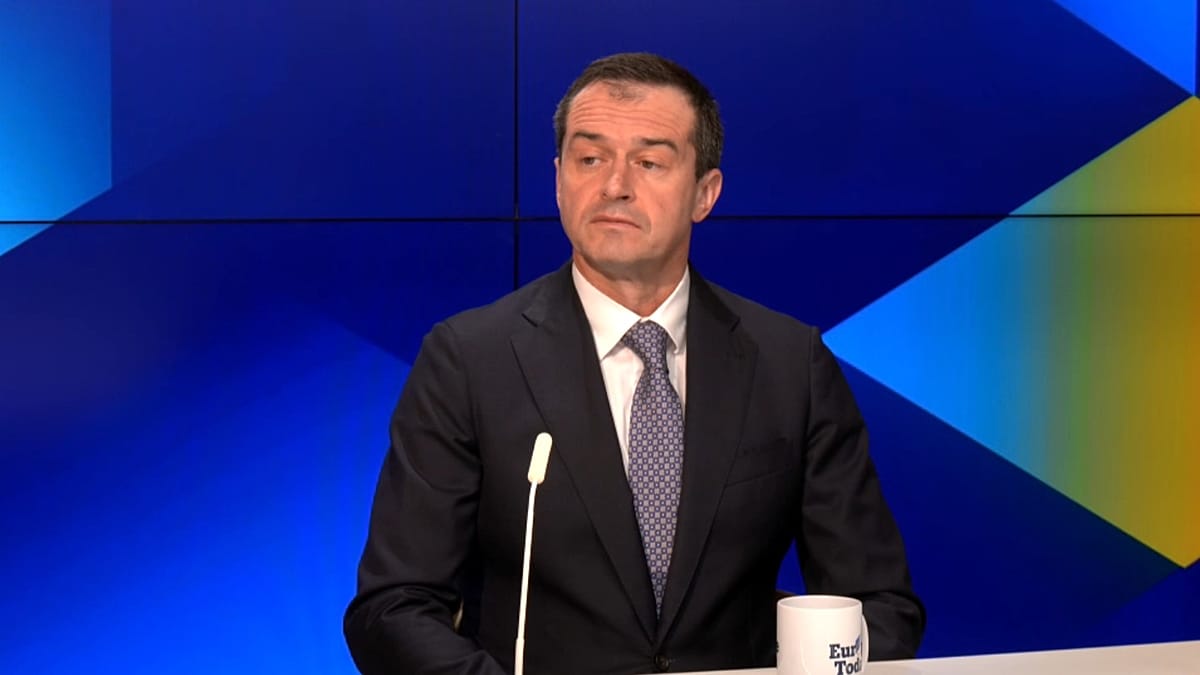
Ukraine's top diplomat to the European Union has urged member states to concentrate on delivering tangible integration benefits rather than debating symbolic titles, as Kyiv seeks to accelerate its accession process.
Vsevolod Chentsov, Head of the Mission of Ukraine to the EU, told Euronews on Monday that while the concept of gradual integration is welcome, the focus must remain on substance. 'Let's not concentrate on the title, let's concentrate on the substance,' Chentsov said, responding to a flurry of reform proposals from European capitals.
In recent weeks, German Chancellor Friedrich Merz floated the idea of an 'associate membership' status that would include security guarantees for Ukraine. Ukrainian President Volodymyr Zelenskyy has firmly rejected any partial arrangement, insisting on full membership. Chentsov's remarks suggest a pragmatic middle ground: Kyiv is open to innovative approaches as long as they deliver real economic and institutional progress.
Gradual Integration as a Pathway
Chentsov noted that several EU member states and the European Commission are exploring ways to gradually integrate Ukraine into the bloc's structures. 'The idea is good because we need to deepen our partnership, economic cooperation, institutional setup,' he said. 'There are several ideas on how to get Ukraine closer. We just need to work together to ensure that Ukraine feels the benefit of enlargement already at this stage.'
This approach aligns with broader discussions in Brussels about reforming the enlargement process. The European Commission has been drafting reforms to regain control of the accession narrative, as member states increasingly drive the debate. For more on these internal dynamics, see our analysis: EU Enlargement Reform: Brussels Seeks to Regain Control as Member States Drive Debate.
Last week, Ukraine and Moldova achieved a milestone when all EU countries agreed to proceed with the second of six accession clusters. Formal confirmation is expected on 14 July. Kyiv and the European Commission have been pushing to open all remaining clusters simultaneously, arguing that preliminary work was already completed while Hungary's former Prime Minister Viktor Orbán blocked progress.
Since Péter Magyar's landslide victory over Orbán in April, Budapest has shown greater openness to advancing Ukraine's bid, though it still resists rapid acceleration for domestic political reasons. This shift has eased one of the main bottlenecks in the enlargement process.
Ukraine's push for faster integration comes amid renewed Russian attacks and a stalled frontline. The country continues to press its allies for both NATO support and EU membership. For context on the security dimension, see: Ukraine Presses for NATO Support and EU Membership Amid Renewed Russian Attacks.
Chentsov's emphasis on substance over labels reflects a broader sentiment in Kyiv: that the EU must move beyond political declarations and deliver concrete results. As the bloc debates its own enlargement reform, the outcome will have significant implications not only for Ukraine but also for other candidate countries in the Western Balkans and beyond.