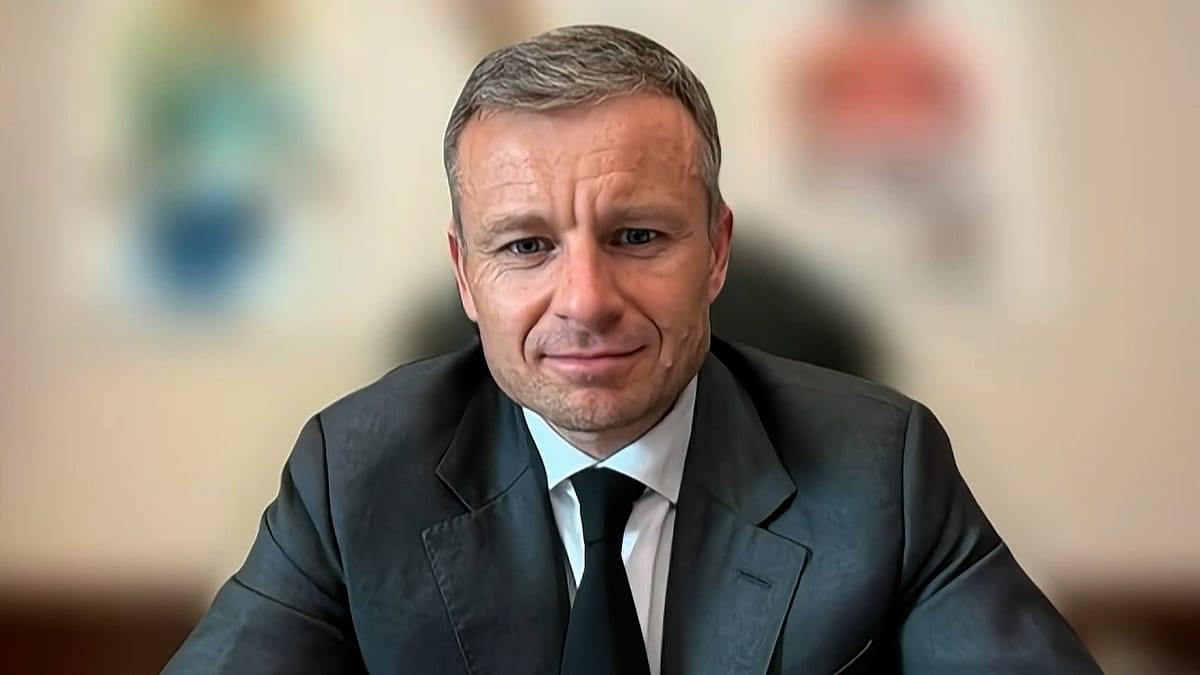
Ukraine's finance minister has issued a stark warning that the country is entering its most financially constrained period since the start of the full-scale war in 2022, as Kyiv braces for another winter of Russian attacks. In an exclusive interview with Euronews, Sergii Marchenko said that without additional funding from allies, Ukraine may be forced to delay or cut spending on non-military items, including critical infrastructure and shelter construction.
“We already see some liquidity issues, and we envisage some shortages in our budget,” Marchenko told Europe Today. “It means we may have to postpone some payments not related to the war because of a lack of liquidity. There will be consequences.”
The warning comes as Russia intensifies its assaults on Ukrainian logistics and energy infrastructure. Marchenko noted that the intensity of attacks escalated sharply in August, and he expects a “very hard winter.” He is drafting a new budget on the assumption that the war will continue into 2027, with an estimated funding shortfall of €32.6 billion that will need to be covered by international partners. The International Monetary Fund, which visited Kyiv this week, reportedly sees similar figures.
“The war has intensified very quickly. We realise that ourselves. It is a totally different reality compared with last month, with the recent attacks on our logistics. We expect a very hard winter. Escalation means we have to find the means to survive it,” he said.
Pressure on non-military spending
While military spending and weapons procurement remain the top priority, other areas of the budget are feeling the strain. Marchenko acknowledged that local governments could be hit particularly hard, especially when it comes to building shelters and maintaining infrastructure that is “still important” as the country prepares for another winter of Russian strikes.
“We haven't had a situation like this since 2022; we really suffered from the shortage of liquidity. Right now, we are getting far too near to the same scenario we had in 2022,” he said.
Despite the liquidity crunch, Marchenko insisted that Ukraine would not default on its external creditors. However, the domestic impact could be significant, with potential delays in public services and construction projects.
Reviving the frozen assets plan
Marchenko is urging European finance ministers to “think outside the box” and consider a new Ukrainian proposal to tap into approximately $300 billion of frozen Russian assets. The plan was rejected by EU ministers last December, who instead opted for a €90 billion loan jointly financed by member states. But last week, a group of EU countries led by Sweden revived the idea, arguing that the cost of the war effort must be distributed fairly among European taxpayers.
The new Ukrainian plan would shift custodianship of the assets, currently held in Belgium, and introduce “totally new elements” to mitigate legal risks for the Belgian government and Euroclear, the institution that holds the assets. Marchenko said the plan would make the responsibility for any court disputes with Russia a joint one for all 27 EU member states, rather than a burden on Belgium alone.
“We want to discuss it; the plan creates new conditions where it is not the responsibility of Belgium to face court disputes with Russia, but the joint responsibility of the 27,” he said.
Supporters of the plan, including Poland, Sweden, the Netherlands, and Spain, face an uphill battle to overcome the legal and political hurdles that have stalled previous attempts. Belgium has resisted earlier EU efforts to seize the assets, citing legal concerns. Meanwhile, the EU has been left to shoulder much of the financial burden for Ukraine, especially since the United States under President Donald Trump has reduced its involvement.
Marchenko welcomed the renewed interest and expressed hope that more countries would rally behind the plan before the next meeting of euro area finance ministers in September. He also noted that the EU is preparing a multibillion-euro package for Ukraine's air defence, as Patriot stocks dwindle.
The coming months will test the resolve of European allies to maintain support for Ukraine. With Lithuania warning that Russia is likely to escalate attacks on the EU, the stakes are high not only for Ukraine but for the entire continent.