Brussels is moving to unlock fresh funding for Ukraine's air defence, responding to a new payment request from Kyiv worth several billion euros as Russia escalates its missile campaign. The money would cover, among other things, the procurement of US-made PAC-3 Patriot interceptors, which have become a critical bottleneck for Ukraine's ability to protect its cities and infrastructure.
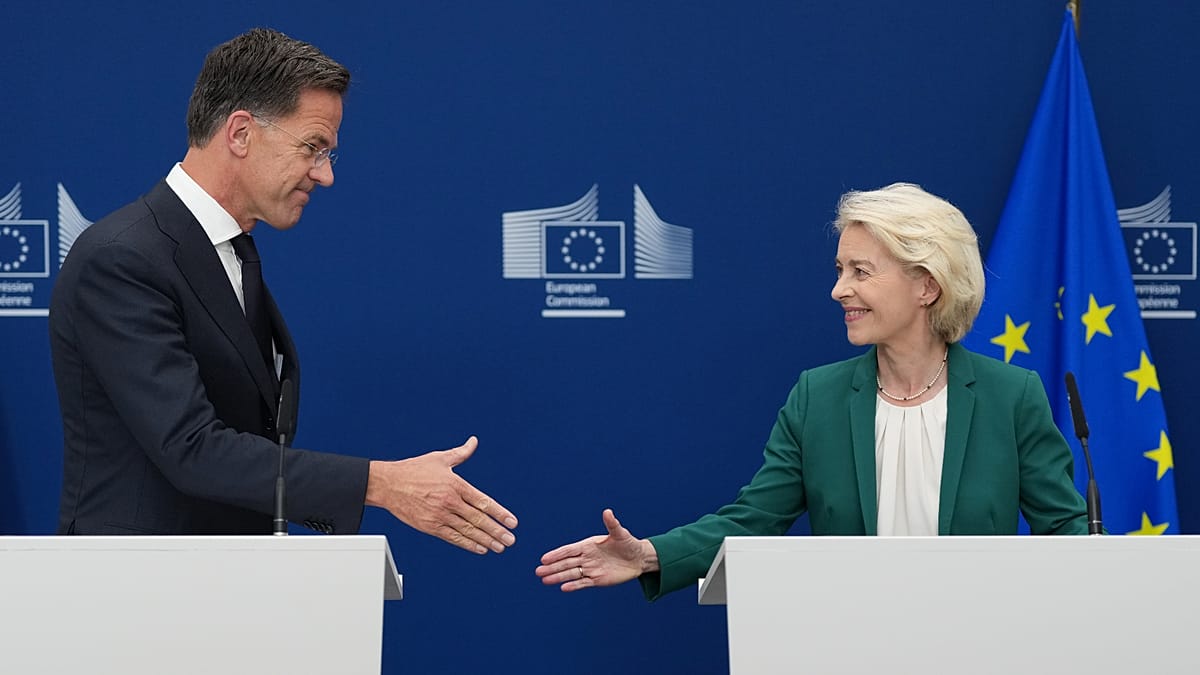
European Commission President Ursula von der Leyen confirmed the request during a joint press conference with NATO Secretary General Mark Rutte. "We have received a new payment request. It is worth several billion euros and would cover Ukraine's air defences, including the highly advanced PAC-3 Patriot air defence systems," she said.
The request falls under the EU's €90 billion Ukraine Support Loan, a mechanism that has already been used to finance military and budgetary aid. However, the loan's rules limit non-European sourcing to 35% of the value of any defence product unless no European alternative exists. To buy Patriots, member states must approve a derogation from that condition—a step that requires unanimous consent.
A Commission official, speaking on condition of anonymity, said the exact amount was not disclosed publicly to avoid pressuring member states into approving the full sum. The official added that part of the payment could come from NATO, though discussions are still ongoing. No other derogations were requested under this payment, apart from the one covering the Patriots.
Why Patriots matter now
Russia has intensified its aerial attacks in recent weeks, launching as many as 30 ballistic missiles in a single night. Ukraine's interceptor stocks, already depleted after more than four years of war, are being stretched further. Patriots are among the most effective systems for intercepting ballistic missiles, but they are expensive and slow to manufacture. Global supplies have also been squeezed by the US-Iran conflict earlier this year, which forced Gulf states to use large numbers of their own interceptors.
At an informal meeting of EU defence ministers in Ireland this week, officials lobbied member states with significant remaining stockpiles—notably Greece and Spain—to share their Patriots with Kyiv. So far, those efforts have not yielded the desired results. Von der Leyen said member states are "looking at Ukraine's request," and that it is "going in the right direction," but no concrete commitments have been announced.
According to Ukrainian media reports, Kyiv has asked the Commission to allow it to spend around €2 billion on Patriot interceptor missiles. The number of missiles that sum could buy depends on the terms of the deal, but for Ukraine the main challenge is not funding—it is availability. In July, President Volodymyr Zelenskyy said Ukraine would need at least 140 Patriot interceptors to defend against a single Russian attack involving around 70 ballistic missiles.
Ukraine has already secured a derogation for US-made Patriots under the €90 billion loan, alongside another allowing the procurement of Chinese drone components. That dual-track approach has drawn criticism from France, which is pushing to phase out non-European suppliers in defence procurement. The new request will test whether member states are willing to continue relying on American hardware despite those concerns.
National representatives are due to discuss the request on Monday, with a view to approving it as early as next week. The Commission would then need signed procurement contracts before disbursing the funds. The timeline is tight, but EU officials are keen to show that the bloc can act quickly on defence.
Von der Leyen also pointed to Freya, a pan-European anti-ballistic missile defence project led by Ukraine's Fire Point and involving several European companies, as a potential way to close a critical gap in Europe's air-defence capabilities. The project is still in its early stages, but it reflects a broader push to build European alternatives to US systems.
The EU's efforts to bolster Ukraine's air defence come amid a wider debate about European defence readiness. An expert panel has been assembled to identify capability gaps, and ministers in Ireland confronted the twin challenges of drone threats and Patriot shortfalls. The bloc is also exploring ways to use frozen Russian assets to fund Ukraine's defence, a proposal that has gained traction in recent months.
For now, the immediate priority is getting more Patriots into Ukrainian hands. Whether the EU can deliver on that promise—and whether member states will part with their own stockpiles—remains to be seen. But the political will appears to be building, and the next few weeks will be crucial.