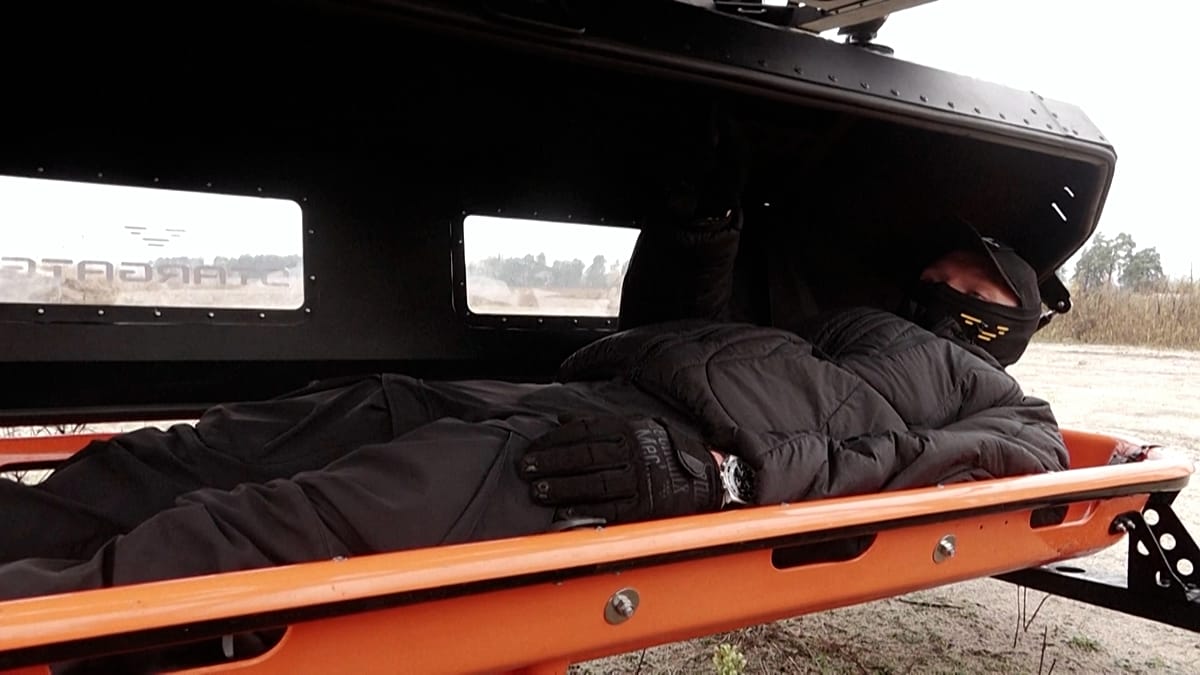
In a development that underscores the growing role of unmanned systems in modern warfare, Ukraine's drone manufacturer Skyfall has announced that its Stargate drone successfully evacuated two wounded soldiers from the frontline. The mission, which took place in an undisclosed sector of the front, involved a round trip of 15 kilometres per leg, with the aircraft reaching speeds of up to 105 km/h.
The Stargate is a heavy-lift drone designed for logistics and medical evacuation, a niche that has become increasingly critical as both sides seek to minimise casualties. According to Skyfall, the drone carried the two soldiers to a safe area, marking one of the first confirmed uses of an unmanned aerial vehicle for casualty evacuation in the conflict.
A new role for drones in combat medicine
While drones have been widely used for reconnaissance, artillery spotting, and strike missions, their use in medical evacuation is still rare. The Stargate's ability to carry personnel represents a significant step forward, potentially offering a faster and safer alternative to ground ambulances, which are often targeted or hindered by mines and artillery fire.
Skyfall, a relatively young company, has been developing the Stargate for over a year. The drone is reportedly capable of carrying up to 200 kilograms, which allows it to transport a stretcher and medical personnel. The company has not disclosed the exact specifications or the number of units in service, but the successful evacuation suggests that the system has reached operational maturity.
The announcement comes as Ukraine continues to face intense pressure on multiple fronts. Recent weeks have seen massive drone and missile barrages targeting Ukrainian cities and infrastructure, while ground battles rage in the east and south. The ability to evacuate wounded soldiers quickly could prove vital in sustaining morale and preserving combat effectiveness.
Military analysts note that the use of drones for medical evacuation is not entirely new—experiments have been conducted in other conflicts—but the Stargate's apparent success in a high-threat environment is notable. It also reflects a broader trend of Ukraine leveraging its tech sector to innovate on the battlefield, often with support from European partners.
The development also has implications beyond Ukraine. As European armies observe the conflict, they are likely to study the Stargate's performance. The drone could offer a template for future medical evacuation in NATO forces, particularly in scenarios where helicopters are too vulnerable or unavailable. Some European countries have already shown interest in similar systems, and European troops rehearsing post-war support missions in Poland have been testing drone-based logistics.
However, the Stargate's use also raises questions about the ethics and practicality of drone-based medical evacuation. While drones can operate in hazardous areas without risking a pilot, they are still vulnerable to electronic warfare and anti-aircraft fire. Moreover, the psychological impact on wounded soldiers of being transported by an unmanned aircraft is not yet fully understood.
Skyfall has not released video footage of the evacuation, but the company's claim has been met with cautious optimism. Ukrainian military officials have not officially commented, but the news has been shared widely on social media, with many praising the innovation.
As the war enters its third year, both Ukraine and Russia are increasingly relying on drones for a wide range of tasks. The Stargate's success could mark a turning point in how casualties are managed on the modern battlefield, potentially saving lives that might otherwise be lost to delays in evacuation.
For now, the Stargate remains a niche capability, but its performance in combat will be closely watched by military planners across Europe. The conflict in Ukraine has already reshaped many aspects of warfare, and the use of drones for medical evacuation may be the next chapter in that transformation.