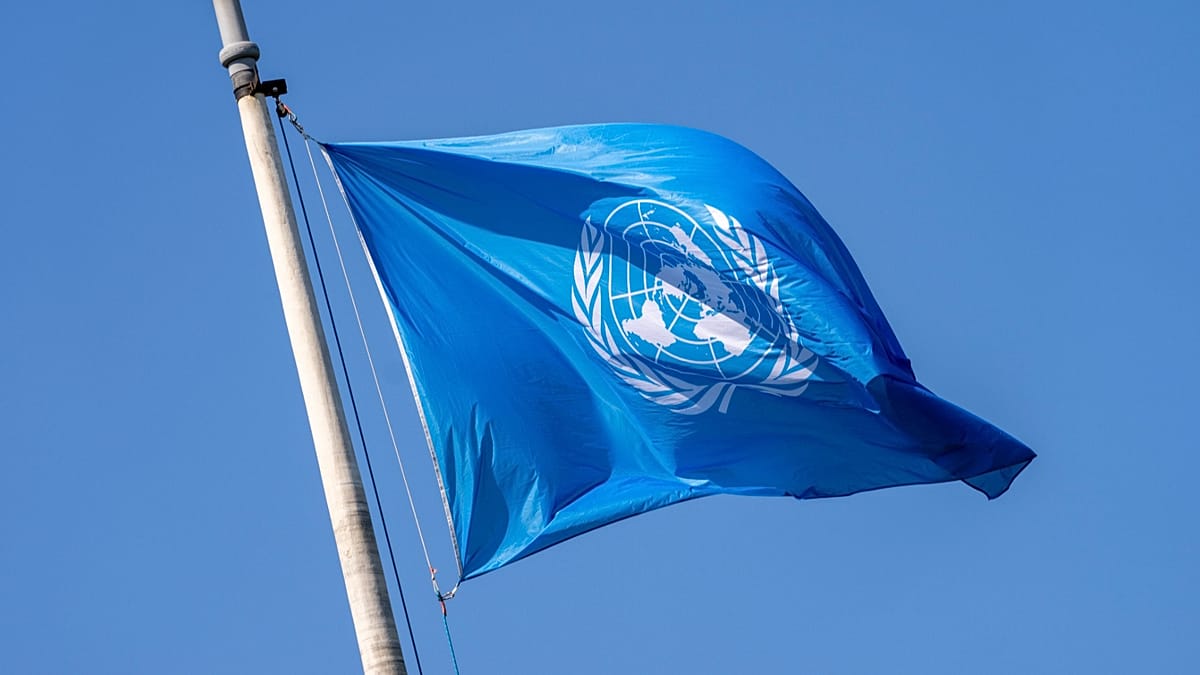
The United Nations confirmed on Thursday that it will shut down its human rights office in Burkina Faso, citing the military junta's indefinite suspension of its activities as an insurmountable obstacle to fulfilling its mandate. The closure, set for 30 November, marks a significant setback for human rights monitoring in a country grappling with jihadist violence and political repression.
Volker Türk, the UN High Commissioner for Human Rights, expressed deep regret over the decision, noting that intensive engagement with authorities in Ouagadougou had failed to resolve the impasse. "This has directly affected our ability to implement our mandate and ultimately necessitated my decision to wind down the country presence," Türk said in a statement.
The office, established in October 2021, had been tasked with monitoring human rights abuses, documenting violations, and advocating for civic freedoms. It also trained nearly 4,000 members of Burkina Faso's defence and security forces on international humanitarian law and human rights standards.
Escalating Repression Under Traoré
Captain Ibrahim Traoré, who took power in a coup in September 2022 at the age of 38, has steadily tightened control over civic space. His government has cracked down on political opposition, suspended political parties, and curtailed press freedoms. The UN office's troubles began in February, when it issued a press release calling on the authorities to end repression and reverse plans to ban all political parties. In response, the junta suspended the office's operations indefinitely.
Türk had warned in that statement that "real civic and democratic space, allowing pluralistic voices of political parties and organisations, and strengthened rule of law are essential for lasting peace, security and social cohesion in Burkina Faso." The junta, however, viewed the intervention as an infringement on its sovereignty.
Burkina Faso is part of a broader trend in West Africa's Sahel region, where military juntas in Mali and Niger have similarly sidelined democratic institutions and human rights protections. All three countries have expelled French forces and deepened ties with Russia, framing their actions as a fight against jihadist insurgencies linked to Al-Qaeda and the so-called Islamic State. In May, Traoré visited Moscow for talks at the Kremlin, underscoring the shift away from traditional Western allies.
The UN's withdrawal from Burkina Faso raises concerns about accountability in a region already at a "dangerous tipping point," as Türk described it last month. The office's closure leaves a gap in monitoring abuses by both state forces and non-state armed groups, which have killed thousands and displaced millions since the insurgency began in 2015.
Despite the shutdown, Türk pledged continued support: "My office and I remain committed to continue supporting and cooperating with the government, national institutions, civil society, and other stakeholders, to keep promoting and protecting human rights in Burkina Faso." However, with the junta's anti-Western posture and its suspension of UN operations, the prospects for independent oversight appear dim.
The development comes as the European Union grapples with its own geopolitical recalibrations, including closer ties with Turkey amid shifting alliances. For now, Burkina Faso's junta shows no sign of reversing course, having severed diplomatic relations with France in January 2023 and expelled French troops. The UN's exit is the latest sign of the country's deepening isolation from international human rights frameworks.