The United Nations' top human rights official has sounded the alarm over the escalating violence in Yemen, warning that the country could be dragged back into a full-scale war if the current trajectory continues. Volker Türk, the UN High Commissioner for Human Rights, called on all parties to immediately de-escalate and spare civilians from further suffering.
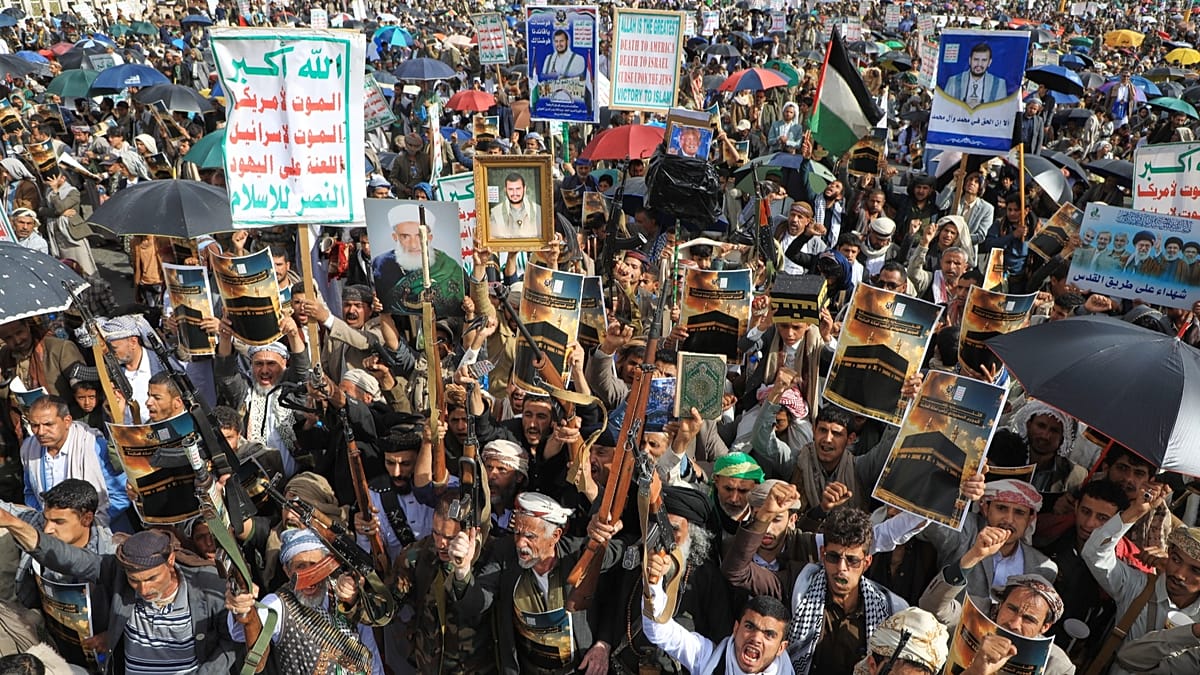
Yemen, already shattered by more than a decade of civil conflict, has seen a sharp uptick in hostilities since the Tehran-backed Houthi movement effectively abandoned a 2022 truce with the Saudi-backed government. The renewed fighting has raised fears that the Arabian Peninsula's poorest nation could once again descend into all-out warfare.
“I call on all parties to de-escalate tensions and spare the Yemeni people from further misery. The Yemeni people have already suffered way too much from the devastating legacy of years of conflict, displacement and humanitarian crisis,” Türk said in a statement. “I urge all parties to halt immediately any actions that risk returning Yemen to full-scale conflict.”
The warning comes after the Houthis launched their deadliest attacks in years earlier this month, killing 58 government troops, according to a military source, primarily in the oil-rich Marib province. The same day, shelling on residential areas and displacement camps in Marib killed two civilians.
The UN rights office reported that at least seven civilians have been killed and ten wounded in Houthi attacks on government-controlled areas since 6 August. Two more civilians were reported injured in Houthi-held areas in late July. On 9 August, a missile and drone strike on the Red Sea port of Mokha killed three port workers and injured four others. Another attack on a cargo ship in the Bab al-Mandeb Strait on 11 August reportedly killed four crew members—three Pakistanis and one Indonesian—and injured several more.
Civilian infrastructure under fire
The UN has highlighted that multiple civilian sites have been hit, including fuel storage facilities and a residential compound at the Saudi Field Hospital in Mokha. Such attacks on civilian infrastructure, Türk warned, risk deepening the suffering of a population already on the brink.
“Attacks on civilian infrastructure risk further deepening civilian suffering at a time when at least 18 million Yemenis are already food insecure,” he said. “These attacks must end immediately.”
The renewed violence is a stark reminder of the fragility of the 2022 truce, which had brought a measure of calm to the country. The Houthi escalation also comes amid broader regional tensions, with Iran's influence extending across the Middle East. The conflict in Yemen has long been a proxy battleground between Tehran and Riyadh, and the recent uptick in attacks threatens to reignite a war that has already claimed hundreds of thousands of lives.
For Europe, the situation in Yemen carries significant implications. The Red Sea and the Bab al-Mandeb Strait are critical maritime chokepoints for global trade, including European energy supplies. Attacks on shipping in these waters, as seen in recent weeks, disrupt supply chains and raise insurance costs for vessels transiting the region. European nations, particularly those with strong trade ties to the Gulf and Asia, are closely monitoring the security situation.
The humanitarian toll remains staggering. According to the UN, more than 18 million Yemenis are food insecure, and millions more are displaced. The country's health system is on the verge of collapse, and international aid efforts are chronically underfunded. Türk's appeal for de-escalation is a plea to prevent further catastrophe.
As the international community watches, the question remains whether the Houthis and their backers will heed the UN's call or continue down a path that leads back to full-scale war. The stakes could not be higher for the Yemeni people, who have already endured more than a decade of conflict and deprivation.