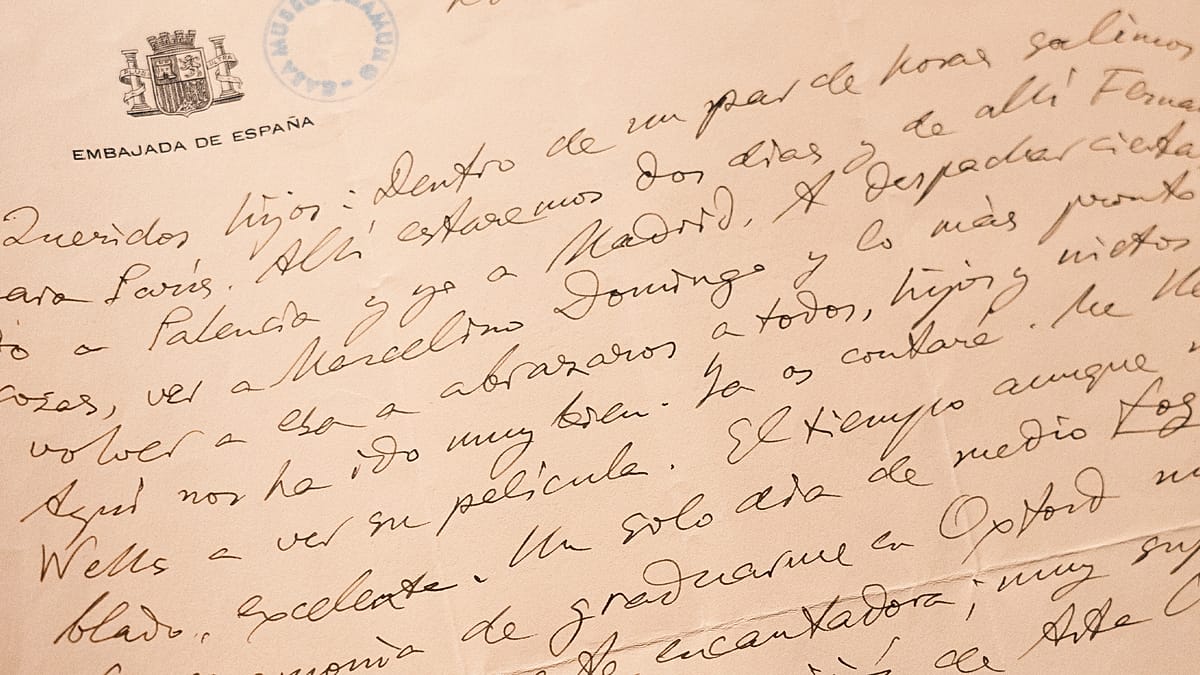
An unpublished letter by Miguel de Unamuno has finally confirmed a remarkable literary encounter in London: the Spanish philosopher and writer dined with H. G. Wells and then went to the cinema together. The document, dated 2 March 1936, was found in the archive of the Casa-Museo Unamuno at the University of Salamanca.
In the letter, addressed to his children, Unamuno describes the evening: "Wells took me to see his film," he wrote, before leaving London for Paris. The two attended a screening of Things to Come at the Leicester Square Theatre, a film whose screenplay was written by Wells himself, based on his book The Shape of Things to Come.
A meeting long suspected
Until now, researchers had only indirect clues that the two intellectuals had met. A poem by Unamuno contained references that seemed to echo the film's themes, and a report by a correspondent for the Spanish newspaper El Sol hinted at the encounter. But no direct testimony from Unamuno had surfaced.
In 2025, a handwritten invitation from Wells to Unamuno emerged, suggesting dinner at Wells's home on 28 February 1936 and a subsequent visit to see Things to Come. Unamuno was in the United Kingdom to receive an honorary doctorate from the University of Oxford. The newly found letter confirms that the invitation was accepted and that the two spent the evening together.
The discovery adds a vivid chapter to the cultural exchanges between Spain and Britain in the 1930s, a period when both writers were grappling with the rise of authoritarianism and the role of science in society.
The original letter will be on display from 29 September to 30 October in Bilbao, Unamuno's home city, as part of the exhibition Let them invent it. Miguel de Unamuno and science. The show explores Unamuno's engagement with science and his connections with leading intellectual figures of his time, including Albert Einstein, Santiago Ramón y Cajal, and H. G. Wells himself.
For those interested in the broader cultural context, the exhibition also touches on how Unamuno's contemporaries viewed the future, a theme that resonates with current debates about technology and society. As Tom Cruise recently argued, audiences still crave authentic experiences, a sentiment that echoes the era when Wells and Unamuno sat in a dark cinema watching a vision of the future.
The letter not only settles a historical question but also offers a glimpse into the personal lives of two giants of European letters. It reminds us that even the most profound thinkers enjoyed a night out at the movies.