Delegations from the United States and Iran have arrived in Switzerland for talks aimed at implementing a provisional peace agreement, the Swiss foreign ministry confirmed on Sunday. The meetings are taking place at Bürgenstock in the canton of Nidwalden, a location known for hosting high-stakes diplomacy. Representatives from Pakistan, which has played a mediating role between the two sides, have also arrived in the country.
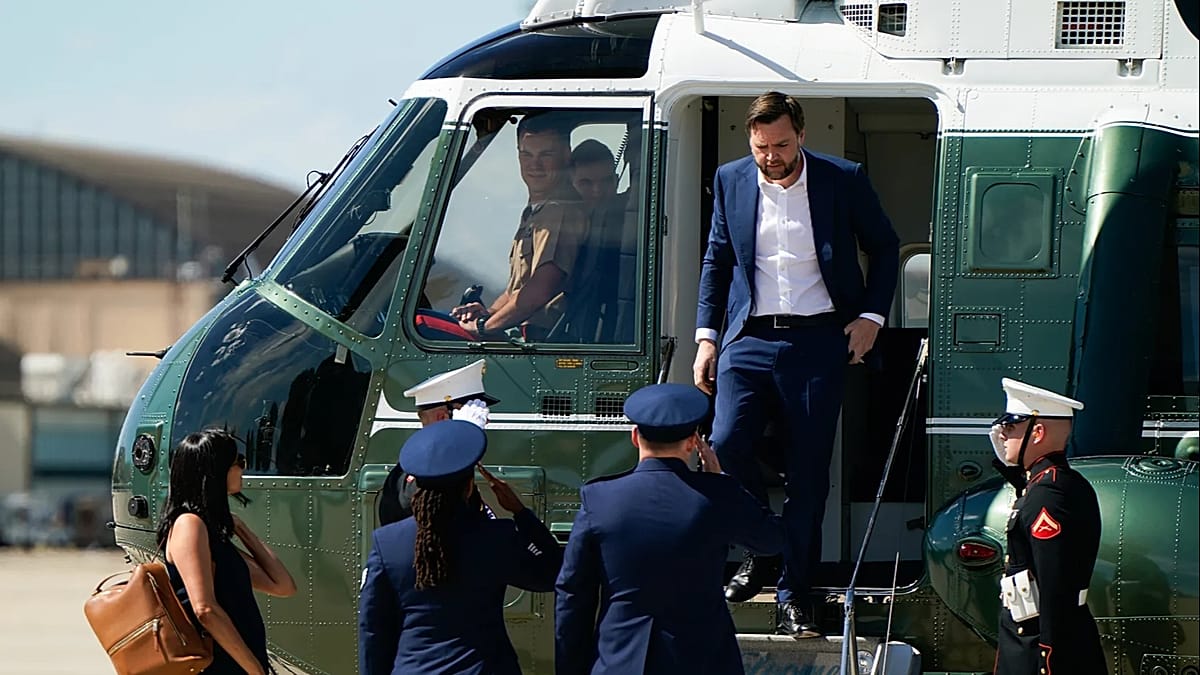
US Vice President JD Vance is expected to participate in the technical discussions. His spokesperson confirmed that Vance landed at the Swiss air force's Emmen Air Base early Sunday morning, according to AFP. Before departing from Joint Base Andrews in Maryland, Vance told reporters he was "looking forward" to the talks. "We're going to hopefully make progress on the nuclear issue, make progress on the Lebanon ceasefire issue — those are the two big things that I think we're going to be focused on," he said.
The meeting was originally scheduled for Friday but was postponed as tensions escalated between Israel and Hezbollah in Lebanon. The delay underscores the fragility of the broader regional situation, which continues to complicate US-Iran diplomacy.
Strait of Hormuz Closure and Ceasefire Violations
On Saturday, Iran's military announced the closure of the Strait of Hormuz, a critical chokepoint for global oil shipments. The decision was framed as a response to what Tehran described as "America's bad faith and blatant breach of the first clause of the war-ending memorandum of understanding" and "the relentless and continuous violation of the ceasefire by the Zionist regime in southern Lebanon."
US Central Command, however, stated that the waterway remained open. "Safe passage through the international waterway remained intact today as 55 merchant ships transited, moving large amounts of cargo and more than 17 million barrels of oil to global markets," it said in a statement. The conflicting accounts highlight the information war that often accompanies such disputes.
The renewed ceasefire between Israel and Hezbollah, agreed upon on Friday, quickly unraveled. Israel launched a fresh wave of attacks on Saturday morning, striking targets in southern Lebanon. According to the Lebanese civil defence agency, strikes on Nabatieh killed 16 people and injured 12 more. Israel's military said it acted in response to more than 50 Hezbollah rockets fired at its forces in southern Lebanon overnight. "Among the targets struck were rocket launch positions, weapons storage facilities, and command centers," the Israeli military stated.
The situation in Lebanon remains volatile, with the UNIFIL deputy recently noting that no quick peace between Israel and Hezbollah is possible without political will. This assessment underscores the challenges facing the US and Iranian delegations as they attempt to stabilize the region.
The talks in Switzerland are part of a broader effort to de-escalate tensions that have flared repeatedly since the collapse of the 2015 nuclear deal. The provisional peace agreement, whose details remain largely undisclosed, is seen as a potential framework for addressing both the nuclear program and regional conflicts. For European observers, the outcome carries significant implications for energy security and migration flows, particularly given the Strait of Hormuz's role in global oil supply.
As the delegations settle into negotiations in Bürgenstock, the international community watches closely. The success or failure of these talks could reshape the geopolitical landscape of the Middle East and beyond.