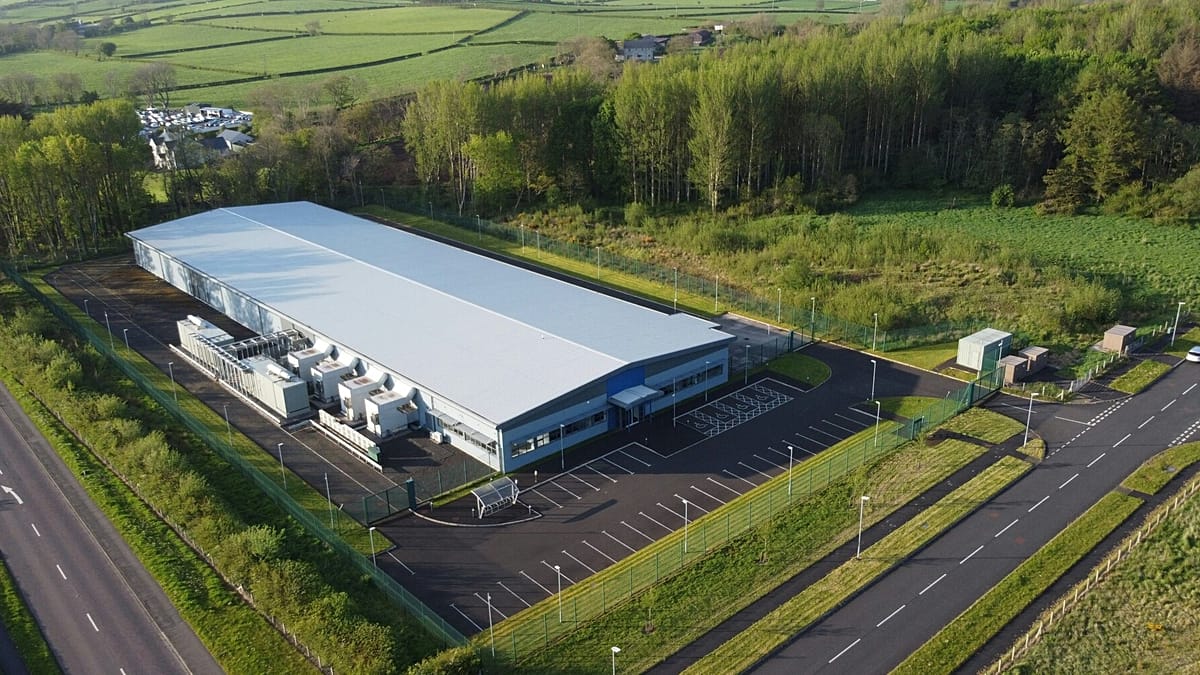
For years, environmentalists and researchers have warned about the growing energy appetite of data centres. Now a Harvard study has quantified the scale of the problem: the 403 largest data centres in the United States consumed enough electricity in a single year to generate roughly the same carbon emissions as Denmark, a country of nearly six million people.
The study, one of the first to estimate the electricity use and emissions of hyperscale data centres since the AI boom, found that between May 2024 and April 2025, these facilities produced an estimated 25.7 million tonnes of CO2. That figure is two to three times higher than earlier estimates based on 2018 data. More than half of the power came from fossil fuels, primarily natural gas and coal.
“We are going backwards toward the goal of controlling CO2 emissions,” said Francesca Dominici, a biostatistics professor at Harvard, in an interview with the Associated Press.
The findings arrive just as negotiators at COP31 launch a voluntary pledge urging data centre operators to adopt cleaner energy and disclose their environmental impact. But the Harvard researchers caution that voluntary commitments alone may not be enough to reverse the trend.
Europe’s data centre boom is underway
While the study focuses on the US, Europe is rapidly expanding its own data centre footprint. The European Union aims to triple its data centre capacity within the next seven years to compete in the global AI race. Property consultancy CBRE expects European capacity to grow by 20 per cent in 2026 alone.
London, Frankfurt and Paris have already emerged as major hubs, but electricity shortages have forced some cities, including Amsterdam and Dublin, to pause new developments. Investors are now looking elsewhere. In Finland, 145 data centre projects have been announced nationwide in recent years, 60 of them this year alone. Spain has more than 50 projects in the pipeline, with 17 already under construction. Italy is also attracting developers: in Puglia, local authorities have received 29 requests for grid connections, and CBRE predicts Milan will overtake Dublin as Europe’s fifth-largest data centre market by 2028.
This expansion comes with significant costs. The International Energy Agency (IEA) estimates that data centres will account for 10 per cent of additional electricity demand in the EU by 2030, straining ageing power grids. Residents have raised concerns about water consumption, noise pollution and the amount of land being devoted to these facilities.
In July, the UK government overruled a local council to approve a €585 million plan to convert the former Truman Brewery in east London into a mixed-use development, including shops, offices, homes and a data centre. Protesters took to the streets, arguing that the data centre alone could consume as much electricity as 15,000 homes, while the project would create just 44 new homes, only six of them for social housing.
In October, more than 1,000 people representing about 40 local committees gathered in Milan to protest Italy’s data centre expansion and demand a halt to new developments. Less than a month later, activists broke into a Microsoft construction site in Amsterdam, climbing a crane, setting off flares and clashing with police. In November, the coalition Stop Dirty Data Centres, which includes more than 100 environmental, digital rights and community groups, organised demonstrations in 15 countries to demand a freeze on new data centres until governments address their impact on utility bills, housing and resources.
How Europe plans to reduce the environmental impact
The Harvard researchers found that a data centre’s carbon footprint depends heavily on where it is built. The same amount of electricity generated more than twice as much carbon in Wyoming, where coal dominates the power mix, than in Oregon, where hydropower is a significant source. They also noted that operators rarely disclose their electricity consumption, making it difficult to calculate individual emissions.
The EU is trying to avoid similar transparency gaps. Under the Energy Efficiency Directive, data centres using at least 500 kilowatts of computing power must report their energy and water consumption. In September, the European Commission proposed A-to-G ratings for energy and water efficiency, similar to the labels used on household appliances.
Some operators claim to be finding ways to reduce their impact, but the Harvard study suggests that without stronger regulation and cleaner energy sources, the environmental cost of the AI revolution could undermine climate goals. As Europe embarks on its own data centre boom, the lessons from the US are clear: pledges alone may not be enough.