The Pentagon has disclosed that the United States has spent approximately $29 billion (€24.7 billion) on military operations against Iran, a figure roughly $4 billion higher than the estimate provided just two weeks ago. The updated accounting comes amid mounting bipartisan concern in Congress over the financial toll of the conflict and the rapid depletion of American weapons stockpiles.
According to Pentagon comptroller Jay Hurst, a significant portion of the expenditure has gone toward replacing munitions and repairing damaged equipment. However, Hurst noted that the estimate does not yet include costs for repairing or rebuilding US military installations in the region that have been affected by the fighting.
Lawmakers Press Hegseth on Strategy and Stockpiles
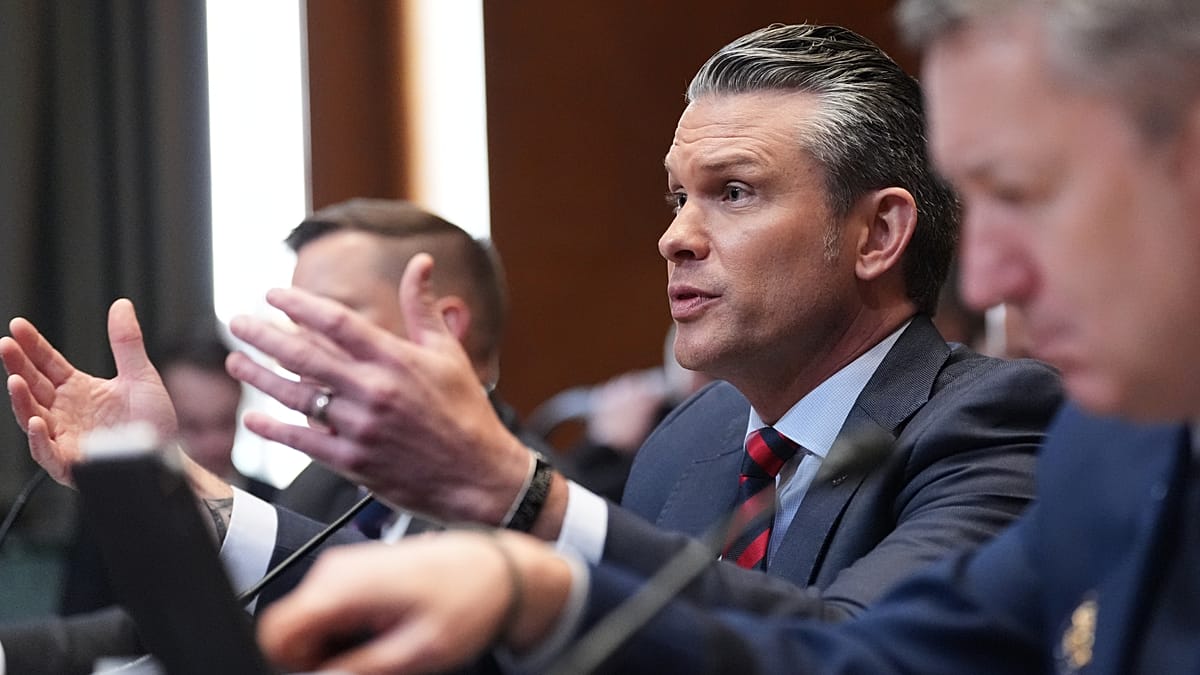
Defence Secretary Pete Hegseth faced sharp questioning during a four-hour hearing before the Senate Appropriations subcommittee on defence. Both Democratic and Republican lawmakers pressed him on the rising costs, the administration's endgame, and the sustainability of US military readiness. Notably, Hegseth encountered more pushback from within his own Republican Party than in previous sessions.
Hegseth rejected claims that the US is running out of munitions. “I take issue with the characterisation that munitions are depleted in a public forum,” he said. “That’s not true.” He added that the Trump administration is working to increase weapons production, though he provided few specifics.
California Republican Representative Ken Calvert, chair of the House subcommittee, questioned whether the war with Iran might be undermining long-term readiness. “Questions persist about whether we are building the depth and reliance required for a high-end conflict,” Calvert said.
When asked about a potential exit strategy—efforts that have so far failed to gain traction in Congress—Hegseth offered a vague response: “We have a plan to escalate if necessary. We have a plan to retrograde if necessary. We have a plan to shift assets.” He did not elaborate further.
Strained Relations with European Allies
The hearing also highlighted growing tensions between Washington and its European allies. Kentucky Senator Mitch McConnell, a senior Republican, expressed concern that European nations perceive the US as reducing its influence and leaving them to fend for themselves. “It seems to me that a lot of the European countries think that we're reducing our influence there, that they're sort of on their own. And somehow American leadership is not essential to NATO going forward,” McConnell told Hegseth. He added, “I would argue that it certainly essential for us to continue to be the leader,” describing NATO as “the most important military alliance in world history.”
Relations between the Trump administration and NATO soured after member states rejected calls to assist the US and Israeli Prime Minister Benjamin Netanyahu in securing the Strait of Hormuz following strikes against Iran in February. The leaders of the United Kingdom, Germany, France, and Finnish President Alexander Stubb refused to provide support, arguing that NATO is a defensive alliance and not obliged to participate in what they termed a war of aggression.
The standoff in the Strait of Hormuz—which normally handles roughly a fifth of the world's oil and gas—continues to rattle global markets. Energy prices have soared, and fears of supply shortages persist. The crisis has also prompted European capitals to accelerate their own defence planning, as seen in recent discussions among EU defence ministers on strategy and readiness, as well as initiatives like the Telekom and Rheinmetall partnership to build a drone defence shield for German cities.
The broader implications for European security are significant. With the US focused on the Iran conflict, European nations are increasingly questioning the reliability of American commitments. The EU Defence Ministers' recent strategy session underscored the need for greater European autonomy in defence, a theme that resonates from Berlin to Helsinki.
Meanwhile, the threat of escalation remains. Iran has threatened weapons-grade uranium enrichment as ceasefire talks with the US appear to be collapsing, adding another layer of urgency to an already volatile situation.