Tehran has escalated its rhetoric, warning it could enrich uranium to weapons-grade 90% if the United States resumes military strikes, as the fragile ceasefire between the two countries appears to be unravelling. The threat, posted on X by Ebrahim Rezaei, an MP and spokesperson for the Iranian parliament's National Security and Foreign Policy Committee, signals a hardening of positions just weeks after a Pakistani-mediated truce took effect on 8 April.
Rezaei said the option of enriching to 90% would be discussed in parliament. Separately, Iran's parliament speaker, Mohammad Bagher Ghalibaf, issued an ultimatum overnight Tuesday, insisting that Washington had "no alternative" but to accept Tehran's rights as outlined in its 14-point proposal, or face failure. The proposal was rejected by US President Donald Trump as "completely unacceptable."
Ceasefire on Life Support
Trump described the ceasefire as being on "massive life support" after Iran's foreign ministry called US demands "unreasonable." According to US media reports, Trump met with his national security team on Monday to discuss the possibility of renewed strikes on Iran. The ceasefire ended 39 days of US and Israeli strikes that began on 28 February, but its durability is now in doubt.
Meanwhile, Israeli media reported that some Israeli citizens received threatening text messages purportedly sent by Iran, warning they would "see the sun in the night skies" — a phrase interpreted as referring to possible Iranian missile or drone strikes. The messages add a layer of regional tension to an already volatile situation.
The Nuclear Question
The core issue remains Iran's nuclear programme. Iran holds roughly 400 kilograms of enriched uranium at 60% purity, just below the 90% threshold for weapons-grade material. Washington regards this stockpile as a direct threat. Trump has repeatedly stated that Iran will not be permitted to obtain a nuclear weapon under any circumstances.
Trump's special envoy, Steve Witkoff, told Fox News that Iranian negotiators had informed him and Jared Kushner in earlier talks that Iran held around 460 kilograms of uranium enriched to 60%, which could be upgraded to weapons-grade material within one to two weeks. That amount, Witkoff said, would be sufficient to produce approximately 11 nuclear warheads.
Iran has said its right to enrich uranium is non-negotiable, although it has indicated the level of enrichment is open for discussion. The US position demands that Iran either transfer its enriched uranium stockpiles abroad or halt enrichment for at least 20 years. Trump claimed Iranian officials had verbally agreed to the removal of enriched uranium from a site he described as having been obliterated by US strikes, but that the commitment was absent from the written proposal subsequently sent to Washington.
Israeli Prime Minister Benjamin Netanyahu has insisted the war with Iran cannot be considered over until its nuclear capabilities are eliminated. In a CBS News interview, he said the uranium stockpiles would need to be retrieved physically on the ground.
The 2015 Joint Comprehensive Plan of Action (JCPOA) had capped Iranian enrichment at 3.67% and limited stockpiles to 300 kilograms for 15 years. Trump withdrew the US from the deal in 2018 during his first term, triggering a gradual Iranian rollback. Iran raised enrichment first to 20%, then beyond 60%, drawing repeated warnings from the International Atomic Energy Agency (IAEA).
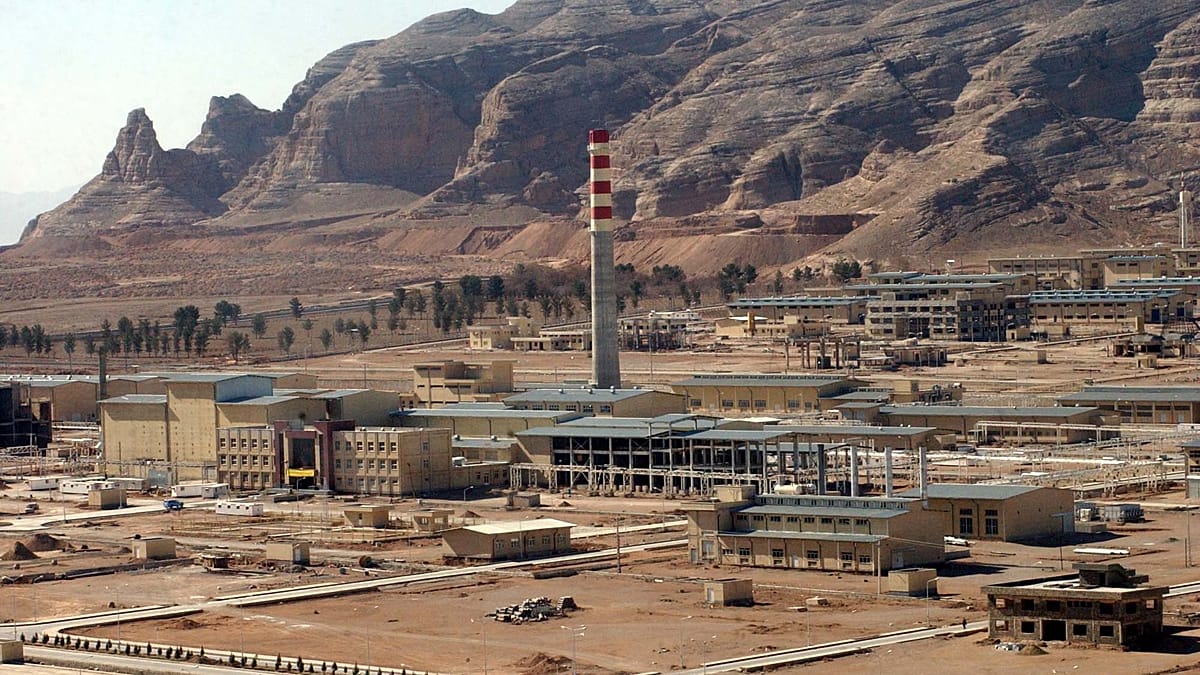
Following US and Israeli strikes in June 2025 and in the opening salvo of the war in February, Trump said Iran's nuclear facilities had been "obliterated." However, satellite imagery of the Natanz complex published in March showed no new damage to the facility or its tunnels.
The standoff has broader implications for Europe, which has been closely monitoring the situation. The EU has previously urged restraint and sought to revive diplomatic channels, but divisions remain among member states on how to engage with Tehran. The threat of a nuclear-armed Iran also complicates European security calculations, particularly for countries like France and Germany that were signatories to the JCPOA. For more on Europe's diplomatic challenges, see EU Foreign Ministers Split Over Direct Talks with Putin on Ukraine War.
As the ceasefire teeters, the risk of a renewed conflict looms, with potential consequences for global energy markets and regional stability. European nations have also been warned by Iran against sending warships to the Strait of Hormuz, a critical chokepoint for oil shipments, as detailed in Iran Warns European Nations Against Sending Warships to Strait of Hormuz Amid Stalled Nuclear Talks.