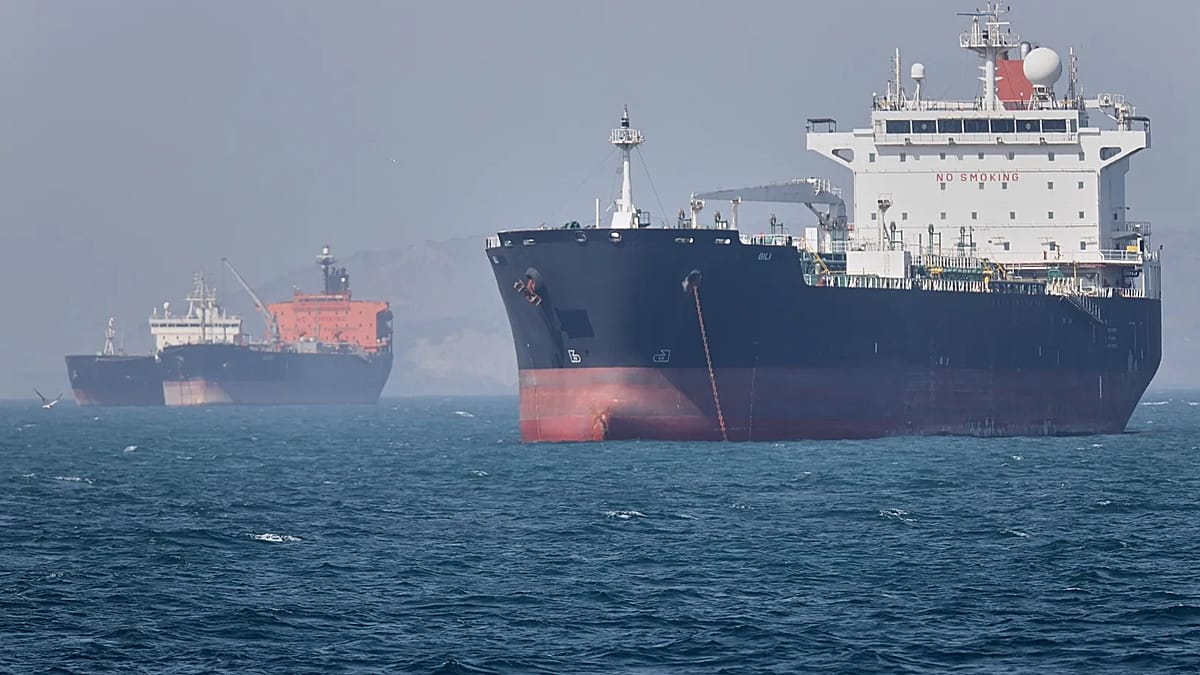
Late on Saturday, the US military said its forces fired a missile into the engine room of a merchant ship that had ignored more than twenty warnings to avoid entering an Iranian port. The vessel, the Gambia-flagged cargo ship Lian Star, is now adrift in the Gulf of Oman, though US forces have not boarded it, according to media reports.
The action is the latest in a series of interdictions by the US Navy since it imposed a blockade on Iranian ports on 17 April. The blockade was a response to Iran effectively closing the Strait of Hormuz after the outbreak of the US-Israeli war against Tehran over its nuclear programme on 28 February. The US military says it has now stopped six ships trying to breach the blockade, allowing only one to proceed, and has redirected another 116 vessels.
Ceasefire talks hang in the balance
The strike comes amid a fragile ceasefire that has held since 7 April, but which now faces an uncertain future. US President Donald Trump met with advisers on Friday but has yet to decide whether to approve a tentative agreement that would extend the ceasefire by 60 days, reopen the Strait of Hormuz, and curtail Iran's nuclear programme. Under the proposed deal, Tehran would surrender a large percentage of its uranium deposits, according to US officials. Iran has said no deal has been finalised.
Washington's strategy is to limit Iran's access to cash and further weaken its already struggling economy. The blockade is a central part of that effort, cutting off maritime trade routes that Tehran had used to export oil and import goods.
Meanwhile, commercial traffic has continued to move through the Strait of Hormuz, though at a much lower volume than before the war. Iran has asserted that it must approve all transits and has charged tolls as high as $2 million per vessel—a practice experts say violates the principle of freedom of peaceful navigation under international maritime law.
On Saturday, Iran's joint military command warned in a statement carried by state TV that any military vessels interfering with its control of the strait would be targeted. “Any violation of these regulations will place the security of their passage at serious risk,” the statement said.
Qatar's deputy prime minister, Sheikh Saoud bin Abdulrahman bin Hassan bin Ali Al Thani, said the Gulf nation opposes charging transit fees in principle, but added that “for certain times when they say they are going to use it for mine clearing or some usage of the fees for a temporary time, this is something that is negotiable, and it could be something that will help the transit of the Strait of Hormuz to be back to a normal stage.”
The Strait of Hormuz, a narrow waterway between Iran and Oman, is a critical chokepoint for global energy supplies, with about 20 percent of the world's seaborne oil passing through it. The disruption has sent shockwaves through the global economy, raising energy prices and threatening supply chains across Europe and beyond.
For European capitals, the crisis poses a direct challenge. The EU has long sought to maintain freedom of navigation in the strait and has been a key player in diplomatic efforts to revive the nuclear deal with Iran. The latest escalation underscores the fragility of the region and the high stakes for European energy security and trade.