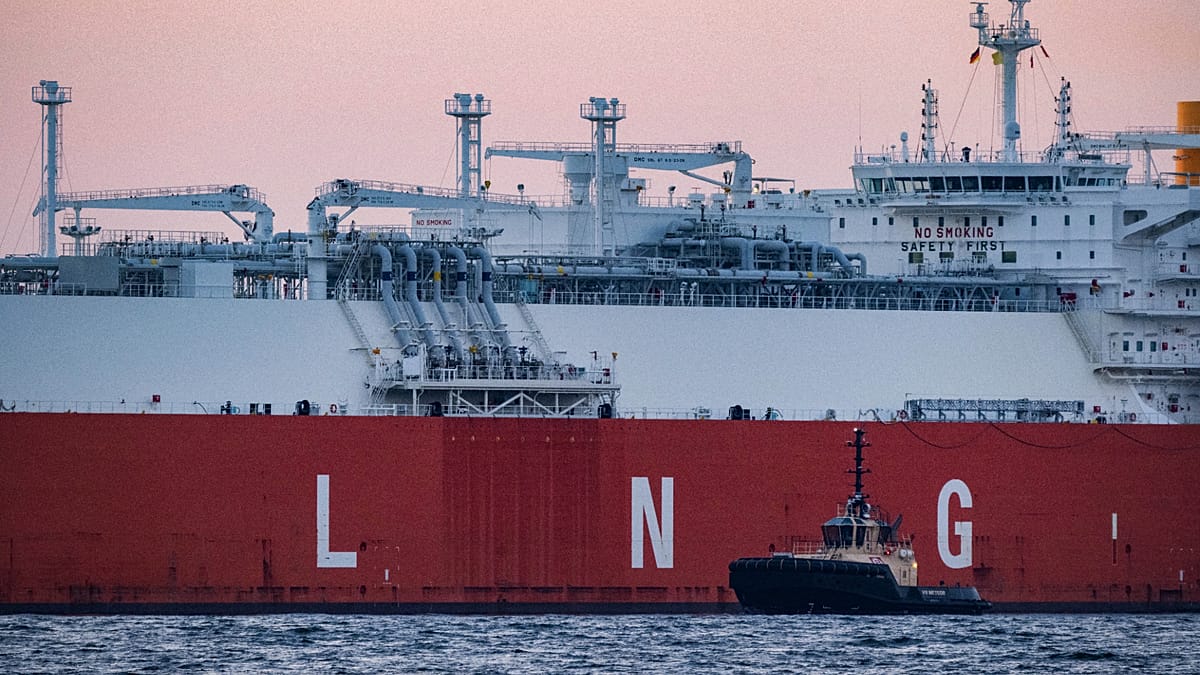
Europe’s rapid pivot away from Russian fossil fuels is creating a new vulnerability: an overwhelming reliance on American liquefied natural gas. According to a report published Wednesday by the Institute for Energy Economics and Financial Analysis (IEEFA), the United States could supply close to two-thirds of the continent’s LNG imports by 2026.
The analysis estimates that US LNG already accounted for 57% of European imports in 2025, a dramatic increase from pre-war levels. If current contracting trends continue and additional long-term supply agreements take effect, that share could rise further, the think tank warned.
The findings come as most EU member states pursue the European Commission’s REPowerEU strategy, which aims to eliminate Russian gas imports entirely by 2027. Since Russia’s full-scale invasion of Ukraine in 2022, European countries have scrambled to secure alternative supplies, with the US emerging as the primary beneficiary.
From Russian Pipes to American Tankers
The shift has improved short-term energy security, but the IEEFA argues it has also created a significant concentration risk. “Replacing dependence on Russian gas with heavy reliance on another single alternative supplier could expose Europe to future political and market instability,” the report states.
European policymakers have echoed those concerns. Earlier this year, European Commission Executive Vice President Teresa Ribera warned that the bloc must avoid “replacing one energy dependency with another” and instead accelerate investment in renewable power and electrification. The European Union Agency for the Cooperation of Energy Regulators has also flagged the growing role of US LNG as a source of supply concentration risk.
The cost of this new dependency is substantial. The IEEFA estimates that EU countries spent roughly €117 billion on US LNG imports between early 2022 and mid-2025. American LNG generally comes at a higher price than pipeline gas due to liquefaction, shipping, and regasification expenses.
Lower Demand, Higher Imports
Paradoxically, the increase in LNG imports has occurred against a backdrop of declining European gas consumption. High prices following the energy crisis, industrial weakness, energy-saving measures, and faster deployment of renewables have all contributed to lower demand. The IEEFA data shows that Europe’s LNG imports actually declined in 2024 as gas consumption fell to its lowest level in more than a decade.
However, imports rebounded in 2025 amid colder weather and government efforts to replenish storage sites. At the same time, several EU countries continue expanding LNG import infrastructure. Germany, which previously relied heavily on Russian pipeline gas, has rapidly developed floating LNG terminals and emerged as one of the largest buyers of US LNG in Europe.
Analysts have questioned whether Europe risks building excess LNG import capacity as long-term gas demand is expected to weaken further during the energy transition. The IEEFA’s report adds weight to those concerns, noting that the continent’s growing reliance on US LNG may lock in higher costs and strategic vulnerabilities for years to come.
For a broader perspective on Europe’s energy and resource challenges, see our coverage of Portugal exhausting its 2026 natural resources and the varying overshoot days across the EU. Meanwhile, the EU’s search for alternative energy sources has also extended to other sectors, as highlighted by the bloc’s turn to US jet fuel imports amid Middle East disruptions.