The Trump administration has escalated its campaign against diversity, equity, and inclusion (DEI) programs in higher education by proposing a new rule that would strip private schools and colleges of their tax-exempt status if they provide targeted assistance based on race. The proposal, announced by the US Treasury Department on Thursday, would take effect after May 2027, following the conclusion of the academic year.
The regulation is designed to eliminate any policies or programs that benefit students because of their race, explicitly stating that such advantages in admissions, scholarships, and facilities would be incompatible with the rule. This marks the latest move in the administration's broader effort to dismantle DEI initiatives that became widespread before President Donald Trump returned to the White House.
Legal and political context
Trump officials have invoked Civil Rights-era laws to challenge these policies, arguing that they discriminate against white and Asian American students. The administration describes the proposal as a step toward restoring merit in education, but higher education leaders have sharply criticized it.
“The administration’s latest rules changes are its most blatant attack to keep working class Americans and people of colour from accessing higher education and a better life,” said Mike Gavin, President and CEO of the Alliance for Higher Education. “By claiming that efforts to increase fair opportunity for all students are discriminatory, the administration is trying to gaslight the American people into believing that up is down and black is white.”
Many universities have already closed or rebranded their DEI offices and ended scholarships and clubs aimed at minority students under pressure from the White House. Treasury Secretary Scott Bessent suggested that even policies not explicitly labeled as DEI could be targeted.
“Schools rebranding race-based preferences as equitable, inclusive, or diversity-enhancing does not change their discriminatory nature,” Bessent wrote on X.
The Treasury and the Internal Revenue Service (IRS) estimate that up to 18,000 private schools, colleges, and other educational institutions could be affected. Private universities have enjoyed tax exemptions for over a century, saving them millions of dollars annually. Trump has used this status as leverage in his pressure campaign against institutions he describes as hotbeds of “wokeness” and “radical left ideology.”
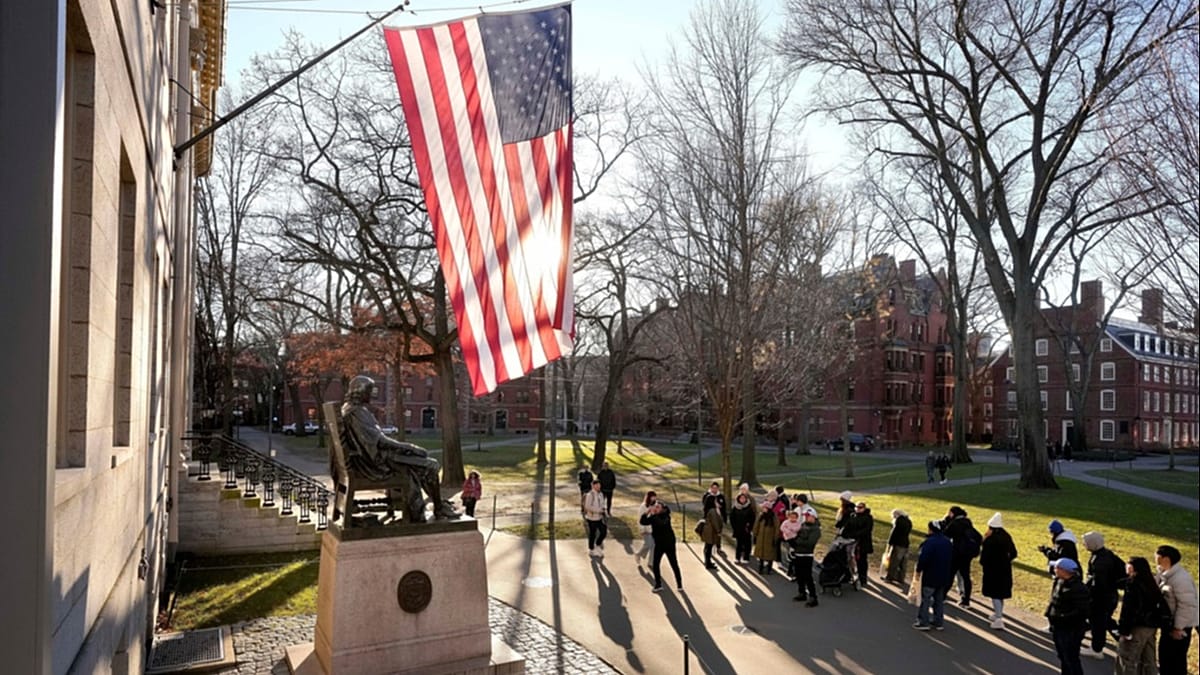
Last year, he threatened to revoke Harvard University's tax-exempt status during a dispute. Harvard officials responded that there was no legal basis for such action and warned it would force cuts to financial aid and medical research.
While it is rare for the federal government to challenge a college's tax-exempt status, there is a notable precedent: Bob Jones University, a Christian school in South Carolina, lost its exemption in the 1970s over a ban on interracial dating. The Supreme Court upheld the IRS decision, though the school later regained its status in 2017.
The Justice Department has separately opened investigations into several medical schools accused of favoring Black and Hispanic students in admissions. This proposal is part of a wider pattern of the administration using federal levers to reshape educational policies, a development that European observers may find concerning given the transatlantic exchange of students and academic ideas.
As the debate unfolds, the implications for academic freedom and access to education resonate beyond US borders, particularly for European institutions that collaborate with American universities and for European students considering studying in the United States.