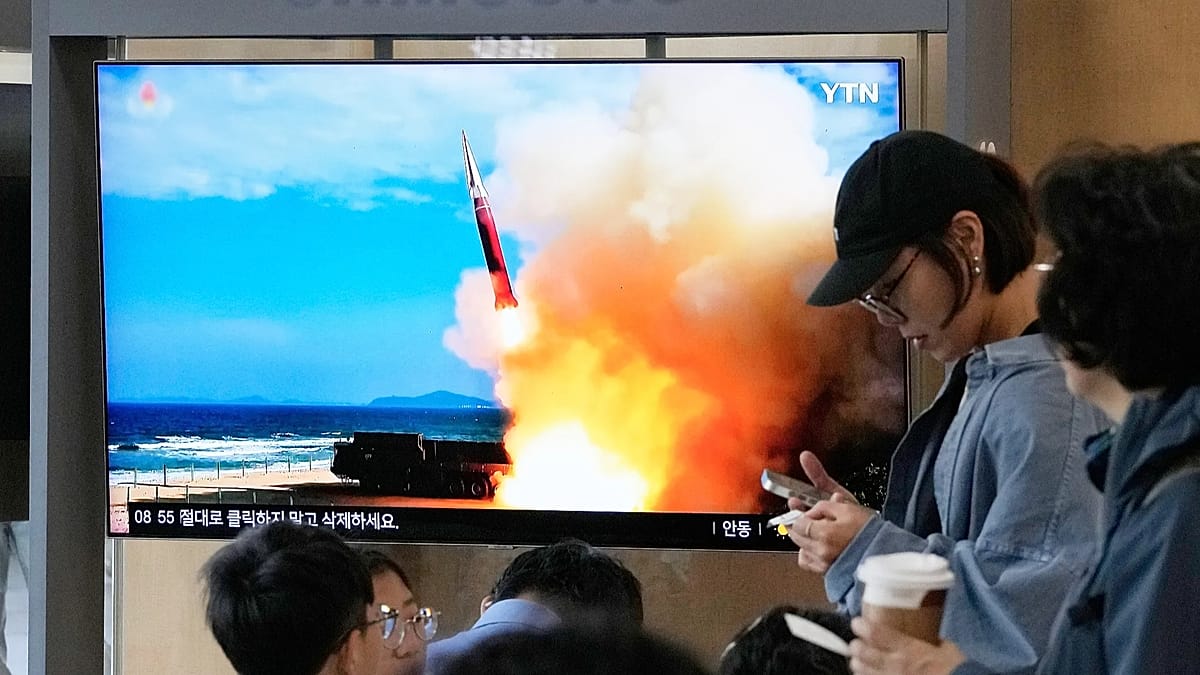
The United States has issued an urgent security alert urging its citizens to leave Iran without delay, warning that hostilities across the Middle East could escalate quickly. The advisory, published by the US Virtual Embassy in Iran, comes after a series of attacks on American assets and allies in the region.
On Wednesday, the embassy cited recent incidents, including Iranian strikes on US facilities in Bahrain and Kuwait, and a Houthi attack on a tower in Riyadh's financial district that injured 11 people. The alert said Iran, the Houthis, and other Tehran-aligned groups may target US interests and citizens, including companies and institutions.
"Do not travel to Iran for any reason. United States citizens should leave Iran immediately," the alert stated.
The warning reflects a broader deterioration in regional security, with potential implications for European nationals and businesses operating in the Gulf. Many European countries, including France, Germany, and the UK, have significant economic and diplomatic ties in the region, and their citizens often travel between Europe and the Middle East.
Regional attacks and responses
Saudi Arabia's Civil Defence reported that Tuesday's Houthi strike on a tower in Riyadh's financial district wounded 11 people. Meanwhile, Bahrain's Interior Ministry said an Iranian attack on Saturday injured two individuals and sparked a fire at a civilian industrial facility.
The US alert urged citizens in the region to monitor airline and airport operations, prepare for possible flight cancellations and airspace closures, and be aware that rules for crossing Iran's land borders and entry conditions in destination countries may change at short notice.
Citizens were advised to avoid demonstrations, large gatherings, and areas with a heavy police presence, and to stay alert in places associated with the US. In the event of air attacks, the alert said citizens should keep away from doors, windows, and debris, keep mobile phones charged, and follow instructions from local authorities.
The State Department also directed citizens to register with its information system to receive security updates.
The escalation comes amid heightened tensions across the region, with European allies closely watching the situation. The NATO chief's recent warnings about hybrid threats underscore the broader security challenges facing the Euro-Atlantic community, even as the focus remains on the Middle East.
European governments have urged restraint and called for de-escalation, but the risk of a wider conflict remains. The EU has been engaged in diplomatic efforts to reduce tensions, though its leverage is limited. Some analysts argue that investing in preventive security measures is more cost-effective than responding to crises, a lesson that may apply here as well.
For European citizens in the region, the US advisory serves as a reminder to review their own security arrangements. Many European embassies have issued similar guidance, advising their nationals to avoid non-essential travel to Iran and to exercise caution in neighboring countries.
The situation remains fluid, and further attacks cannot be ruled out. The US alert's emphasis on rapid escalation suggests that Washington sees a real risk of broader conflict, a scenario that would have profound consequences for global energy markets and international security.
As the region braces for potential further strikes, the international community, including Europe, will be watching closely. The coming days will be critical in determining whether diplomatic channels can prevent a slide into a wider war.