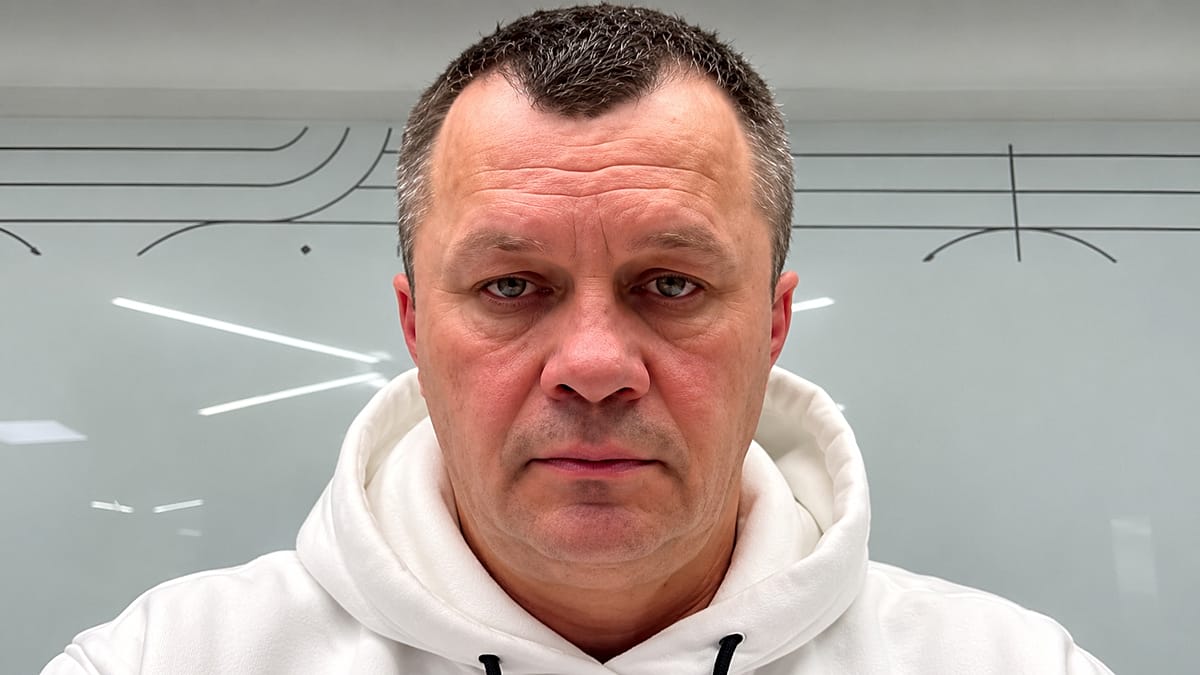
As European Union leaders gather in Brussels to haggle over the bloc's next long-term budget, a prominent Ukrainian economist has a blunt message: cutting aid to Kyiv now will cost Europe far more later. Tymofiy Mylovanov, president of the Kyiv School of Economics, told Euronews that abandoning Ukraine financially would embolden Moscow and expose the continent to a wider conflict.
"It's simply cheaper to fund Ukraine and support Ukraine," Mylovanov said. "As long as Ukraine is containing Russia, Europe gets a breathing space to build up its capabilities and defence."
The warning lands as financing for Ukraine emerges as a major sticking point in the EU budget negotiations. German Chancellor Friedrich Merz has tied an agreement on the multiannual financial framework to continued assistance for Kyiv, while Slovakia, Hungary, Czechia and Bulgaria have signalled reluctance to commit more funds. The European Commission last week proposed an additional loan of up to €45 billion for 2027, covering roughly two-thirds of Ukraine's estimated €70 billion financing shortfall. Ukrainian President Volodymyr Zelenskyy has urged leaders to speed up disbursement.
Mylovanov argued that Ukraine's defence costs are climbing because Russia is pouring ever more resources into the war, including advanced technology. "Russia is putting more money to the war, to the tech, so we are forced to respond also with more tech," he said. "In practical terms, there's more drones, more missiles. We need more interceptors." Drones equipped with advanced sensors, software and artificial intelligence are becoming increasingly expensive, he added.
Meanwhile, Russian strikes on energy and transport infrastructure are disrupting logistics, public transport and access to education, placing additional strain on the Ukrainian economy as winter approaches. The cumulative effect, Mylovanov said, is that Ukraine's resistance is buying time for the rest of Europe.
Europe's security is at stake
Mylovanov rejected the argument that withholding aid could hasten peace by forcing Kyiv to make concessions. Citing Russia's record of violating previous agreements with Ukraine, he warned that a weakened Ukraine would invite further aggression. "Russia will divert resources immediately to operations in the broader European area," he said, pointing to the Baltic states, Poland and southern Europe as potential targets.
"Forcing Ukraine to compromise simply means speeding up issues for Europe. Speeding up further aggression," he said.
On the renewed US-mediated diplomatic process, Mylovanov expressed scepticism, noting that Moscow has yet to demonstrate genuine willingness to end the war. Rather than relying on Kremlin assurances, he said, Ukraine's partners should create conditions that leave Russia no alternative but to engage in substantive negotiations.
Drawing on his economics background, Mylovanov invoked the concept of "cheap talk": "Talk is cheap, actions are costly." He suggested starting with limited, tangible agreements—prisoner exchanges, a temporary halt to attacks on energy infrastructure, a Black Sea ceasefire, or geographically limited truces. "So we need to demonstrate something real in addition to words," he said.
While welcoming European involvement in peace talks, Mylovanov questioned how any future agreement would be enforced. He raised the possibility of troop deployments, joint security budgets, military training and technology sharing. "In the end, we'll have a bad deal for everyone," he said. "What is the right question is not whether the deal should be good or bad, but how do we ensure that this deal is the final deal and there is no continuation of the war two or three years from now, five years from now."
The debate over Ukraine funding is intertwined with broader EU budget tensions, as leaders clash over the size of the budget and new taxes. Mylovanov's warning adds a security dimension to what might otherwise be seen as a fiscal dispute. As Visegrád leaders push back on EU budget and Ukraine funding, the cost of inaction could be measured not in euros but in lives and territory.
For now, Ukraine's partners face a choice: invest in Kyiv's defence or prepare for a more dangerous neighbourhood. Mylovanov's message is clear—the former is the cheaper option.