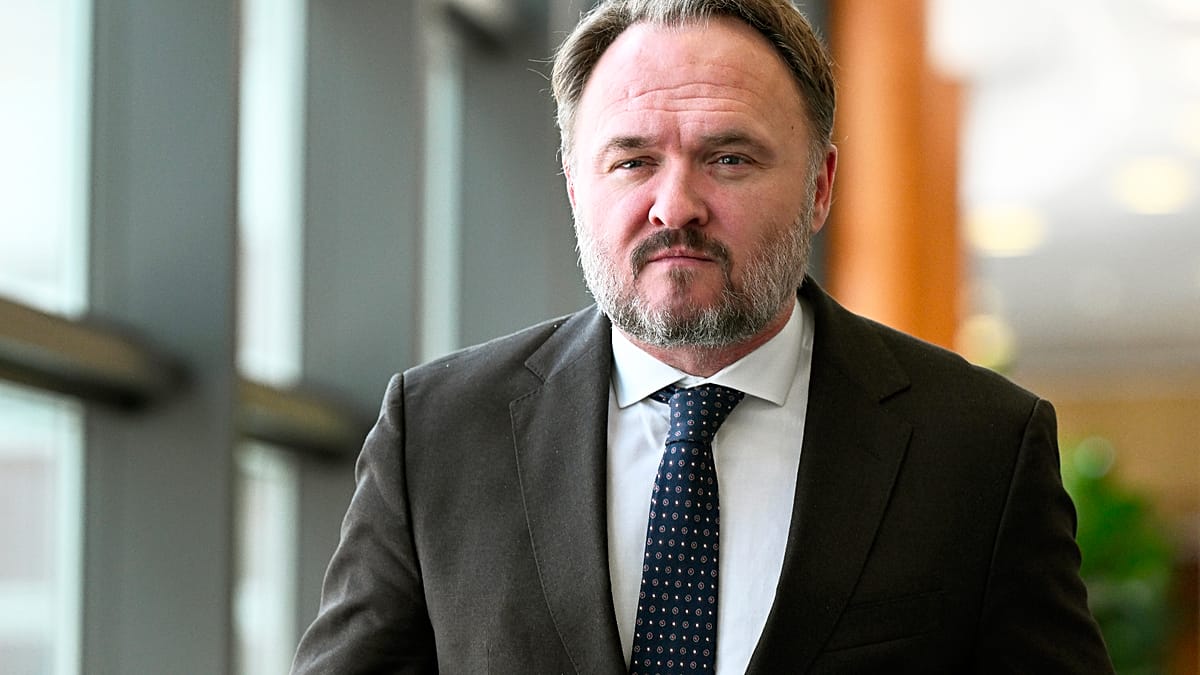
Brussels has drawn a firm line under its energy relationship with Moscow. In an interview with Euronews, EU Energy Commissioner Dan Jørgensen said the bloc would never return to importing Russian energy, no matter what emerges from negotiations between Washington and Moscow over Ukraine.
“We will never again, if it's up to me, import as much as one molecule from Russia. We do not trust Russia,” Jørgensen told On the Record with Maria Tadeo. His remarks underscore a widening transatlantic rift over how to handle Russia's energy leverage.
The administration of US President Donald Trump has already eased restrictions on Russian diesel and has floated the idea of welcoming Moscow back as a global energy supplier if a peace deal is reached. But Jørgensen stressed that no agreement between the US and Russia can override EU law.
“No matter what happens in these negotiations, European legislation is made in Brussels, proposed by the Commission, made by the Parliament and the Council co-legislators,” he said. “The EU wants to make sure it never has to rely on Russian gas again.”
Legislation, not sanctions
The EU has moved beyond relying on sanctions, which are subject to renewal every six months and could be lifted once the war ends. Instead, the bloc has adopted permanent legislation to phase out Russian gas imports. Jørgensen argued this approach is more durable: “We've actually banned [it], which is stronger than sanctions because sanctions have to be renewed every six months.” He added that “if there's a peace, then probably the sanctions will fall away,” but the legislative ban will remain in force.
Since the full-scale invasion of Ukraine, the EU has slashed its dependence on Russian gas from 45% to around 10% and expects to eliminate imports entirely next year. “Even if there's peace, we will not trust them, and we do not want to repeat the mistakes of the past,” Jørgensen said.
The commissioner's stance aligns with broader European security concerns. Recent reports have highlighted Russia's heavy military losses and its continued sabotage operations across the continent, reinforcing the view that Moscow remains a hostile actor.
Winter price pressures
Jørgensen also warned consumers to brace for higher energy costs this winter, despite recent falls in oil prices. “We are looking into a winter that will be quite difficult at the pump because gasoline, diesel and gas will be more expensive,” he said. Average gas prices in Europe rose by 163% year on year in October, and colder weather could push bills even higher.
As governments face mounting pressure to shield households, Jørgensen pushed back against calls for an EU-wide windfall tax on energy companies. “In some member states it probably will be a good idea. I do not think it is a good idea to have an overall European one size does not fit all,” he said. Six countries—Austria, Germany, Italy, Poland, Portugal and Spain—have urged Brussels to consider a bloc-wide levy on excess profits, but the Commission prefers that governments cut electricity taxes, which currently account for around 29% of the average household bill.
Asked about the potential prolonged closure of the Strait of Hormuz, Jørgensen said Europe should prepare for the worst rather than rely on political promises of an imminent end to conflicts in Ukraine and the Middle East. “We do prepare for a world where the uncertainties are so big. We don't know what will happen,” he said, adding that the EU must be ready for disruptions to global energy routes. The bloc's resilience will be tested as it navigates tense budget negotiations and volatile geopolitics in the coming months.