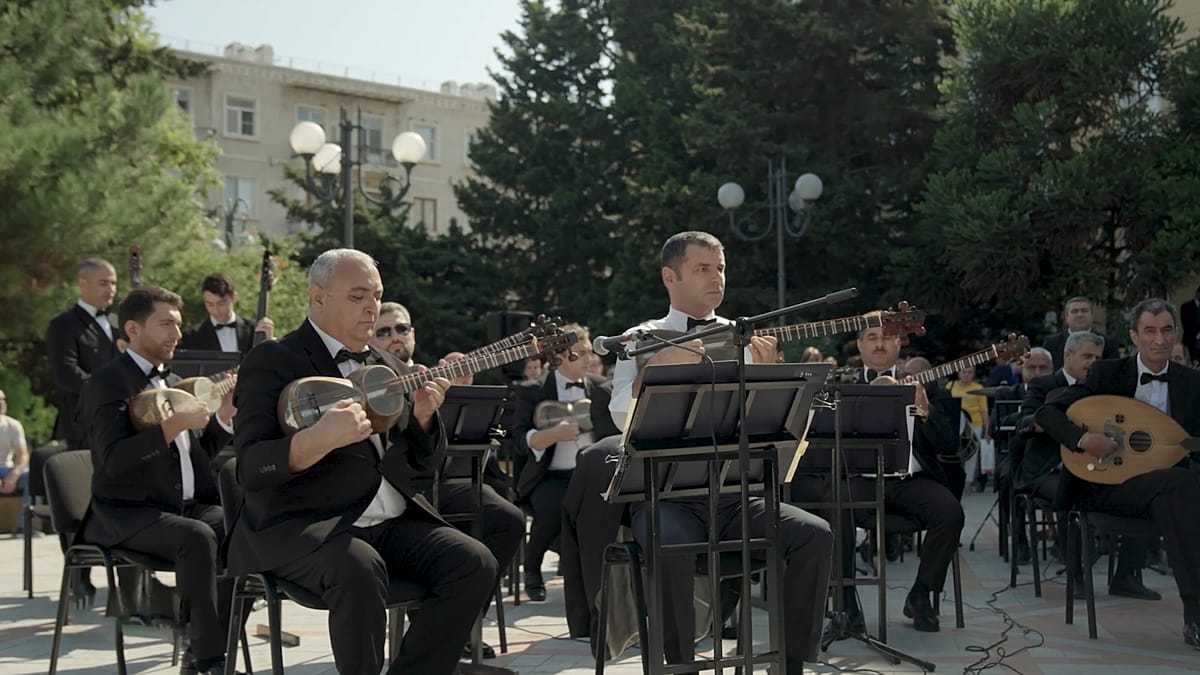
For over a century, Uzeyir Hajibeyli's music has served as a bridge between traditions often considered distinct. His vision, which blended the rich modal systems of Azerbaijani mugham with the structures of Western classical composition, continues to resonate. This year, the festival bearing his name—now in its 18th edition—has once again turned that legacy into a living, international conversation.
Held across multiple venues, the programme featured a wide array of concerts, exhibitions, and performances, all inspired by the musical connections of the Turkic world. Artists from Azerbaijan, Turkey, Kazakhstan, and beyond gathered to explore the shared roots and contemporary dialogues within this musical sphere. The festival also provided a platform for performers to reflect on Hajibeyli's unique synthesis, a style that broke down barriers and created a new, hybrid language.
A centenary of Turkological exchange
A key moment of this year's festival was a forum dedicated to the centenary of the Turkological Congress of 1926. That historic gathering, held in Baku, was a landmark attempt to standardize and modernize the Turkic languages, and its influence on cultural and intellectual life across the region remains profound. The forum brought together scholars and musicians to discuss the congress's enduring impact, linking linguistic unity with musical expression.
The festival's reach extends well beyond Azerbaijan's borders. Events and performances have been scheduled in several European cities, including Berlin, Paris, and Vienna, underscoring the continent-wide interest in Hajibeyli's work. This international dimension reflects a broader trend of cultural exchange, similar to how Montreux festival marks 80 years with Azerbaijani music showcase, highlighting the growing presence of Azerbaijani music on the global stage.
Hajibeyli's own journey was one of constant exploration. Born in 1885 in Shusha, he was a composer, conductor, and musicologist who sought to modernize Azerbaijani music without losing its soul. His operas, such as Leyli and Majnun, are considered the first in the Islamic world, and his symphonic works, like the Fantasia on the Themes of Mugham, are masterpieces of cross-cultural synthesis.
The festival's artistic director, speaking at the opening, emphasized the relevance of Hajibeyli's approach today. "In a world that often emphasizes division, his music reminds us of the power of dialogue," she said. "He didn't see a contradiction between tradition and innovation; he saw an opportunity."
This year's programme also included masterclasses and workshops for young musicians, ensuring that Hajibeyli's techniques and philosophies are passed on to the next generation. The educational component is a crucial part of the festival's mission, as it seeks to nurture new talent that can continue the tradition of musical fusion.
For those unable to attend in person, several concerts were streamed online, allowing a global audience to experience the festival's unique atmosphere. The digital outreach is part of a broader effort to make cultural events more accessible, a trend that has gained momentum across Europe in recent years.
The festival's closing concert, held in Baku's Heydar Aliyev Center, featured a symphony orchestra performing a selection of Hajibeyli's works alongside new compositions by contemporary Azerbaijani composers. The evening was a testament to the enduring vitality of his legacy, proving that his music remains a source of inspiration for artists today.
As the festival continues to expand, it serves as a reminder of the deep cultural ties that bind the Turkic world and Europe. It is a celebration not just of a composer, but of a vision—one that sees music as a universal language capable of transcending borders. For those interested in exploring more of the region's cultural offerings, the October 2026 travel guide offers a glimpse into autumn festivals across the continent.
In an era where cultural heritage is often at risk, the Uzeyir Hajibeyli International Festival stands as a powerful example of how art can preserve identity while embracing change. It is a legacy that continues to inspire, bringing together different traditions in a harmonious whole.