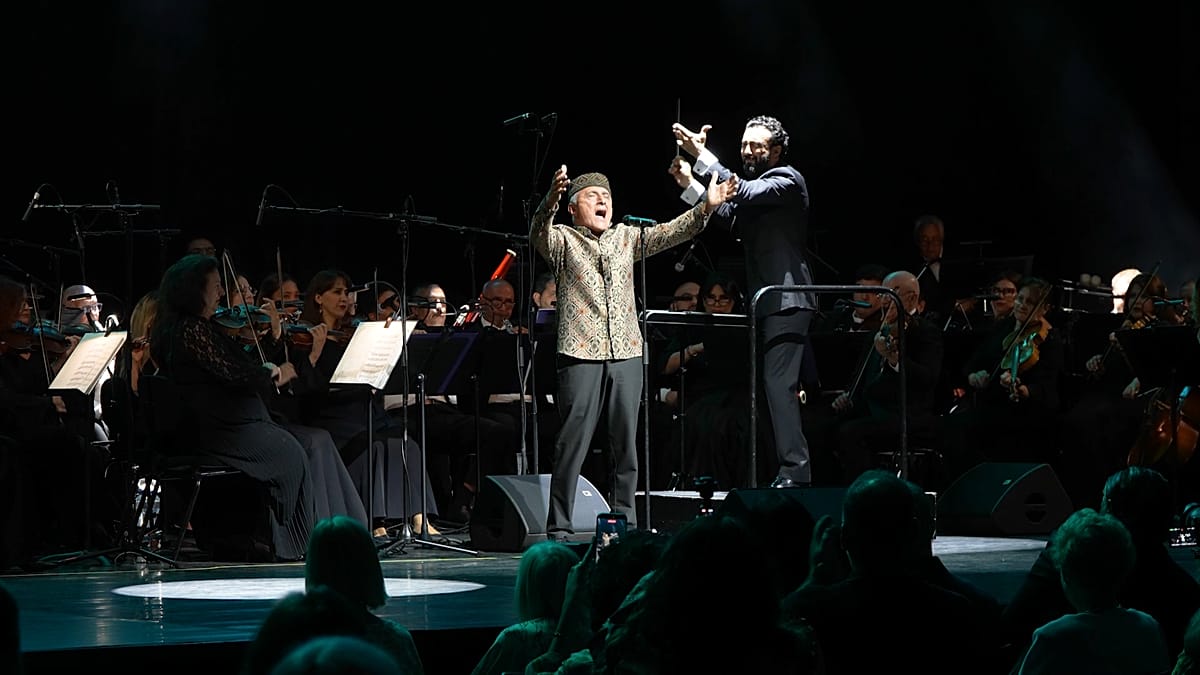
Montreux, the Swiss resort town synonymous with jazz and lakeside glamour, recently played host to a different kind of musical pilgrimage. The Septembre Musical Montreux-Vevey festival, now in its 80th year, dedicated a significant portion of its program to Azerbaijan, offering audiences a sweeping survey of the country's musical traditions—from centuries-old mugham to contemporary jazz and opera.
The Azerbaijani delegation, comprising around 200 artists led by the State Symphony Orchestra, delivered performances that spanned the full arc of the nation's musical history. Central to the program were works by Uzeyir Hajibeyli, widely regarded as the father of Azerbaijani classical music. His compositions, which blend Western classical forms with Eastern modal systems, provided a fitting anchor for an evening that sought to bridge traditions.
A musical bridge between East and West
Hajibeyli's legacy is particularly resonant in a festival context. Born in the late 19th century in Shusha, he was a pioneer in synthesizing European orchestral techniques with the melodic and rhythmic idioms of Azerbaijani folk and mugham. His opera Leyli and Majnun, first staged in 1908, is often cited as the first opera in the Islamic world—a testament to the cultural cross-pollination that defined his work.
The Montreux program, however, was not confined to classical repertoire. Mugham, the improvisational modal tradition that UNESCO has recognized as Intangible Cultural Heritage, was performed by specialists who have kept the art form alive across generations. Jazz, too, had its place, reflecting Azerbaijan's long-standing engagement with the genre, particularly through the Baku Jazz School, which emerged in the mid-20th century despite Soviet-era restrictions.
Traditional dance added a visual dimension to the performances, with colorful costumes and intricate footwork that drew on regional styles from the Caucasus and beyond. For many in the audience, it was a rare opportunity to experience the breadth of Azerbaijani culture in a single evening.
The choice of Montreux as a venue is significant. The festival, which has hosted some of the world's most celebrated orchestras and soloists since its founding in 1946, has long served as a cultural crossroads. By featuring Azerbaijan, the organizers underscored the country's role as a bridge between Europe and Asia—a theme that resonates in its music, which has absorbed influences from Persian, Turkish, and Russian traditions.
For the Azerbaijani performers, the event was more than a concert. It was an act of cultural diplomacy. In a region where heritage is often politicized, sharing music on an international stage carries weight. The country has recently made efforts to protect its Christian heritage sites, and its musical traditions are similarly being positioned as a point of pride and connection.
The festival's anniversary also provided a moment to reflect on the broader cultural ties between Switzerland and Azerbaijan. While the two countries are geographically distant, they share a commitment to cultural exchange. The Swiss city of Vevey, which co-hosts the festival, has a history of welcoming international artists, and the Azerbaijani program was met with enthusiasm from local audiences.
Beyond the concert hall, the event highlighted the growing soft-power ambitions of Baku. Azerbaijan has invested heavily in cultural infrastructure, from the Heydar Aliyev Center in Baku to the restoration of historical sites in Shusha. The country's recent investments in climate-smart farming and its hosting of COP29 signal a broader strategy to engage with global audiences on multiple fronts.
For those who attended, the evening was a reminder that music can transcend political boundaries. As the final notes of a mugham improvisation faded into the Swiss night, the applause was not just for the performers but for the idea that cultural heritage, when shared, becomes a universal language.
The Septembre Musical Montreux-Vevey festival continues through the autumn, with a diverse lineup that includes orchestras from across Europe. But for many, the Azerbaijani night will stand out as a highlight—a testament to the enduring power of music to connect distant worlds.