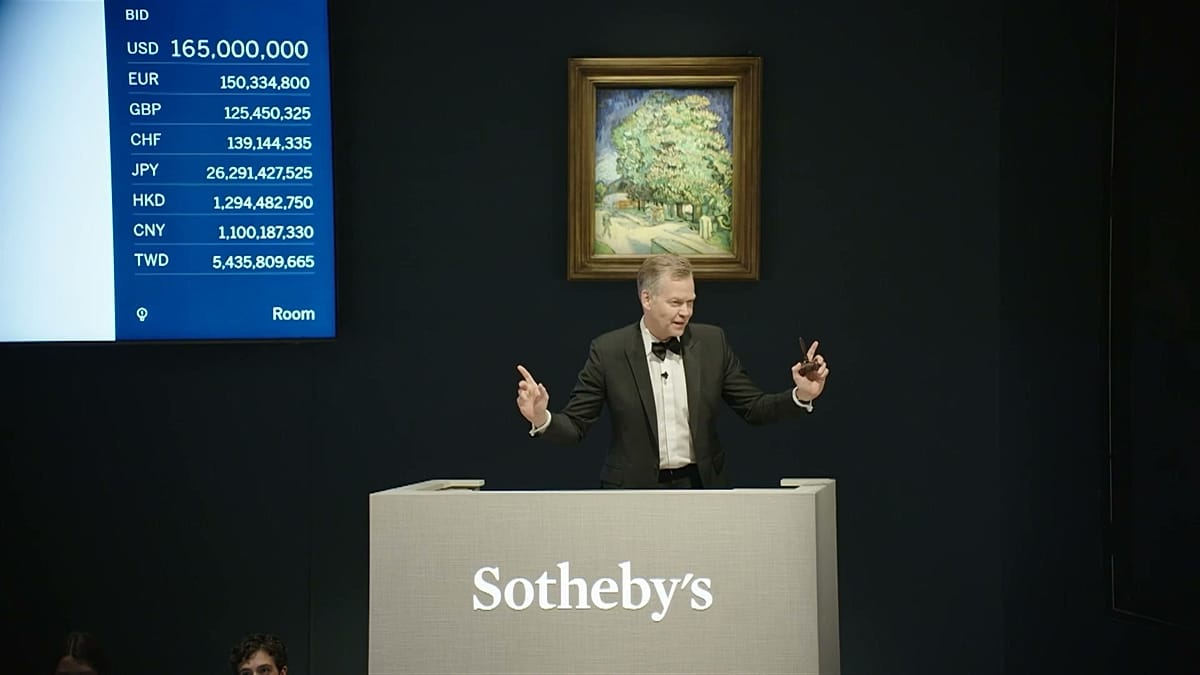
Vincent van Gogh's Chestnut Trees in Bloom (Châtaigniers en fleurs) has become the most expensive painting by the Dutch artist ever sold at auction, fetching €173 million at Sotheby's in New York. The price also places it among the top five most valuable artworks ever auctioned worldwide.
The oil on canvas, painted in May 1890 in the French village of Auvers-sur-Oise, dates from the final, intensely productive weeks of van Gogh's life. It was executed just two months before his death, a period that also produced masterpieces such as The Church at Auvers and Wheatfield with Crows.
A sale that settles a painful history
The auction was not merely a commercial event. Sotheby's confirmed that the sale was arranged to resolve a long-running legal and moral dispute between the Blaquier-Arrieta family, who had owned the painting since 1975, and the heirs of Samuel Fischer, a prominent German publisher who acquired the work in Paris in 1909.
Fischer, who founded the influential publishing house S. Fischer Verlag, and his wife Hedwig were forced to sell the painting in 1936, under the Nazi regime. Their descendants had argued that the sale was made under duress, as the family had suffered severe financial losses and persecution. They opposed the auction, demanding that Sotheby's prove the painting had been sold at fair market value and that the Fischer family would have parted with it regardless of the political context.
Gunnar Schnabel, the Berlin-based lawyer representing the heirs, had publicly called on the auction house to provide such evidence. In a statement issued on Tuesday, Sotheby's said that "an agreement has been reached between the Blaquier-Arrieta family and all of the legal descendants of Hedwig and Samuel Fischer regarding the sale."
The resolution avoids a potentially damaging legal battle and sets a precedent for how auction houses handle works with contested provenance from the Nazi era. It also highlights the ongoing efforts across Europe to address the legacy of art looting and forced sales during the Third Reich.
The painting's journey reflects the broader history of European art in the 20th century. After leaving the Fischer family, it passed through several hands before being acquired by the Blaquier-Arrieta family in 1975. The family, which has deep roots in Argentina and France, had owned it for nearly half a century.
The record price underscores the enduring appeal of van Gogh's work, even as the art market faces broader uncertainties. It also comes at a time when record-breaking financial events are capturing global attention, though the art world's milestones are often more reflective of cultural heritage than market speculation.
For European observers, the sale is a reminder of the continent's complex relationship with its artistic treasures. Many works that once hung in European collections were displaced by war, persecution, and exile. The resolution of this particular dispute offers a measure of justice, even if it comes decades later.
As the art world digests this historic auction, it also looks ahead to other restitution cases still pending across the continent. The Fischer family's long campaign, and its eventual success, may encourage other heirs to pursue similar claims.
The painting itself, a vibrant depiction of blossoming chestnut trees, remains a testament to van Gogh's genius. Its sale, while record-breaking, also carries the weight of history—a reminder that every masterpiece has a story, and sometimes that story is one of loss and recovery.