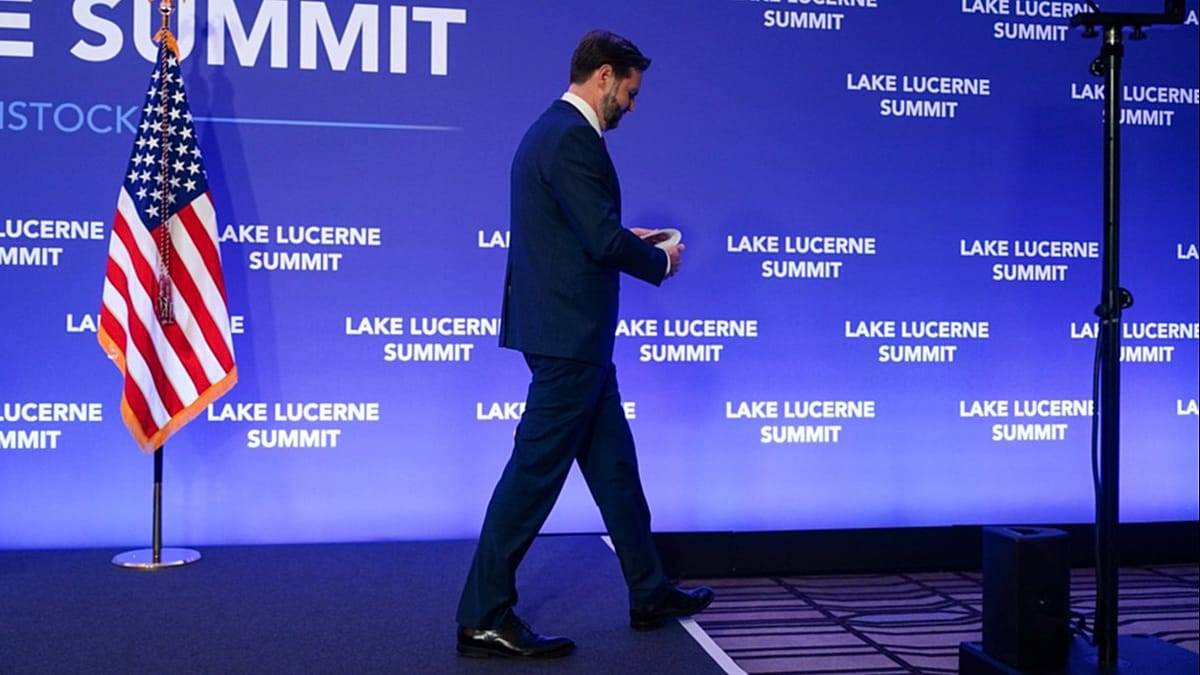
US Vice President JD Vance said his extended meetings with top Iranian officials in Switzerland have created a “good foundation for a successful final deal” as both sides seek a permanent end to the conflict that began with US and Israeli strikes in late February. The talks, held at the Bürgenstock Resort near Lucerne, mark a significant step in diplomatic efforts that have seen lower-level officials remain in Switzerland for what are being called “technical talks” after Vance and his Iranian counterparts departed.
Vance and US officials reported progress on several fronts, including the establishment of mechanisms to keep the Strait of Hormuz open—a vital waterway for global energy shipments—and to address fighting between Israel and Iranian-backed Hezbollah militants in southern Lebanon, where a ceasefire appears to be holding. The interim agreement, signed last week by US President Donald Trump and Iranian President Masoud Pezeshkian, sets a 60-day period for negotiations on key issues, including the future of Tehran’s nuclear programme amid concerns that Tehran may seek military applications, a claim Iran denies.
Technical Talks Continue in Switzerland
As Vance left Switzerland, technical teams from both sides continued their work. Trump, speaking from the Oval Office, emphasized the importance of respect in the negotiations. “As long as they respect us, I don’t want to use the word fear because that’s an inappropriate word, but as long as they respect us, we’re not going to have any trouble,” he said, while also touting efforts to reopen the strait as an “oil gusher.”
Iran effectively closed the Strait of Hormuz after the US and Israel began their attacks on 28 February, causing fuel prices to skyrocket globally. The interim deal aims to reopen the strategic channel, and over the weekend dozens of ships passed through it, though the main route remains mined and closed. Iran’s lead negotiator, parliamentary speaker Mohammad Bagher Ghalibaf, insisted on Monday that the strait will be managed by Tehran, but in accordance with international law.
“Hopefully we can activate the strait again, in terms of passage, and bring prosperity back to regional and global economy,” Ghalibaf told Iranian state media on his flight back from Switzerland. He and Foreign Minister Abbas Araghchi later arrived in Oman, where they met with Foreign Minister Badr al-Busaidi to discuss peace efforts and ensure safe navigation in the strait.
Economic and Market Implications
The US Treasury issued a 60-day license on Monday waiving sanctions on Iranian oil as part of the interim agreement. Notably, the license allows Iranian oil to be imported into the US, which has not imported significant amounts since the 1990s. Tanker traffic through the Strait of Hormuz has picked up: according to data and analytics firm Kpler, there were 71 confirmed transits over the weekend, with a peak of 35 crossings on Saturday. Before the war, 100 to 130 vessels passed through daily.
In the markets, Brent crude oil fell 3.2% to $77.52 (€67.85) per barrel, closer to its pre-war price of roughly $70 (€61.27). Benchmark US crude oil fell 2.6% to $73.86 (€64.65) per barrel—a dramatic drop from the peak of over $120 (€105) per barrel during the conflict. The developments are closely watched in Europe, where energy prices have been a major concern. For context, the EU has been navigating its own energy challenges, as seen in Von der Leyen urging the EU to prepare a mandate for Russia talks on Ukraine, highlighting the continent's broader geopolitical balancing act.
The talks in Switzerland, which follow earlier rounds of US-Iran negotiations in Lucerne, represent a fragile but potentially pivotal moment for regional stability and global energy markets. European observers, including officials in Brussels and national capitals, are monitoring the process closely, given its implications for energy security and Middle East stability.