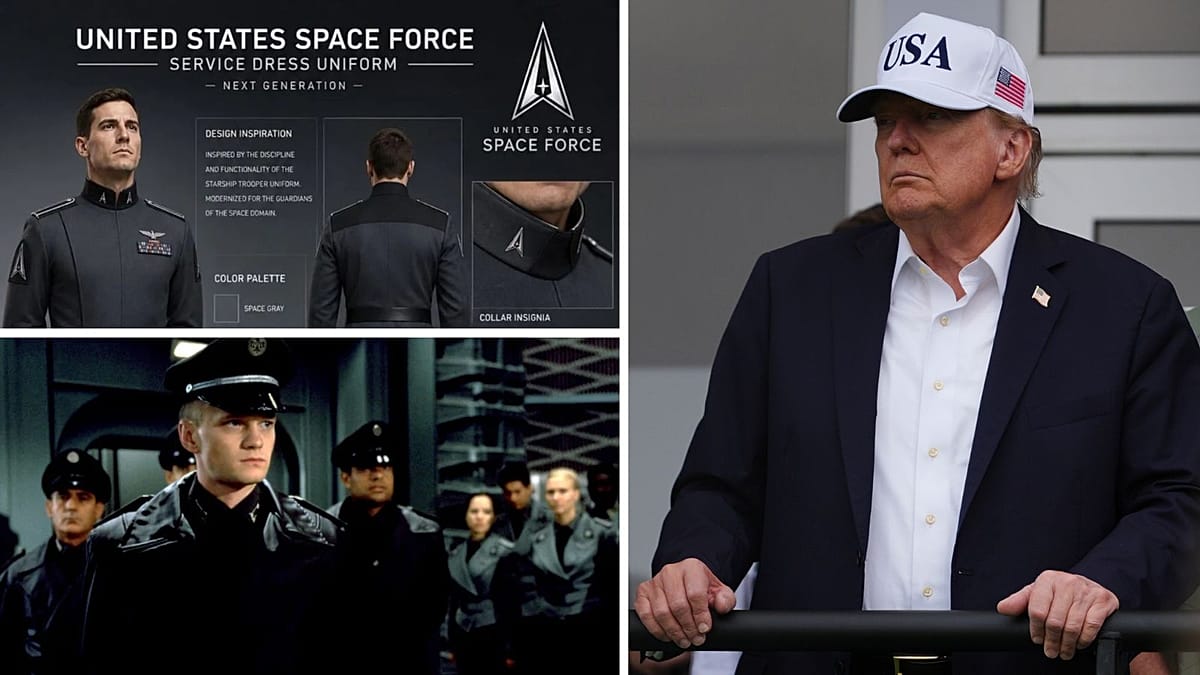
When Donald Trump posted AI-generated images on Truth Social in early September, one proposal stood out: a new dress uniform for the US Space Force, explicitly "inspired by the discipline and functionality of the Starship Trooper Uniform." The reference was to the 1997 film, but the director behind that movie has now made clear that the inspiration is more troubling than the president may realize.
Paul Verhoeven, the Dutch filmmaker who directed Starship Troopers, told The Hollywood Reporter that the Trump administration should be aware that the film's heroes are "fascists without knowing that they're fascists." He added that the movie's visual style was deliberately drawn from the work of Leni Riefenstahl, the German director whose films glorified the Nazi regime in the 1930s.
"I don't know if this president is aware that the movie says these [characters] are fascists without knowing that they're fascists. That's the point," Verhoeven said. The director has long explained that his film was a dark satire of militarism and authoritarianism, turning Robert A. Heinlein's 1959 novel—which Verhoeven read as pro-military and nationalistic—into a cautionary tale about the seduction of fascism.
A cinematic warning misread
Starship Troopers follows a group of young recruits who enlist in an intergalactic war against alien "bugs." But beneath the action, the film critiques misplaced patriotism, colonialism, and xenophobia. Its uniforms, propaganda broadcasts, and even the design of its officer insignia echo Nazi iconography. Verhoeven has said he used these elements to expose the dangers of authoritarian rule.
The Trump administration's decision to cite the film as a design reference has sparked criticism from fans and cultural commentators, who note that the movie's satire is often misunderstood. Verhoeven himself acknowledged that the film has been challenging for audiences "because its heroes are, without knowing, Nazis."
This is not the first time Trump has borrowed from pop culture in ways that backfired. He has previously invoked Superman, Hannibal Lecter, and the Jedi, often drawing rebukes from creators and fans. The Space Force uniform proposal, however, carries a more serious weight, given the military context and the historical echoes.
The US Space Force, established in 2019 during Trump's first term, has been a pet project of the former president. The new uniform design was posted alongside other AI-generated images, including one renaming New Mexico as "New America" and another declaring the Moon US territory. The posts were widely mocked, but Verhoeven's comments add a layer of concern.
For European observers, the episode is a reminder of how easily cultural references can be stripped of their meaning. Verhoeven, who was born in Amsterdam and later directed films like RoboCop and Basic Instinct, has often used genre cinema to explore political themes. His warning about the Space Force uniforms is a pointed critique of those who miss the point.
As the debate continues, Verhoeven's words serve as a caution: when leaders co-opt art without understanding it, they may inadvertently embrace the very ideologies the art was meant to condemn. The director's message is clear—look closer before you salute.