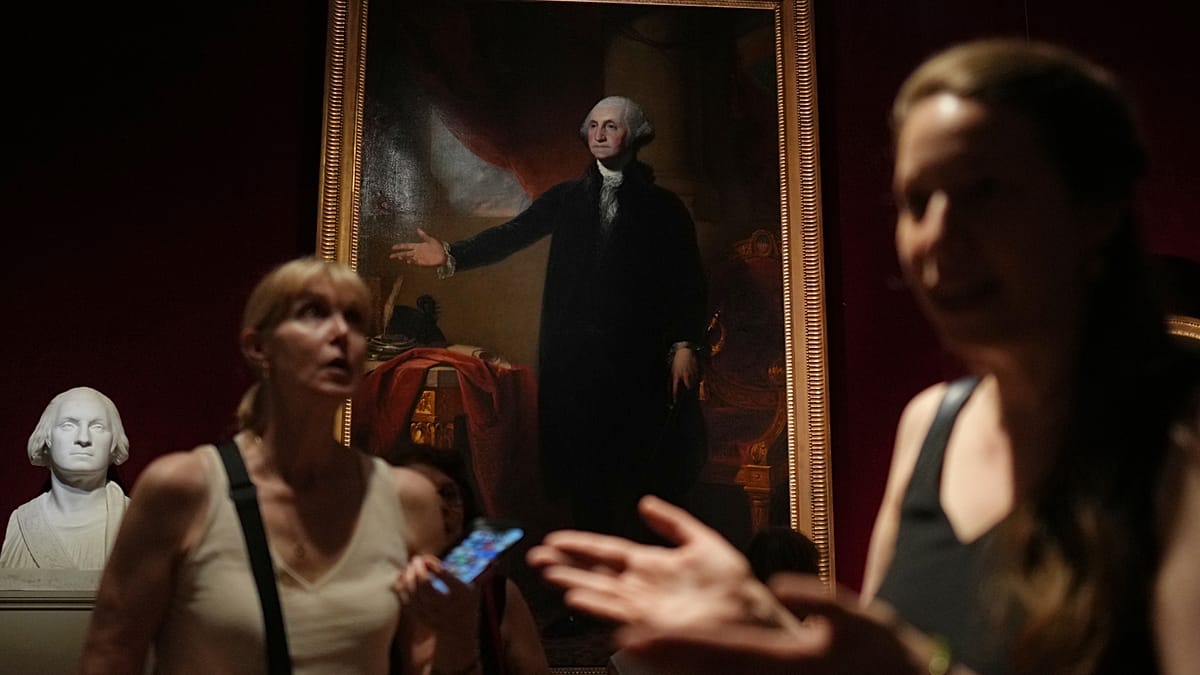
On 4 July, the Palace of Versailles will open a dedicated gallery commemorating the 250th anniversary of the United States' independence. Housed in the apartment where King Louis XVI received Benjamin Franklin and formally recognised American sovereignty in 1778, the space underscores the enduring diplomatic and cultural ties between Paris and Washington.
Versailles was also the site where, in 1783, one of the treaties ending the War of Independence was signed, securing international recognition for the fledgling republic. The new exhibition draws on the château's own collections, bringing together paintings, sculptures, and portraits of key figures such as Franklin, the Marquis de La Fayette, and George Washington.
A Two-Way History
Clara Terreaux, a curator at the palace, explained that the idea of celebrating the American Revolution at Versailles dates back to Louis XVI himself. "From the time of Louis XVI there was already a wish to underline the link between France and those events, not least through the commission of the great candelabrum by Louis XVI, which stood in his private apartment and celebrated the American War of Independence," she said.
Laurent Salomé, director of the Palace of Versailles museum, noted that the current gallery is a revival of earlier efforts. "This desire to celebrate goes back to the aftermath of the First World War. The museum director at that time wanted to acknowledge the role played by the Americans in helping Europe during the conflict," he said. "So, just after 1918, we created galleries devoted to the American Revolution to pay tribute to America’s presence in Europe. They also tell the story of how France supported the insurgents in the 18th century. It is therefore a two-way history. These galleries have existed in various forms and then disappeared. Today we are recreating them to coincide with the 250th anniversary."
The gallery's opening comes just days after French President Emmanuel Macron hosted his American counterpart, Donald Trump, at Versailles for the first time. Trump was reportedly impressed, remarking, "I don’t think there is anything better in the world." The visit also saw Trump sign an interim Iran deal at the palace, a move aimed at de-escalating conflict in the Middle East, as covered in our earlier report.
Versailles has long served as a tool of French soft power, from the Hall of Mirrors to the Sun King's gardens. Salomé reflected on its diplomatic role: "It creates a different atmosphere for discussion. And I think that was already Louis XIV’s idea from the outset. This place was designed to prompt people to think differently. Of course it is a diplomatic tool, so it has to be dazzling, impressive and show that France is a great country. But it is not only that: it is also about beauty and the harmony of the world."
The new gallery joins other recent cultural initiatives across Europe, such as the Musée d'Orsay's exhibition on Nazi-looted art, which similarly grapples with historical memory. For visitors to Versailles, the gallery offers a fresh perspective on the intertwined histories of France and the United States, set against the backdrop of one of Europe's most iconic landmarks.