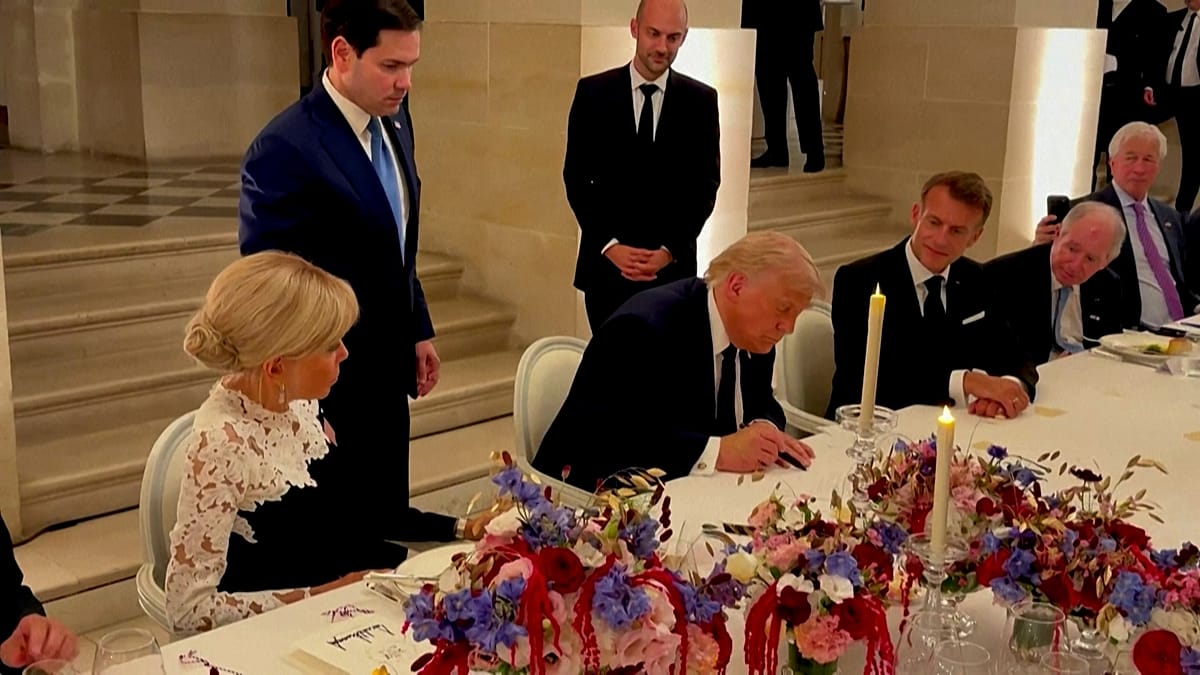
US President Donald Trump signed a memorandum of understanding with Iran at the Palace of Versailles on 18 June, marking a significant diplomatic step aimed at easing the Middle East conflict that has unsettled the region since February. The ceremony, held in the Hall of Mirrors, was witnessed by several European leaders who had gathered for the G7 summit in Évian earlier that week.
The agreement, an interim deal to end hostilities and reopen the Strait of Hormuz, comes after months of escalating tensions that have threatened global oil supplies and drawn in European navies to protect shipping lanes. Trump described the accord as a "historic breakthrough" that would bring stability to the region.
European Reactions and Skepticism
European reactions have been mixed. French President Emmanuel Macron, who hosted the signing at the historic château, praised the diplomatic effort but stressed that verification mechanisms would be essential. German Chancellor Friedrich Merz, who had earlier gifted Trump a personalized football jersey at the G7 summit, expressed cautious optimism while noting that Europe would need to see concrete steps from Tehran.
Italian Prime Minister Giorgia Meloni, who recently patched up a rift with Trump at the G7 in Évian, welcomed the deal as a potential turning point. However, she also emphasized that Rome would continue to coordinate with EU partners on sanctions and security measures.
Not all European voices were convinced. A former US general, speaking to European Pulse, warned that only Trump believes the Iran deal will hold, given the rising risk of conflict between Israel and Hezbollah. The general pointed to Iran's history of proxy warfare and its support for militant groups across the Middle East as reasons for skepticism.
Implications for European Security and Energy
The deal's immediate impact on European energy security is a key concern. The reopening of the Strait of Hormuz, a chokepoint for oil tankers, could lower global crude prices and ease inflationary pressures that have weighed on European economies. However, analysts caution that the agreement is only interim and that full normalization of trade with Iran would require lifting US sanctions, which remain in place for now.
European diplomats in Brussels have begun internal discussions on how to align EU policy with the new US-Iran framework. Some member states, particularly those with strong commercial ties to the Gulf, are pushing for a swift endorsement, while others, led by France and Germany, insist on rigorous monitoring of Iran's nuclear activities and its ballistic missile program.
The signing at Versailles, a symbol of French grandeur and diplomatic history, underscored the European role in facilitating the talks. Yet the venue also highlighted the continent's dependence on US leadership in Middle East security—a reality that many in Brussels and national capitals find uncomfortable.
What Comes Next
Implementation of the memorandum will unfold over the coming weeks, with joint US-Iran committees expected to meet in Vienna to hash out technical details. European observers will be invited to participate, but their influence may be limited. The deal's long-term viability remains uncertain, especially given the deep mistrust between Washington and Tehran.
For now, European leaders are breathing a cautious sigh of relief. The alternative—a wider war in the Middle East that could trigger refugee flows and disrupt energy markets—would have been far worse. But as one EU diplomat put it, "We've seen this movie before. The question is whether this time the ending will be different."