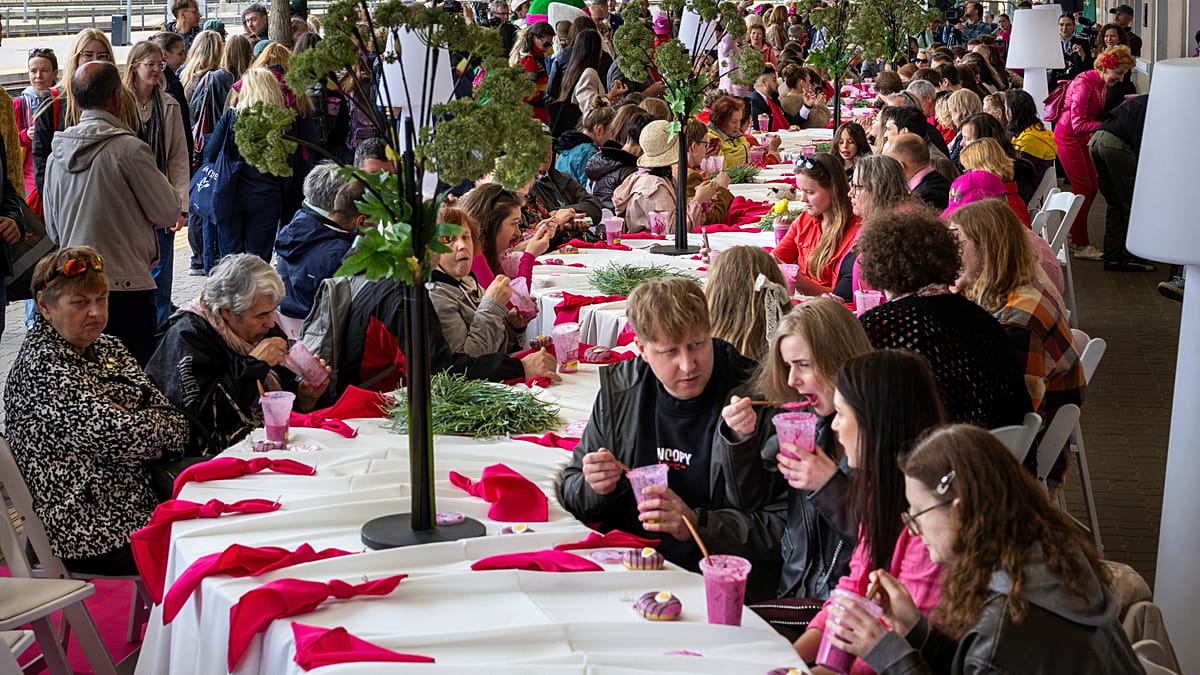
Vilnius is awash in pink this weekend as the Lithuanian capital hosts its annual Pink Soup Festival, a three-day celebration dedicated to the country's iconic cold beet soup. Organizers expect more than 100,000 attendees to participate in the festivities, which blend culinary tradition with playful competition.
The festival, centered around the dish known locally as šaltibarščiai, features a packed program of events including soup-themed races, elaborate costumes, foam slides, and large communal lunches where thousands gather to share bowls of the vibrant pink soup. The event has grown significantly since its inception, drawing both locals and international visitors to the city's streets and parks.
A Culinary Symbol of Lithuanian Summer
Šaltibarščiai, a cold beetroot soup made with kefir, cucumbers, dill, and often served with boiled potatoes, is a staple of Lithuanian summer cuisine. Its striking pink color comes from the beets, and the festival uses this visual appeal to create a festive atmosphere. Participants are encouraged to wear pink clothing and accessories, turning the city into a sea of the hue.
The festival's popularity reflects a broader trend in Europe of celebrating regional food traditions through large-scale public events. Similar festivals, such as the Copenhagen Light Festival, draw crowds by combining cultural heritage with interactive experiences. In Lithuania, the Pink Soup Festival has become a key date on the summer calendar, boosting local tourism and showcasing the country's culinary identity.
Beyond the food, the festival includes a range of activities designed for all ages. A highlight is the "Pink Run," where participants race through the city center while being sprayed with pink foam. Costume contests reward the most creative pink outfits, and live music stages provide entertainment throughout the weekend.
The communal lunches are particularly symbolic, as they emphasize sharing and community. Long tables are set up in public squares, and volunteers serve thousands of portions of šaltibarščiai, often accompanied by cold beer or kvass. This aspect of the festival underscores the social role of food in Lithuanian culture, where meals are often a collective experience.
Vilnius has invested in infrastructure to accommodate the large crowds, including additional public transport services and temporary sanitation facilities. The city's authorities have also coordinated with emergency services to ensure safety, a consideration that has gained urgency following recent events such as Lithuania's shelter shortage exposed after a drone alert lockout.
The festival also provides an economic boost to local businesses. Restaurants and cafes report increased sales, and hotels in Vilnius are often fully booked during the event. Vendors sell pink-themed merchandise, from T-shirts to soup bowls, and food stalls offer variations of šaltibarščiai, including vegan and gluten-free options.
For many attendees, the festival is a celebration of national pride. Lithuania, a Baltic state of 2.8 million people, has a strong culinary tradition that is increasingly gaining international recognition. The Pink Soup Festival serves as a platform to introduce visitors to Lithuanian culture in a fun and accessible way.
As the festival continues through the weekend, organizers are already planning for next year, aiming to expand the program and attract even more participants. For now, Vilnius remains firmly in the pink, a testament to the enduring appeal of a simple soup turned into a major cultural event.