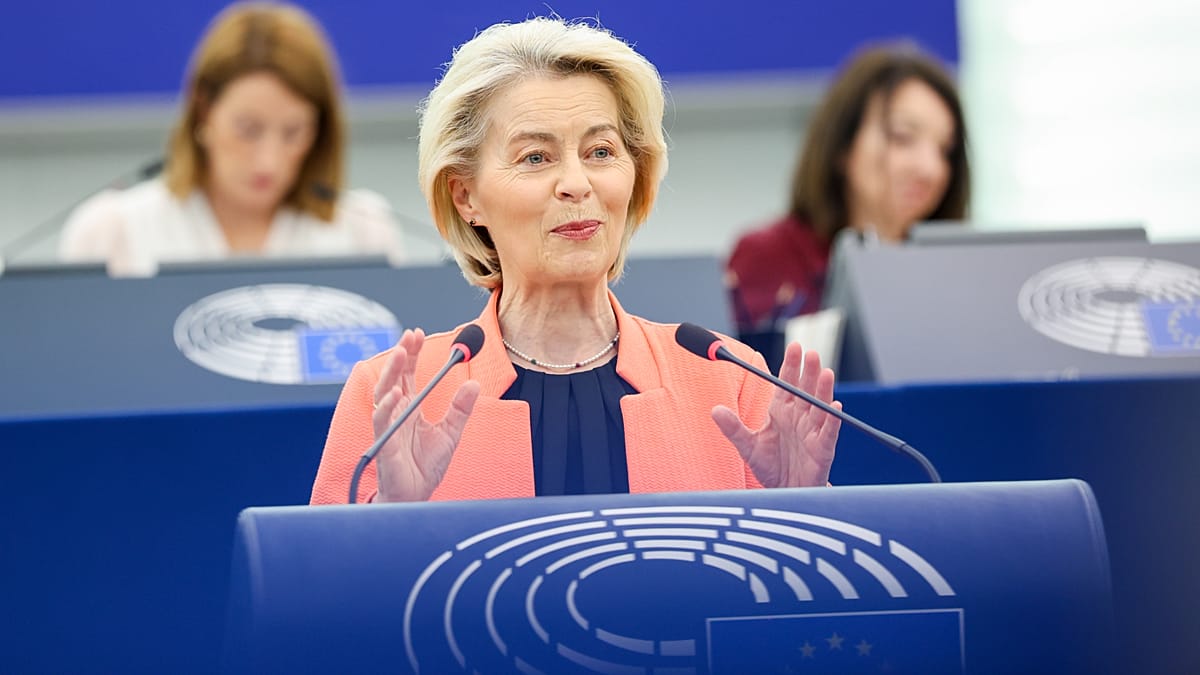
European Commission President Ursula von der Leyen addressed the European Parliament in Strasbourg on Wednesday, urging member states to finally complete the single market by dismantling persistent obstacles that hinder cross-border business and innovation. Speaking to MEPs in plenary session, she framed the issue as central to the bloc's ability to compete in a tense geopolitical landscape.
"We must finish what we started. We must remove the barriers that still persist in our internal market," von der Leyen said. "We must make it much easier to scale up across Europe. This is the basic promise of the single market and it must be fulfilled."
The Commission president singled out the practice of gold plating — where national governments add unnecessary complexity to EU directives — as a key drag on business growth. She argued that such over-implementation discourages investment and stifles small and medium-sized enterprises from expanding beyond their home markets.
Digital and Green Priorities
Von der Leyen pledged to make the single market "digital by design," pointing to EU initiatives in semiconductors, cloud infrastructure, and artificial intelligence development. These efforts aim to reduce dependence on non-European technology providers and foster a homegrown digital ecosystem.
On climate, she stressed that achieving the EU's environmental and circular economy targets requires a market that rewards clean innovation. Removing barriers to trade in low-carbon goods and services, she argued, is essential for the bloc's green transition to succeed.
The Commission president also touched on supply chain resilience, noting that the EU is actively pursuing new trade agreements. A deal with Mexico is expected to be signed later this week, part of a broader strategy to diversify sources and reduce vulnerabilities exposed by recent global disruptions.
Von der Leyen acknowledged that the benefits of the single market must reach every region and every citizen, warning against complacency. "Success still requires constant political will," she said, echoing concerns that uneven implementation could widen disparities between wealthier and poorer member states.
The speech comes amid broader debates about the EU's economic future, including discussions on deepening capital markets union and addressing regulatory fragmentation. Critics argue that without decisive action, the bloc risks falling behind the United States and China in key sectors like technology and clean energy.
For further context on EU trade policy, see our coverage of the EU Parliament's approval of a US trade deal amid lingering tariff threats. Meanwhile, the challenge of antimicrobial resistance highlights how a broken market threatens Europe's health and economy.