At least 14 people were killed and 11 others injured when a temporary weapons depot exploded near the town of Sarmada in northwestern Syria's Idlib province, according to the local health department. The preliminary toll was confirmed by Syria's Health Ministry, which said the site was used for collecting weapons and war remnants.
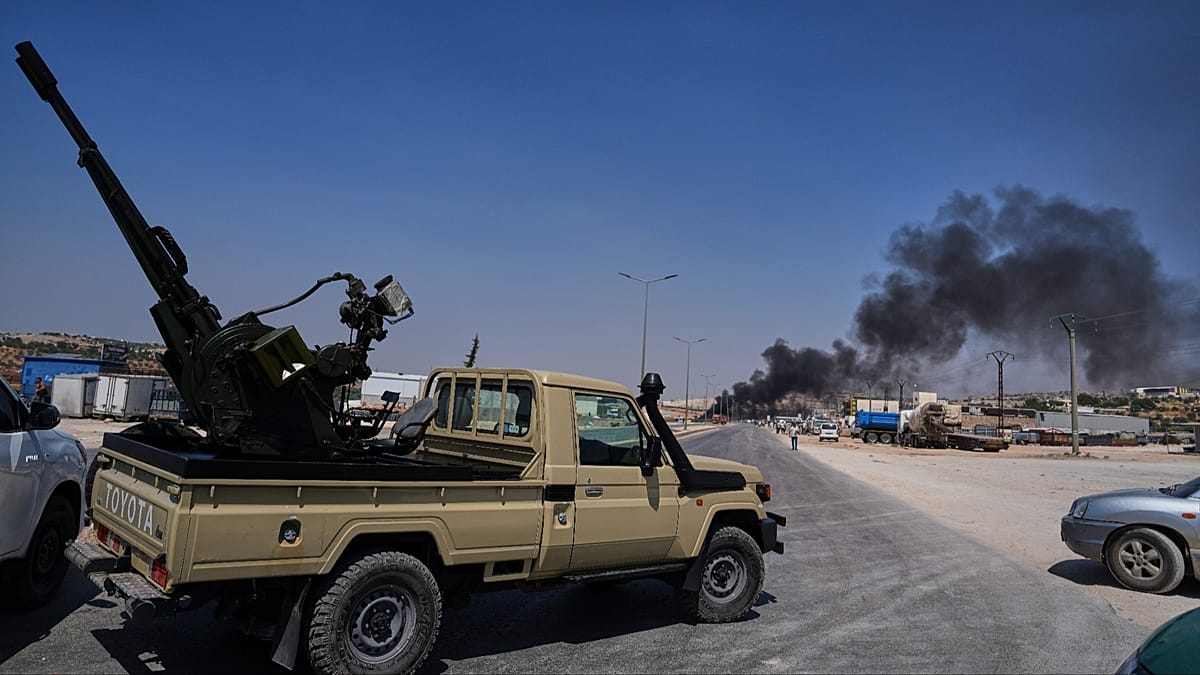
The blast occurred in the Burj al-Nimra area, about 45 kilometres from Idlib city, and sent a large plume of black smoke into the sky. Video footage circulating on social media showed secondary explosions, and Civil Defence and Syrian Red Crescent teams were still searching for survivors trapped under rubble. Security forces cordoned off roads leading to the site.
The depot stored munitions left over from the civil war that ravaged Syria from 2011 until 2024, authorities said. The cause of the explosion was not immediately clear, but initial assessments pointed to the munitions themselves, according to Walid Aslan, head of emergency operations for Idlib's disaster management directorate.
Ahmad Faour, a mechanic whose garage is near the warehouse, told reporters that he and others heard a small explosion first and ran before the larger blast. "A weapons warehouse should not be placed in a public area, in a village with people and shops," he said, surveying the damaged cars in his workshop. "Those poor people who died were not guilty of anything."
A recurring threat
Wednesday's incident is the second deadly blast in Idlib this month. Earlier, a car carrying ammunition exploded in the city of Binnish, killing five people. A government source said the vehicle belonged to a weapons trader, though authorities did not announce a cause.
Idlib, a former front-line province, saw multiple armed factions store weapons throughout the conflict, and explosions involving munitions-laden vehicles or arms depots have occurred sporadically. In November 2025, an ammunition depot blast in the Kafr Takharim area killed five workers and wounded nine. In August 2025, an explosion on the outskirts of Idlib city killed four and injured five.
Humanitarian organisations renewed calls on Wednesday for intensified international and local efforts to clear mines and unexploded ordnance from the province, which they said continues to claim Syrian lives on a recurring basis. The UK-based mine-clearance charity HALO Trust estimated that unexploded ordnance kills or wounds one person in Syria every six hours on average this year. By August, some 700 casualties from explosive accidents had been recorded, one-third of them fatal and one-third involving children, according to Simon Jackson, HALO Trust's Syria programme manager.
The scale of contamination is immense. Syria is ranked among the world's most heavily affected countries for unexploded ordnance, a legacy of more than a decade of fighting. While the front lines have largely quietened, the remnants of war continue to exact a heavy toll on civilians, many of whom have returned to homes and fields littered with dangerous debris.
For European readers, the situation in Idlib is a stark reminder of the long-term consequences of conflict, as similar challenges face other war-torn regions. The international community, including European nations, has funded demining efforts in Syria, but the need remains far greater than the resources available.