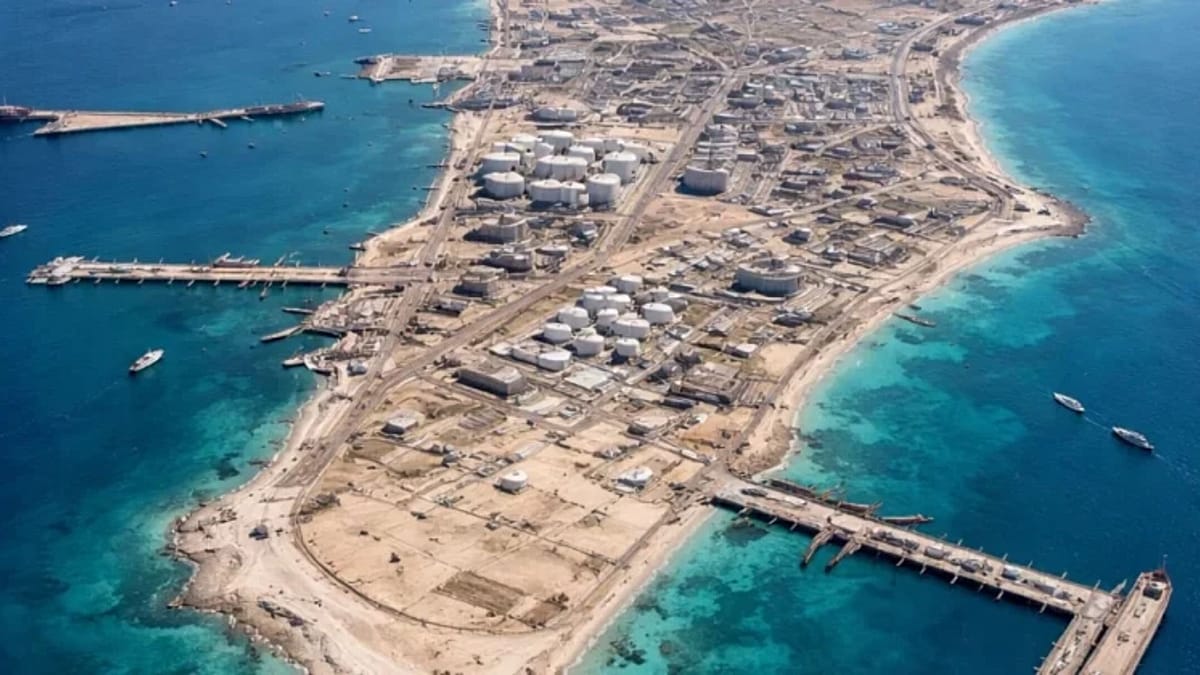
US President Donald Trump has threatened to seize Iran's Kharg Island, a small coral outcrop in the Persian Gulf that handles roughly 90% of the country's crude oil exports. Writing on Truth Social, Trump declared that "at some point in the not too distant future, we will be taking Kharg Island, and other oil infrastructure points, and assume total control of their Oil and Gas Markets." The statement, made amid ongoing US-Iran strikes, raises serious questions about the feasibility and consequences of such an operation—particularly for European energy markets and diplomatic stability.
The Strategic Importance of Kharg Island
Located about 25 kilometres off Iran's coast, Kharg Island is not merely a loading point; it houses some of Iran's largest oil storage tanks, the endpoints of export pipelines, deep-water terminals, and military installations including air defence systems. Losing control of Kharg would not halt Iran's oil exports entirely, but it would severely cripple them, intensifying economic pressure on Tehran. For Europe, which has sought to diversify energy sources since the war in Ukraine, any disruption to Persian Gulf oil flows could reignite inflation and supply concerns, particularly for southern member states like Italy and Greece that rely on Iranian crude via intermediaries.
A US military operation to take the island would be technically feasible but risky. The Pentagon would need to neutralise Kharg's air defences, land forces, and establish a secure perimeter. Holding the island, however, would be far more challenging. Iran could retaliate with ballistic missiles, drones, cruise missiles, attack boats, combat divers, and special forces—all operating from a coastline just 25 kilometres away. This proximity means US forces would face near-constant harassment, and any escalation could draw in regional actors, including Russia and China, both of which have economic ties to Iran.
A Dilemma for Tehran
Iran faces a difficult choice. If it attempts to dislodge US forces with missile or drone strikes, it risks damaging its own oil infrastructure—tanks, pipelines, and loading equipment—potentially rendering the island inoperable for months or years. Alternatively, Tehran could target US supply lines, warships, tanker traffic, and American bases in the region, as it has done in previous confrontations. This approach would aim to raise the cost of occupation for Washington, but it could also trigger a broader conflict that neither side wants.
There is a more extreme scenario: if Iran's leadership concludes that Kharg is lost for good, or that the American presence threatens the regime's survival, it might deliberately sabotage the island. Sacrificing Kharg to inflict disproportionate losses on US forces or to exert political pressure on the Trump administration would be a drastic step, but one that cannot be ruled out. Such an outcome would send global oil prices soaring, hitting European consumers and businesses hard.
European Implications
For European capitals, the prospect of a US seizure of Kharg Island is deeply unsettling. The EU has maintained a delicate balancing act, seeking to preserve the 2015 nuclear deal (JCPOA) while imposing sanctions on Iran over human rights and missile programmes. A US occupation of Kharg would likely collapse any remaining diplomatic channels, as seen in the stalled talks that preceded the current strikes. Brussels would be forced to choose between backing Washington's unilateral action or pursuing an independent European stance—a split that could weaken transatlantic unity.
Moreover, European energy security would be directly affected. While the EU has reduced its reliance on Iranian oil since 2018, global oil markets are interconnected. A spike in crude prices would increase costs for European refiners and consumers, potentially derailing the continent's post-pandemic economic recovery. Countries like France and Germany, which have advocated for diplomatic solutions, would face pressure to mediate or risk being drawn into a conflict they cannot control.
The situation also has implications for European naval operations in the Persian Gulf. European navies, including those of the UK, France, and Italy, patrol the region as part of international maritime security missions. A US-Iran confrontation around Kharg could force these forces to choose sides or withdraw, complicating their strategic posture. The European Union's foreign policy chief has previously called for de-escalation, but with Trump's threats becoming more explicit, the room for diplomacy is shrinking.
In the broader context, the Kharg Island gambit fits a pattern of US unilateralism that has often frustrated European allies. From the withdrawal from the JCPOA to the imposition of secondary sanctions, Washington's approach has frequently bypassed European interests. If Trump follows through on his threat, Europe may need to accelerate its own energy diversification, including investments in renewable sources and alternative supply routes from Africa and the Americas. The Iran Claims US Deal Near as Trump Accuses Tehran of Bad Faith article highlights how fragile these diplomatic efforts have become.
Ultimately, the seizure of Kharg Island would be a high-stakes gamble with unpredictable consequences. For Iran, it could mean economic collapse or a desperate military response. For the US, it would require a long-term occupation with no clear exit strategy. For Europe, it would test the limits of its ability to shape events in its neighbourhood. As the situation evolves, European leaders must prepare for a scenario where the Persian Gulf becomes a flashpoint that directly affects their energy security and geopolitical stability.