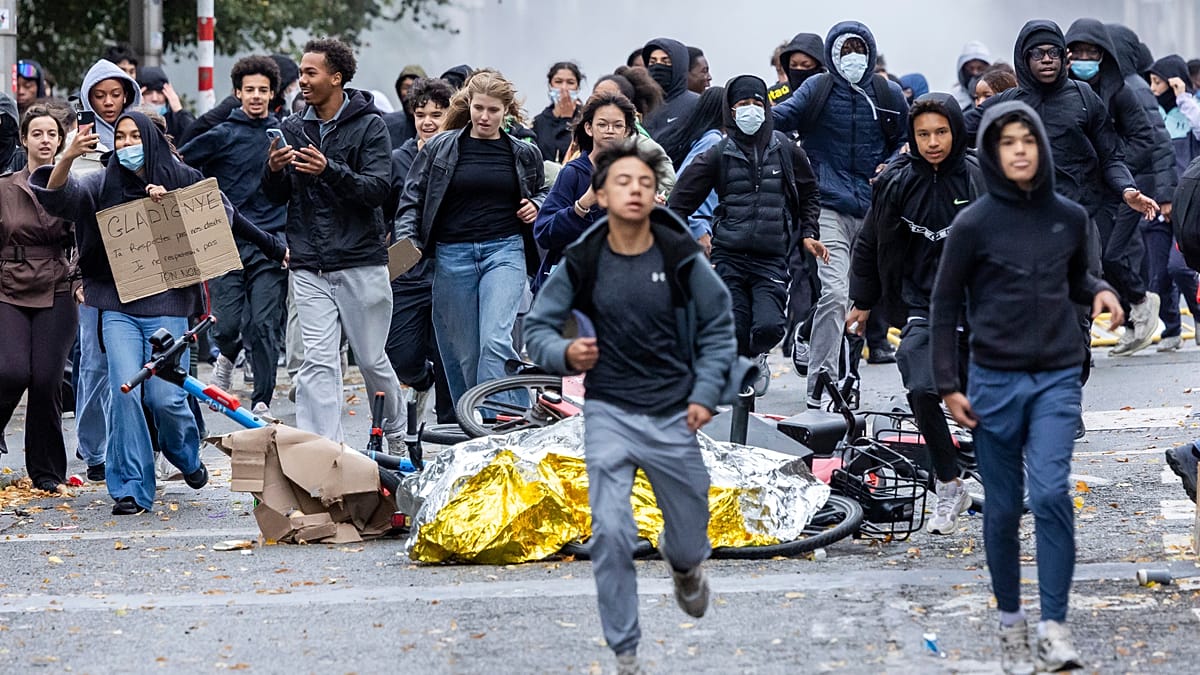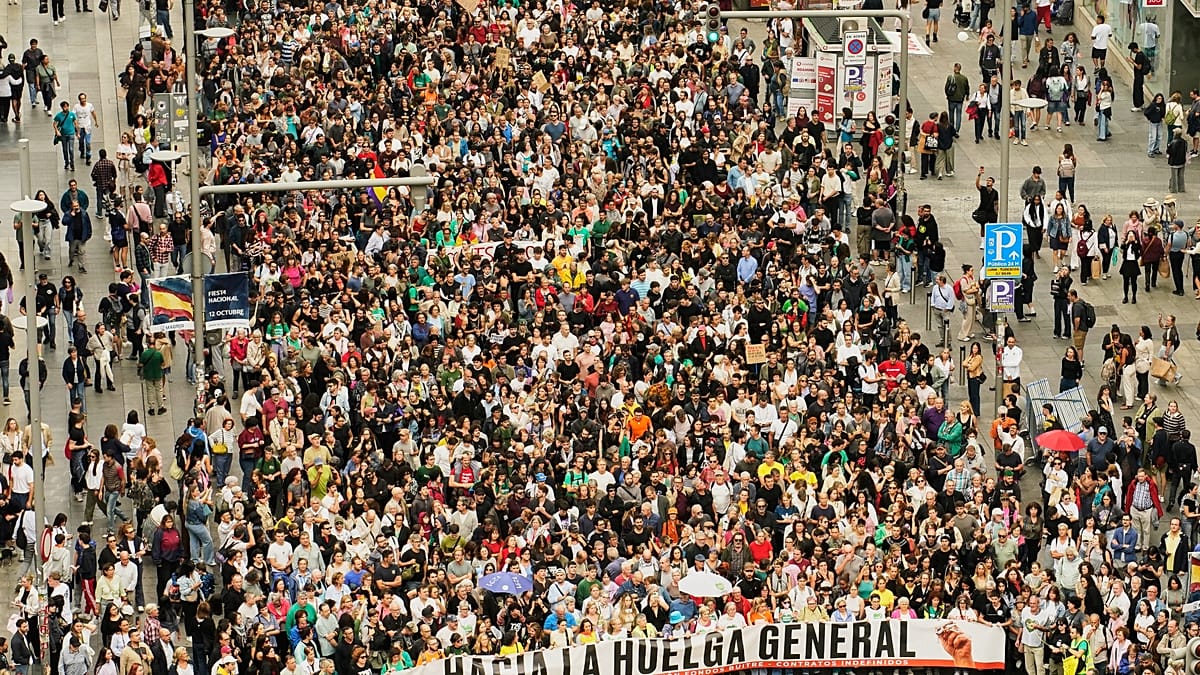
When Spanish workers down tools on 29 November, they will be joining a wave of industrial action that has swept across Europe. The last time Spain's two largest unions, Comisiones Obreras (CCOO) and Unión General de Trabajadores (UGT), called a joint general strike was in November 2012, at the height of the austerity crisis. Now, fourteen years later, the grievances are familiar: unaffordable rents, wages that lag behind prices, and public services stretched to breaking point.
The Spanish walkout comes just 18 days before a snap general election, and it is far from an isolated event. France saw a national day of strikes and protests over the cost of living on 5 November. Italy's CGIL union has called a general strike for 20 November, and Belgian unions have threatened one for the week of 23 November. According to preliminary data from the European Trade Union Institute (ETUI), a Brussels-based research centre, 2025 was the EU's biggest year for strikes since 1991.
Who pays the highest price?
A simple way to compare the economic impact across countries is to apply a uniform formula. Take a country's annual GDP, divide by 365 to get a day's output, then assume one in five workers stops work and that roughly a fifth of that day's output is lost. On this basis, Germany, Europe's largest economy, would lose about €2.5 billion in a single day, according to Eurostat GDP data for 2025. France follows at €1.6 billion, Italy at €1.2 billion, and Spain at €930 million. Smaller economies see smaller bills: Belgium would lose about €350 million, Portugal about €170 million.
But these are rough estimates. Strikes rarely hit all sectors evenly; transport, schools, and public services bear the brunt, while many factories and offices keep running. Moreover, the national accounts tell a calmer story than the pre-strike cost estimates suggest.
Why much of the bill is never paid
France offers the best test case, as its statisticians have measured the effects of strikes several times. The Banque de France estimated that the pension reform strikes of March and April 2023 cut French growth by about 0.1 percentage points in the first quarter of that year, only to see a catch-up of roughly the same amount in the second quarter. In other words, most of the lost activity came back within three months. The central bank noted that this was in line with INSEE's estimate that the social movements of spring 2018 had reduced GDP by about 0.1 points.
The reason is simple: a strike is not like a fire that destroys stock. Cargo is still shipped, hospital appointments are rescheduled, and factories work extra shifts the following week. Some losses, however, are permanent and fall on specific people. Strikers lose a day's pay, governments lose tax revenue, and airlines and hotels cannot recover cancelled flights or empty rooms.
Belgium shows the real risk is repetition
Belgium illustrates what happens when strikes become a recurring feature rather than a one-off event. According to the ETUI, the country lost 1,354,845 working days to strikes in 2025, or 313 days for every 1,000 employees, breaking the previous record of 299 set in 1993. The gap with its neighbours is stark. In the Netherlands, 23 strikes cost almost 60,000 working days in 2025, according to Statistics Netherlands (CBS). In Germany, the Institute of Economic and Social Research (WSI) estimates that about 645,000 days were lost in 2025, below the long-term trend, in an economy almost seven times the size of Belgium's.
This is what one-off cost estimates miss. A single strike day is quickly recovered, but strikes every month leave a lasting mark on the economy. For Spain, the immediate cost of Wednesday's strike will be measured in lost hours, but the broader protest wave may have political consequences. As the pension debate heats up ahead of the 29 November vote, the strike could influence voters.
Measuring turnout: the power grid
Spain has an unusual way of measuring how many people strike: electricity use. During the November 2012 general strike, the Interior Ministry said that early in the morning, electricity demand was 11.4% below normal for that time of day, using data from grid operator Red Eléctrica. During the March 2012 strike, the drop at the same hour had been 15.4%. The grid data is likely to give the first estimate of turnout again on Wednesday, before unions and the government put out their own, usually very different, numbers.
Air travel remains uncertain. As of Monday, the government had not published the minimum flight services for the strike, even though airport and airline staff are covered by the call. Investors, however, have barely reacted. Spain's IBEX 35 index closed Monday at 19,742.5 points, up 14.1% this year and about 3% below its all-time high. Shares of Meliá Hotels International, one of Spain's largest hotel chains, are up 38% this year, and Aena, which runs most of Spain's airports, is up 21%.
For investors, one strike day is like a storm that delays flights for a day. Belgium shows the other possibility: strikes that become so frequent they are a permanent feature of the economy. For Spain, the cost of Wednesday's strike will be measured in lost hours, but the wider protest wave may have political consequences. As the economy minister backs Hernández de Cos for the ECB top job, the government's handling of the strike could shape the election campaign.