From 'rizz' to 'delulu' and 'aura farming', keeping up with Gen Z slang can feel like a full-time job. Every generation coins its own vocabulary, but the speed at which these terms spread today is unprecedented. A phrase can go from a niche TikTok to a global meme in days, leaving anyone who lags behind at risk of being labelled 'Unc' – a shorthand for 'uncle' that mocks those perceived as out of touch.
The latest addition to this ever-evolving lexicon is 'polyester'. It has little to do with the fabric itself, though the choice of word is far from arbitrary. On TikTok and other platforms, calling something 'polyester' is a way of saying it is generic, inauthentic, or trying too hard. A supposedly candid moment that is clearly staged? Polyester. A public apology that rings hollow? Polyester. An influencer faking enthusiasm to sell merchandise or push a sponsored product? That is 'Polyester Prince' territory.
For millennials, it is the equivalent of calling something 'basic', but the Gen Z version carries more weight. It taps into a broader cultural shift, one that is particularly visible across Europe, where young people are increasingly questioning the authenticity of what they see online and the values behind the brands they buy.
From fan edits to lifestyle critique
The term's evolution is telling. It first emerged in fan-edit videos that spliced clips of characters like Spider-Man with flashing, frenetic footage. Then a viral TikTok featuring an 18-year-old describing his 'dream adult life' – waking at 6 a.m. in a New York penthouse, Bible study with friends, an organic yerba mate, a run in Central Park, blue light glasses, deep work, and a Claude AI agent handling half his workload – was quickly dismissed as 'polyester'. The clip was so algorithmically engineered to be aspirational that it felt fake, and the internet called it out.
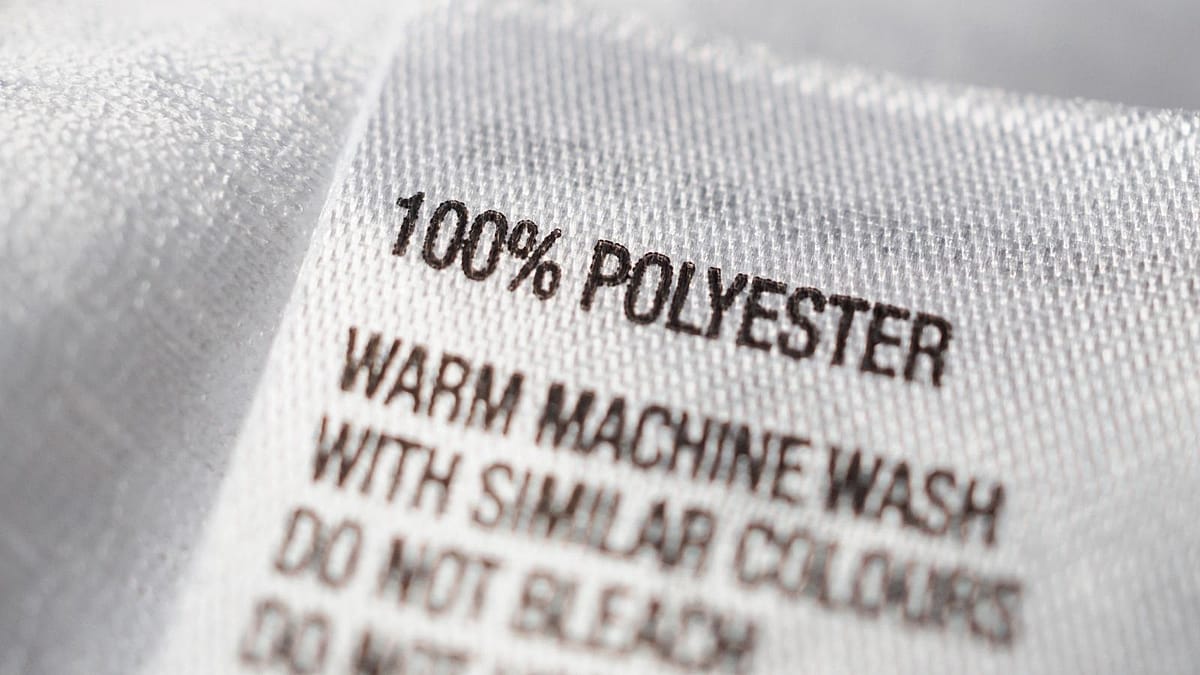
The choice of a synthetic fabric is deliberate. Polyester is the most produced fibre in the world, and younger generations are pushing back against it for two reasons. First, fashion brands that churn out garments looking great in photos but feeling cheap and falling apart after a few washes are increasingly out of favour. Second, polyester's environmental toll is severe: it is not biodegradable and sheds microplastics into waterways. Across Europe, from Berlin to Milan, creators are encouraging followers to purge their wardrobes of mass-produced synthetics, aligning with a growing movement against ultra-fast fashion – the same sentiment behind the trending diss 'It gives Shein'.
This is not just about clothes. The popularity of 'polyester' signals that generations raised online are becoming more discerning about the disingenuous nature of influencers, corporations, and even politicians who rely on catch-all terms and empty promises. It follows other viral terms like 'Larping', 'Slop', and 'Industry Plant', all of which centre on authenticity and call out anything that feels manufactured.
Some may dismiss this as another fleeting internet fad, but 'polyester' reflects a healthy and expanding distrust of the artificial. In an era where AI can make it increasingly difficult to distinguish reality from fabrication, Gen Z's intolerance for insincerity is a promising sign. It is a demand for the real, whether in the content they consume, the products they buy, or the leaders they support.
As this trend continues to ripple across Europe, it is worth watching how it shapes consumer behaviour and online culture. The same impulse that drives young Europeans to battle for aura on city streets is also pushing them to reject the polyester in their lives – both literal and metaphorical.