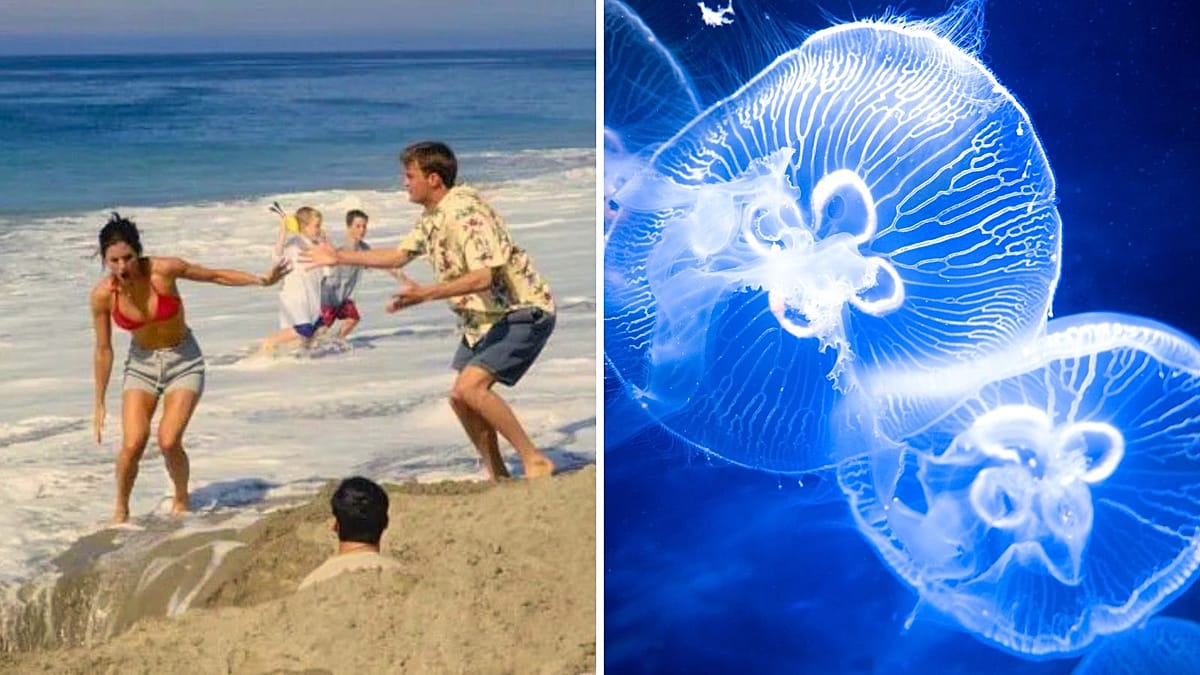
If you grew up watching Friends, you probably remember the episode where Monica gets stung by a jellyfish during a beach trip. Joey Tribbiani, citing the Discovery Channel, insists the only remedy is to urinate on the wound. Chandler backs him up, claiming the ammonia in urine kills the pain. It’s a memorable scene — but it’s also dangerously wrong.
As European summers grow hotter and sea temperatures climb, jellyfish blooms are becoming more frequent along the continent’s coastlines — from the Costa del Sol to the Adriatic, and from the French Riviera to the Greek islands. Warmer waters, often linked to heat domes that push temperatures to record highs, create ideal conditions for jellyfish to thrive. That means more swimmers are likely to encounter them, and knowing how to respond matters.
What Actually Works
Contrary to what pop culture suggests, urine can actually worsen a jellyfish sting. It may introduce bacteria and increase the risk of infection. The correct first step is to rinse the affected area with vinegar, which neutralises the venom and prevents further release from any remaining tentacles. If vinegar isn’t available — and let’s be honest, few beachgoers carry it — seawater is a reasonable substitute. Fresh water, however, should be avoided, as it can cause the sting to become more painful.
Once the tentacles are removed (using tweezers or a gloved hand, never bare fingers), heat is the best pain reliever. Soaking the skin in water at around 45°C for 20 to 40 minutes can significantly reduce discomfort. Most stings subside within 24 hours, but if symptoms like nausea, difficulty breathing, or severe pain persist, immediate medical attention is necessary. Some species, such as the Portuguese man o’ war, can be highly toxic.
This myth is just one of many medical inaccuracies perpetuated by film and television. Others include the idea that chloroform instantly knocks someone unconscious, or that injecting adrenaline directly into the heart — as depicted in Pulp Fiction — is a viable emergency procedure. Neither is true, and both could be dangerous if attempted.
As spring heat surges test Europe’s readiness for extreme weather, the link between rising temperatures and jellyfish populations is becoming harder to ignore. Warmer seas extend the breeding season for many species, and overfishing of natural predators like tuna and sea turtles further tips the balance. For holidaymakers heading to the Mediterranean or the Atlantic coast this summer, a little accurate knowledge can prevent a lot of pain.
To be fair to Friends, the show got some things right. Unagi is indeed freshwater eel sushi. Lobsters do mate for life. And Phoebe’s advice to never lose touch with your inner child is sound. But on jellyfish stings, the writers should have done their homework. So next time you’re at the beach and someone suggests a urine-based remedy, politely decline. Reach for the vinegar instead — or at least the sea.