From 11 June to 19 July 2026, more than six million football fans will travel across Canada, Mexico, and the United States for the men's World Cup. The tournament, the first to be hosted by three nations simultaneously, presents an unprecedented public health challenge. Health authorities and independent experts are closely watching for any signs of infectious disease outbreaks that could threaten the well-being of attendees and local populations.
At Georgetown University in Washington, D.C., Rebecca Katz co-leads the Health Security Operations Center, a non-governmental coordination team focused on infectious disease threats linked to the tournament. “Mass gatherings are complicated. There are always infectious disease threats that are associated with them,” Katz told European Pulse. Her team monitors disease signals across host cities and the communities from which travellers arrive, issues health alert notices when significant risks are detected, and tracks online discussions about emerging health concerns.
A Three-Country Tournament, Dozens of Jurisdictions
The complexity of this World Cup is unprecedented. Unlike a single-host event, fans and teams will move between three countries and over 48 different jurisdictions, including base camps and match venues. “This particular mass gathering is especially complicated, because you have three different countries and over 48 different jurisdictions when you count the base camps and people moving in between all of them,” Katz explained. The team publishes a daily situation report flagging new developments and identifying which national teams may face higher risks based on their location.
Some pathogens under surveillance are common to any large gathering: sexually transmitted infections, gastrointestinal illnesses, and respiratory infections. But others are more specific to the host region. “We monitor a bunch of different pathogens, but I will say the top of mind right now is measles,” Katz said, noting that cases have been reported in all three host countries. The team is watching the situation “quite carefully” given reports in jurisdictions where games are planned or national teams are based. Other pathogens being tracked include dengue, hepatitis A, and mpox.
Ebola: Low Risk but Close Watch
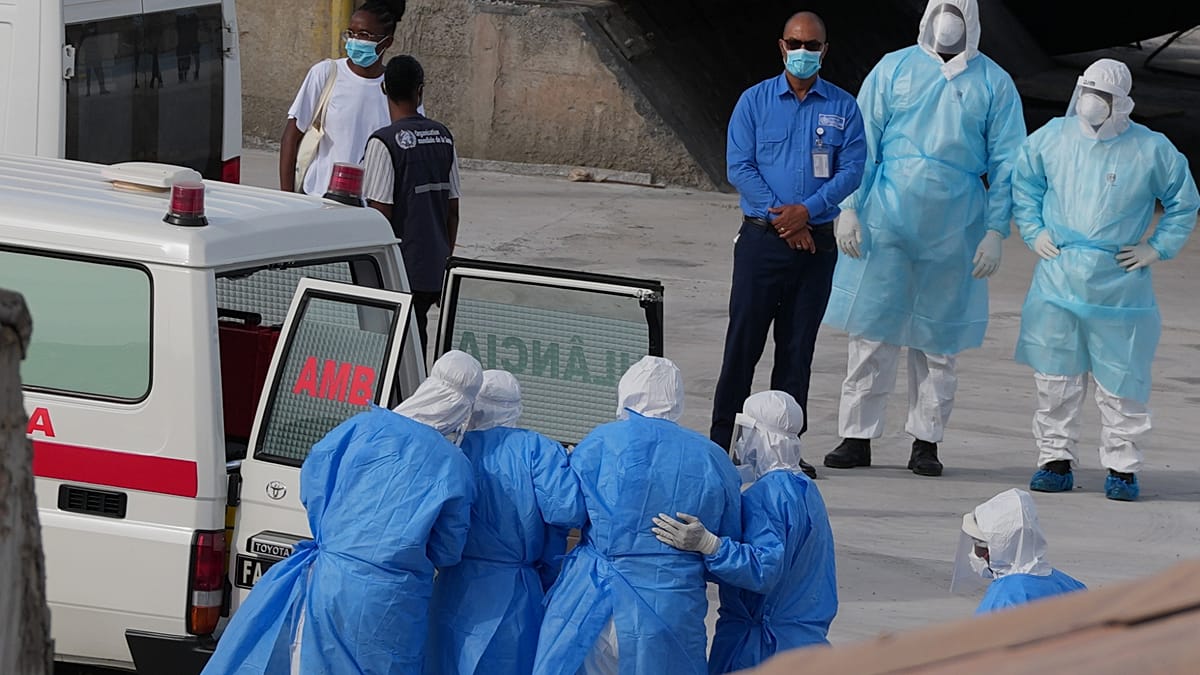
The most significant current global outbreak is Ebola in the Democratic Republic of Congo and Uganda. The Congolese Health Ministry has confirmed 782 cases and 181 deaths. The United States has imposed travel restrictions on arrivals from affected countries and urged others to follow suit. However, Katz assesses the risk to the World Cup as low. “By the way that Ebola is transmitted and the mechanisms that have already been put in place to try to contain the outbreak, we are not deeply concerned about it being a threat to the public here,” she said.
The Democratic Republic of Congo squad arrived in Houston, Texas, on 11 June. According to the Health Security Operations Center's 12 June report, all players and non-playing staff have no recent travel history to the DRC within the past 21 days. The team will train at their base camp ahead of their first match on 17 June against Portugal.
Wastewater Surveillance: Finding the Needle
One of the most powerful tools Katz's team uses is wastewater monitoring, a technology that gained widespread use during the COVID-19 pandemic. “We have seen that it can be a tremendously powerful source of surveillance data,” she said. Specialists are able to “find the needle in the haystack.” Katz added, “If there is that one case of Ebola anywhere, they will find it.”
The approach allows health authorities to detect pathogens circulating in a community before clinical cases appear, providing a crucial early warning system. As millions of fans cross borders and gather in stadiums, fan zones, and public transport hubs, such surveillance will be essential to preventing outbreaks from escalating.
For European readers, the World Cup's health monitoring offers lessons for future mass gatherings on the continent, from the UEFA European Championship to major cultural festivals. The coordination between three countries and dozens of jurisdictions mirrors the challenges faced by the European Union when managing cross-border health threats. The success or failure of this operation will be closely watched by public health officials in Brussels, Berlin, Paris, and beyond.