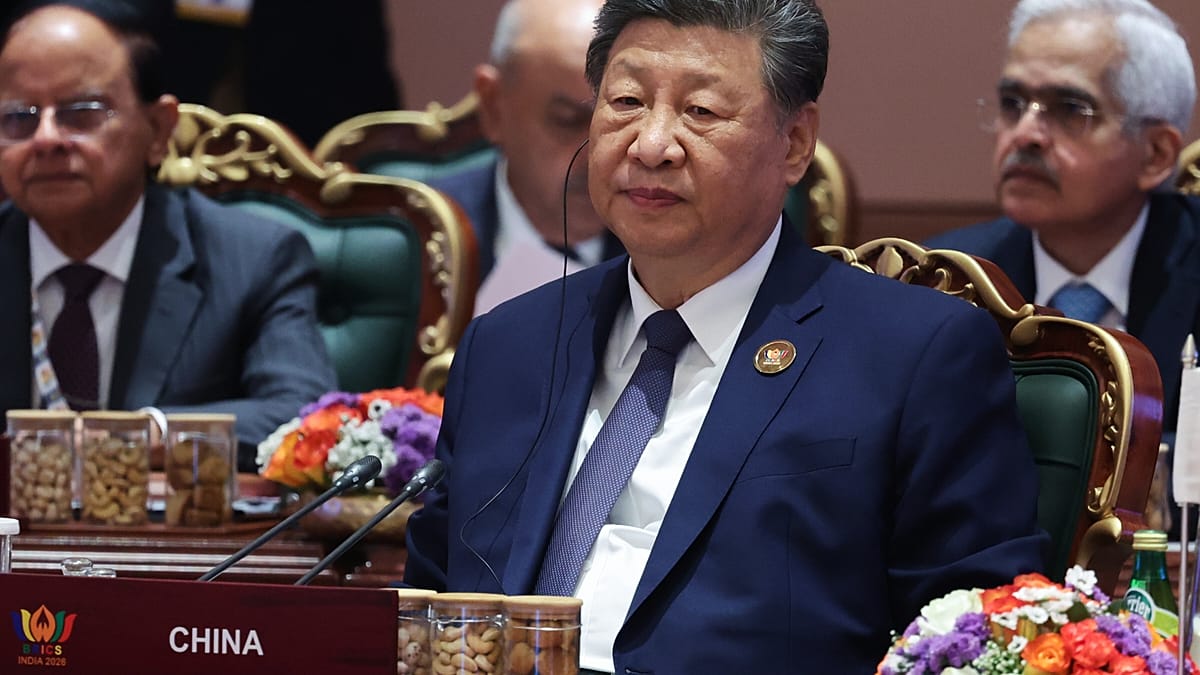
Chinese President Xi Jinping used the BRICS summit in New Delhi to unveil a proposal for an "open-source zone for artificial intelligence" among the bloc's member states. The plan, part of a broader "initiative on open-source and inclusive AI," signals Beijing's ambition to position itself as a leader in shaping the global AI landscape, offering an alternative to the more restrictive models favoured by US tech giants.
According to a readout of Xi's speech carried by state broadcaster CCTV, the initiative would include "support for cooperation in the development and application of large language models" and the establishment of "specialised research and training on AI" for BRICS countries. The overarching goal, Xi said, is to "build an open ecosystem for AI" that would allow member states to collaborate on cutting-edge technology without relying on Western platforms.
A geopolitical counterweight
The proposal comes at a time when artificial intelligence has become a central arena for geopolitical competition. While Chinese companies such as Alibaba and DeepSeek have released open-source models that allow users to adapt the underlying code, US developers have largely favoured proprietary, closed-door approaches. Xi's pitch to BRICS members—Brazil, Russia, India, China, South Africa, and newer entrants like Iran, Egypt, Ethiopia, and the UAE—is a direct appeal to countries wary of depending on US-controlled AI infrastructure.
BRICS, founded in 2009 as a forum for major emerging economies, has increasingly positioned itself as a counterweight to institutions dominated by Western powers. The summit in New Delhi, which also saw Russian President Vladimir Putin in attendance, underscored the bloc's growing assertiveness on global governance issues. Xi's AI proposal fits neatly into that narrative, offering a vision of technological cooperation that bypasses the US-led order.
For European observers, the initiative raises questions about the future of AI governance. The EU has been crafting its own rules under the AI Act, seeking to balance innovation with fundamental rights. A BRICS-led open-source model could create a parallel ecosystem, complicating efforts to establish global standards. As Europe's largest political bloc seeks a balanced China strategy, the prospect of a Beijing-led AI zone adds another layer of complexity to transatlantic and intra-European debates.
Xi also called for a "broad, consensus-based global AI governance framework," echoing language used in previous Chinese proposals at the UN. However, critics note that Beijing's own domestic AI regulations are far from open, with strict censorship and state oversight of large language models. The gap between China's external rhetoric and internal practice is likely to be a point of contention in any future negotiations.
The timing of the announcement is significant. Xi is expected to visit the United States later this month for talks with President Donald Trump, with AI governance likely to be high on the agenda. As fears grow that the world is losing control of rapidly advancing AI technologies, the BRICS proposal could serve as a bargaining chip in those discussions, or as a signal that Beijing is prepared to go its own way if Washington refuses to engage.
For now, the open-source AI zone remains a proposal, with no concrete implementation details or timeline. But the message is clear: China intends to be a central player in shaping how AI develops and who benefits from it. For European policymakers, the challenge will be to ensure that the continent is not left on the sidelines as rival blocs carve out their own technological spheres.
As MEPs push for stricter EU investment rules amid rising trade tensions with China, the AI zone proposal adds a new dimension to the debate. European companies and research institutions may find themselves caught between US restrictions and Chinese overtures, making a coherent European AI strategy more urgent than ever.