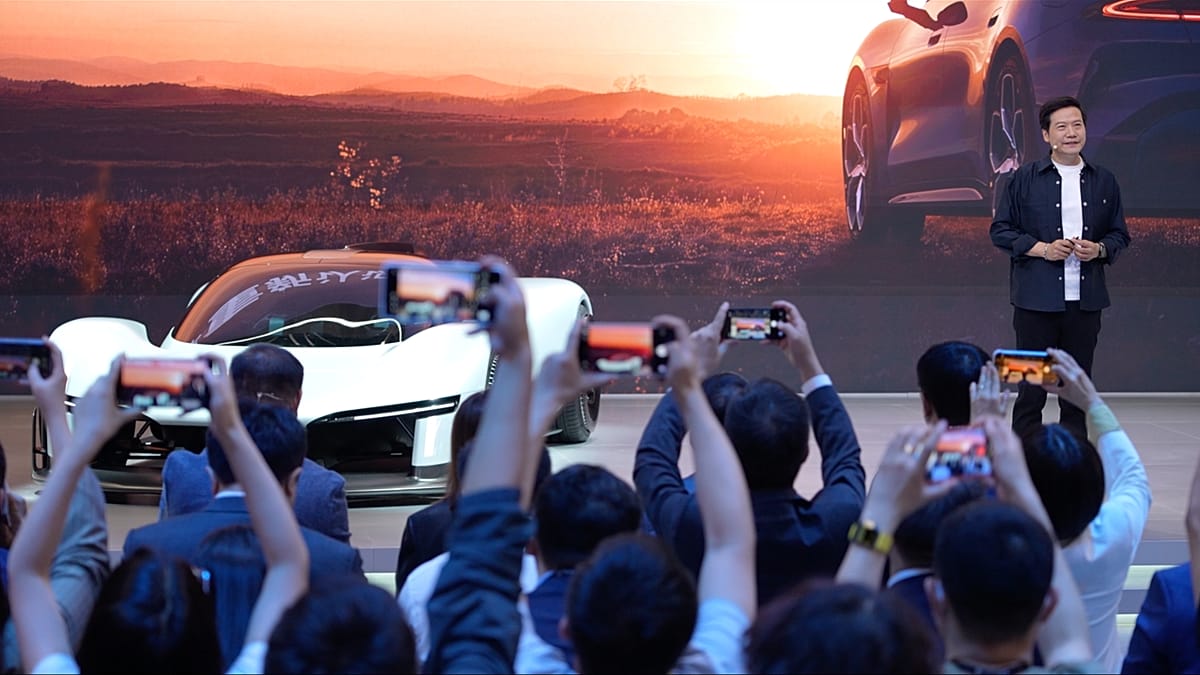
At the Auto China 2026 motor show in Beijing, Xiaomi's stand drew large crowds, many eager to see founder and CEO Lei Jun, a figure with near-celebrity status in China. Earlier in April, Lei Jun personally drove a Xiaomi SU7 Pro from Beijing to Shanghai—a journey of about 1,300 kilometres—with only one charging stop, livestreaming the trip to demonstrate real-world range and performance.
At the show, Lei Jun unveiled the Vision Gran Turismo concept for the first time in China, after its global debut at Mobile World Congress 2026. He also provided updates on the new-generation SU7 and outlined plans for the upcoming YU7 GT.
From Production to Ecosystem
Xiaomi entered the EV market only in 2024 with the SU7. Since then, it has rapidly expanded its lineup, including the YU7, which garnered 200,000 pre-orders within minutes of its release. The company is now preparing to launch the YU7 GT, its first model developed with European engineers, expected to debut in China in late May.
Performance is central to Xiaomi's positioning. The SU7 Ultra accelerates from 0 to 100 km/h in under two seconds and reaches a top speed of 350 km/h, placing it firmly in the high-performance EV category. At Xiaomi's Beijing factory, a new vehicle rolls off the assembly line roughly every 76 seconds. The site integrates manufacturing, research, testing, and customer experience, with over 700 robots and automation rates exceeding 90% in some workshops. AI-driven inspection systems detect defects with near-perfect accuracy, and an on-site testing track verifies every vehicle under real driving conditions before delivery.
Beyond performance, Xiaomi is betting on integration through its "Human x Car x Home" strategy, connecting vehicles with personal devices and smart home systems via its HyperOS operating system. This allows drivers to manage daily routines—from making reservations to controlling home environments—while the system adapts to user behaviour, adjusting lighting or music based on stress levels or preferences. This ecosystem approach reflects a wider trend among Chinese automakers combining hardware with software and AI-driven features.
"Xiaomi is a classic example of where the product is going to go next. Smart home, smart devices are a large part of our home life. The car becomes another product within our home life, our work life, our leisure life. That's the model that is going to develop, and I think everybody needs to follow," said James Pearson, founder and CEO of Lionheart, an automotive branding and advertising agency.
Expansion into Global Markets
With its domestic lineup expanding rapidly, Xiaomi is turning its attention to international markets. The company plans to begin global expansion in 2027, with Germany expected to be its first overseas market. In preparation, Xiaomi opened an EV R&D and Design Center in Munich in 2025, one of Europe's leading automotive engineering hubs. Led by former BMW executive Rudolf Dittrich, the centre focuses on adapting vehicles to European standards—from regulations and infrastructure to customer preferences.
"Xiaomi is approaching that very methodologically, looking at data. We're trying to get customer insights as much as we can," Dittrich said at Auto China 2026. Early signals suggest growing interest: during test drives last year, the vehicles attracted attention even at charging stations, with passers-by stopping to take a closer look.
Xiaomi's entry into Europe comes as the EV market growth moderates. According to the European Automobile Manufacturers' Association (ACEA), battery-electric vehicles accounted for 17.4% of new car registrations in 2025, up from 13.6% a year earlier, while hybrid models—at 34.5%—remain the preferred choice among European consumers. Competition is intensifying, with established players like Volkswagen and Tesla facing pressure from Chinese manufacturers including BYD and XPeng. The European Union has also imposed additional tariffs on Chinese-made EVs after an anti-subsidy investigation, adding another challenge for new entrants.
In 2025, the Xiaomi SU7 Series ranked No. 1 in sales among sedans in its price segment. Models are priced from around €27,000 for the standard version to approximately €38,000 for the SU7 Max. The company targets total EV deliveries of 550,000 vehicles across its lineup this year, up from more than 400,000 previously. Looking ahead, Xiaomi has signalled plans to broaden its vehicle lineup further, though specific details have yet to be announced.
As Xiaomi prepares for its European debut, it will need to navigate regulatory hurdles and intense competition. The company's strategy of combining German engineering with Chinese manufacturing and a strong ecosystem could resonate with European consumers, but success will depend on adapting to local tastes and building trust in a market where brand loyalty runs deep. For more on how European trade dynamics are shifting, see our coverage of EU trade tensions with China.