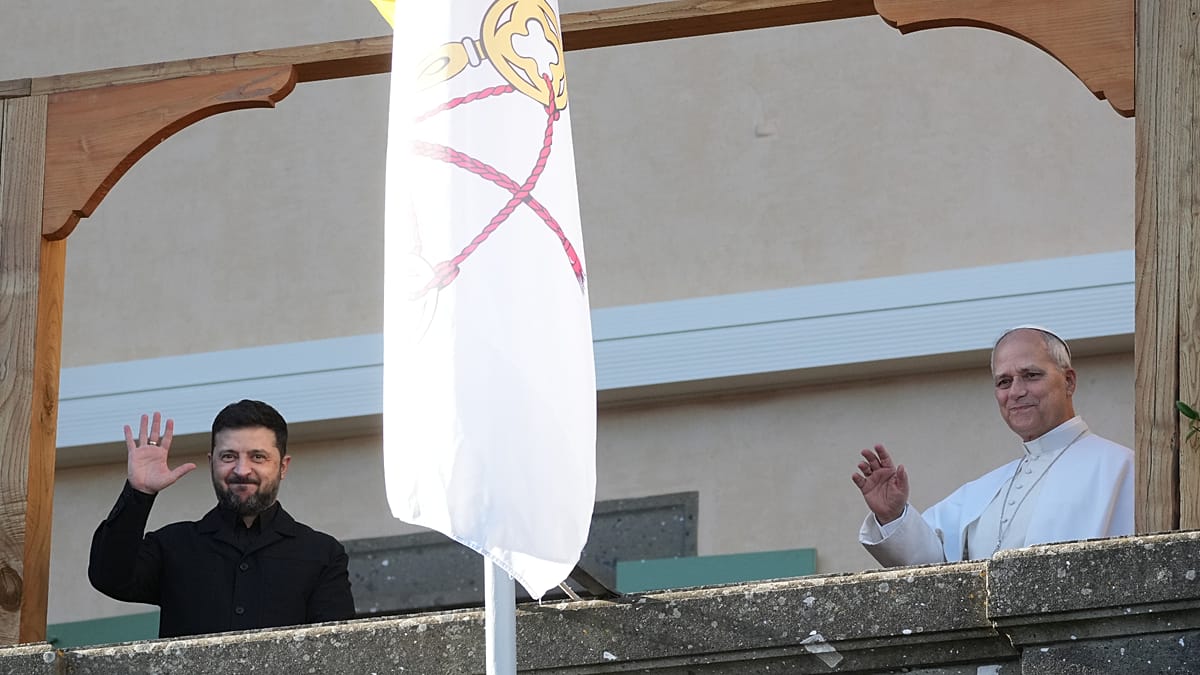
President Volodymyr Zelenskyy has dismissed General Oleksandr Syrskyi as Ukraine's commander-in-chief and appointed Major General Mykhailo Drapatyi to the post, a decision announced after widespread protests across the country. The reshuffle comes more than four years into Russia's full-scale invasion and reflects growing public pressure over military leadership and reform.
Zelenskyy stated that the change followed extensive consultations with the military command and that the General Staff of the Armed Forces of Ukraine would be reorganised. He acknowledged Syrskyi's role in key operations, including the defence of Kyiv, the Kharkiv offensive, and the Kursk operation, but noted that the military needed a new direction.
“The defence of Ukraine continues, and every soldier deserves to be treated with respect,” Zelenskyy said, addressing criticism of Syrskyi's management style and alleged lack of support for troops. “We all share the same desire, to defeat the enemy and to create conditions on the front line and exert sufficient pressure on Russia to force it to make peace.”
Who Is Mykhailo Drapatyi?
Major General Mykhailo Drapatyi has built a reputation as a reform-minded officer popular with civil society and many within the armed forces. He previously led the Joint Forces command covering the northeastern Kharkiv region, where Ukrainian units recaptured territory around Kupiansk. Before that, he commanded the Dnipro operational-strategic group, which Syrskyi dissolved in October 2025.
Drapatyi's military career includes service during the 2014 battle for Mariupol, where his armoured vehicle famously broke through a Russian barricade. He has publicly backed the reform agenda of dismissed Defence Minister Mykhailo Fedorov, calling for a systematic overhaul of the army.
“The military needs change, but without justice, no change will make sense to the people who carry this war on their shoulders every day,” Drapatyi wrote on Facebook last week. “A commander has no right to remain silent about problems, especially when their cost is measured in lost opportunities, time and human lives. Silence does not protect the army, it only allows mistakes to accumulate until they become much more difficult to correct.”
Political Fallout Over Fedorov's Dismissal
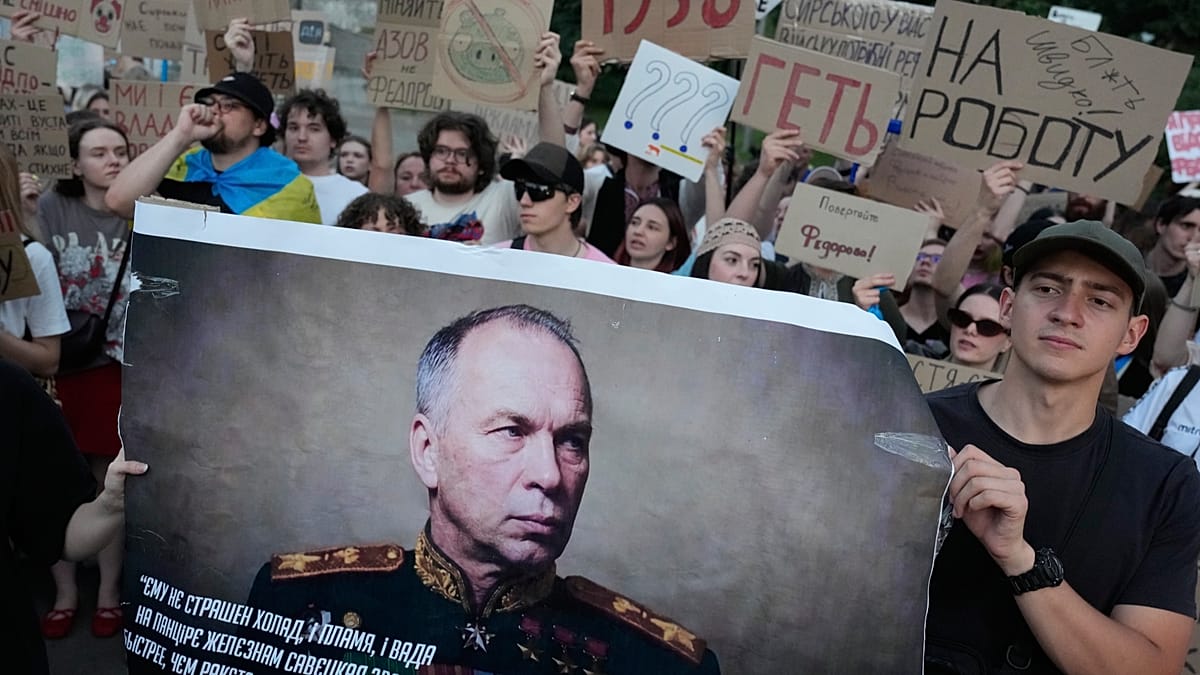
The reshuffle follows the dismissal of Defence Minister Mykhailo Fedorov, a reform-minded figure backed by civil society and many soldiers. His removal sparked protests, with critics accusing Zelenskyy of siding with Syrskyi and entrenched military hierarchies. Dmytro Koziatynskyi, a veteran and protest organiser, has demanded Syrskyi's dismissal and Fedorov's reinstatement by 24 July, threatening an indefinite protest if the conditions are not met.
The political crisis has deepened as Ukraine continues to face intense Russian attacks. The country has also launched long-range drone strikes on Russian logistics hubs, including in Moscow and Tambov regions, as part of its ongoing counteroffensive. The EU has signalled continued support, with European Commission President Ursula von der Leyen visiting Kyiv to advance EU-Ukraine drone cooperation and accession talks.
Zelenskyy's decision to replace Syrskyi with Drapatyi may aim to placate protesters and signal a commitment to military reform, but the broader political instability remains a concern for Ukraine's allies in Europe. The coming days will test whether the new commander can restore confidence both on the front line and among the public.