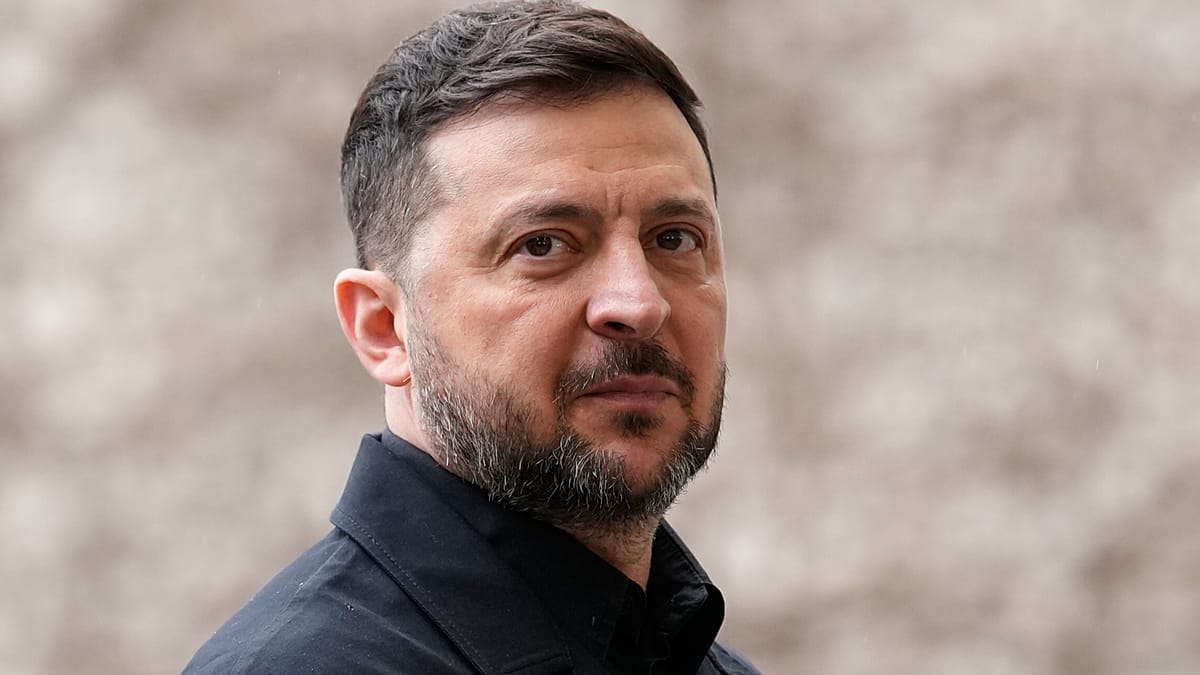
Ukrainian President Volodymyr Zelenskyy declared on Thursday that Kyiv will not remain passive in the face of Russian aggression, following a Ukrainian drone strike on Moscow's oil refinery. In a pointed message, he stated, “If Ukraine burns, so will Moscow,” framing the attack as a direct response to Russia's earlier assault on the Kyiv-Pechersk Lavra, a UNESCO-protected historic and religious site.
Speaking to reporters via the presidential WhatsApp chat, Zelenskyy emphasized that the strike was “entirely justified.” He recalled a visit to the Lavra, where he promised a response: “We were at the Lavra, and I said we will prepare a response and you will see it. I think you are seeing it now.”
Strategic Target in Moscow
The Moscow oil refinery, one of Russia's largest, supplies approximately 40% of the capital's fuel market and the majority of the region's petrol. It also provides aviation fuel to all four major Moscow airports, with a processing capacity exceeding 12 million tonnes of crude oil annually, according to Ukraine's General Staff. The attack underscores Ukraine's ability to strike deep into Russian territory, despite Moscow's layered air defense systems.
Zelenskyy noted that the drone evaded what he described as the “three rings of air defence” protecting Moscow. “As you can all see, regardless of the three rings of air defence that Moscow has in place, we have said that we will target them,” he said.
The Ukrainian leader reiterated that Kyiv's goal remains ending the war, not escalating it. “We do not want this war and never have. Everyone knows this, and our partners know it too,” he explained. However, he warned that if Russian President Vladimir Putin persists, Ukraine will continue to respond.
Call for International Pressure
Zelenskyy urged Europe and the United States to intensify sanctions against Russia, targeting its energy sector, shadow fleet, oil and gas revenues, banking system, and defense industry. “The main thing is for the Russian people to begin to realise that it is just one man, Putin, who is waging this war, whilst it is the people who are paying the price for everything,” he said.
This call for increased pressure comes amid broader European discussions on Ukraine strategy, as EU leaders ponder Ukraine strategy and explore diplomatic channels with the Kremlin. Meanwhile, European Commission President Ursula von der Leyen has urged the EU to prepare a mandate for talks with Russia on Ukraine, signaling a dual approach of military support and potential negotiation.
The strike on Moscow's refinery follows a series of Russian attacks on Ukrainian infrastructure and civilian areas. Recent Russian strikes in eastern Ukraine killed three and wounded 22, including children, highlighting the ongoing human cost of the conflict.
Zelenskyy's comments also reflect a broader strategy of asymmetric warfare, where Ukraine leverages drone technology to target critical Russian assets. The attack on the Moscow refinery is a significant escalation, demonstrating that Ukraine can project power into the heart of Russia, challenging the narrative of Russian invulnerability.
As the war enters its third year, the international community remains divided on how to proceed. While some EU member states advocate for stronger sanctions and military aid, others, like Hungary and Slovakia, have called for a more cautious approach. The strike on Moscow's refinery may further polarize opinions, with some viewing it as a legitimate act of self-defense and others as a dangerous escalation.
For now, Zelenskyy's message is clear: Ukraine will not hesitate to retaliate against Russian attacks, even if it means striking targets in Moscow. The question remains whether this strategy will force Putin to reconsider his war aims or lead to a broader conflagration.