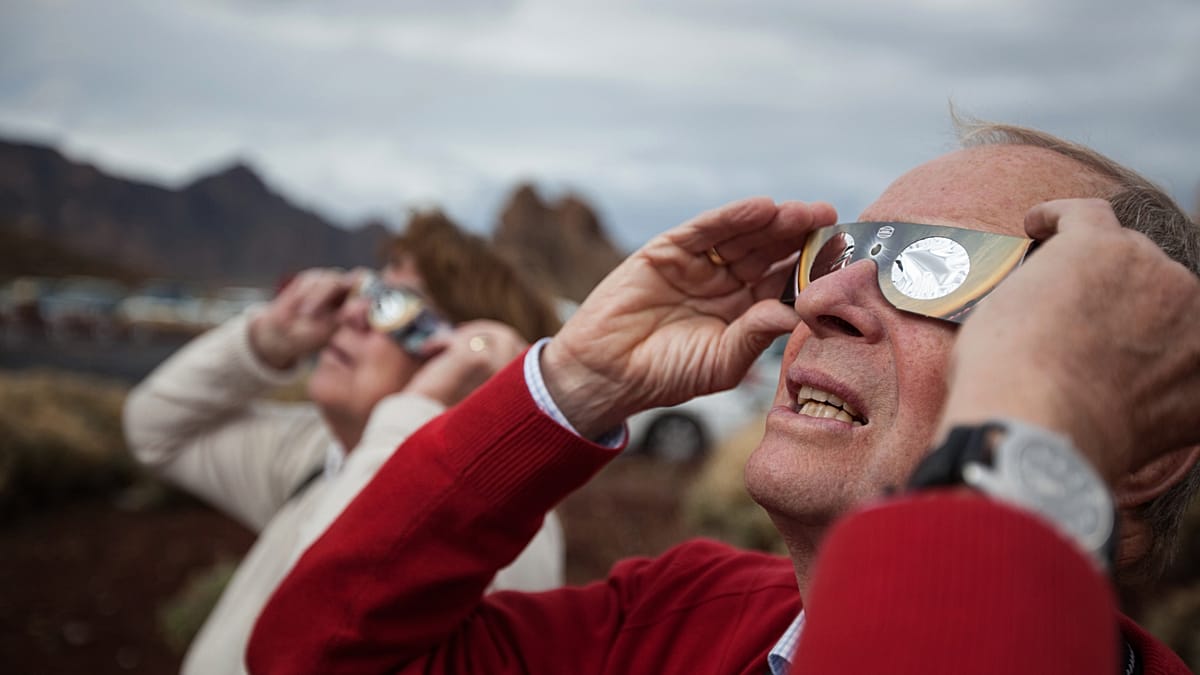
With nearly a year to go, the total solar eclipse of 2 August 2027 is already reshaping the accommodation market in southern Spain. In El Palmar, a beach town in Cádiz province, a six-person villa about 600 metres from the shore is listed at €33,129 for a single night—roughly €5,522 per guest if the group is full.
The eclipse will be visible across much of Spain, but only in Andalusia, Ceuta, and Melilla will the Moon fully obscure the Sun. In Tarifa, one of the most coveted viewing spots, totality will last 4 minutes and 38 seconds; in Ceuta, it will stretch to 4 minutes and 48 seconds, according to Spain's National Geographic Institute. For comparison, Egypt will offer the longest totality worldwide at 6 minutes and 23 seconds.
Soaring prices and booking surges
Accommodation platforms are already reflecting the scramble. In Tarifa, a search for two adults staying from 1 to 2 August returns three properties at €13,260, €12,500, and €11,090 per night. These are not isolated listings; they represent a broader trend across Cádiz, Málaga, Granada, and Almería, where bookings have multiplied and prices have followed.
The tourism sector is bracing for a repeat of the economic windfall seen during the last total solar eclipse visible from Spain on 12 August 2026. That event generated an estimated €347.6 million and attracted around 446,000 international tourists. The United States was the main source market outside Europe, followed by Canada and Argentina, with notable numbers of British and Japanese visitors drawn by astrotourism.
Given that precedent, hotels in Cádiz have reportedly paused new bookings for August 2027 due to overwhelming demand. Meanwhile, interest in astrotourism continues to grow, and destinations offering longer periods of totality are seeing the highest price spikes.
For travellers willing to plan ahead, the eclipse offers a rare celestial spectacle, but the financial commitment is steep. As one industry observer noted, "the market is responding to a once-in-a-lifetime event, and prices reflect that scarcity."
For those unable to secure accommodation in Andalusia, alternatives exist. The partial lunar eclipse later this month will be visible from many parts of Europe, offering a more accessible—and affordable—astronomical experience. And for travellers looking to avoid the crowds, the new Brussels–Malmö night train could provide a scenic route to northern skies, though it won't offer totality.
As the date approaches, more price hikes are likely. The eclipse is a reminder of how celestial events can have very terrestrial economic consequences, particularly in regions that depend on tourism. For now, the message is clear: if you want to witness the 2027 eclipse from southern Spain, be prepared to pay a premium—or book very early.