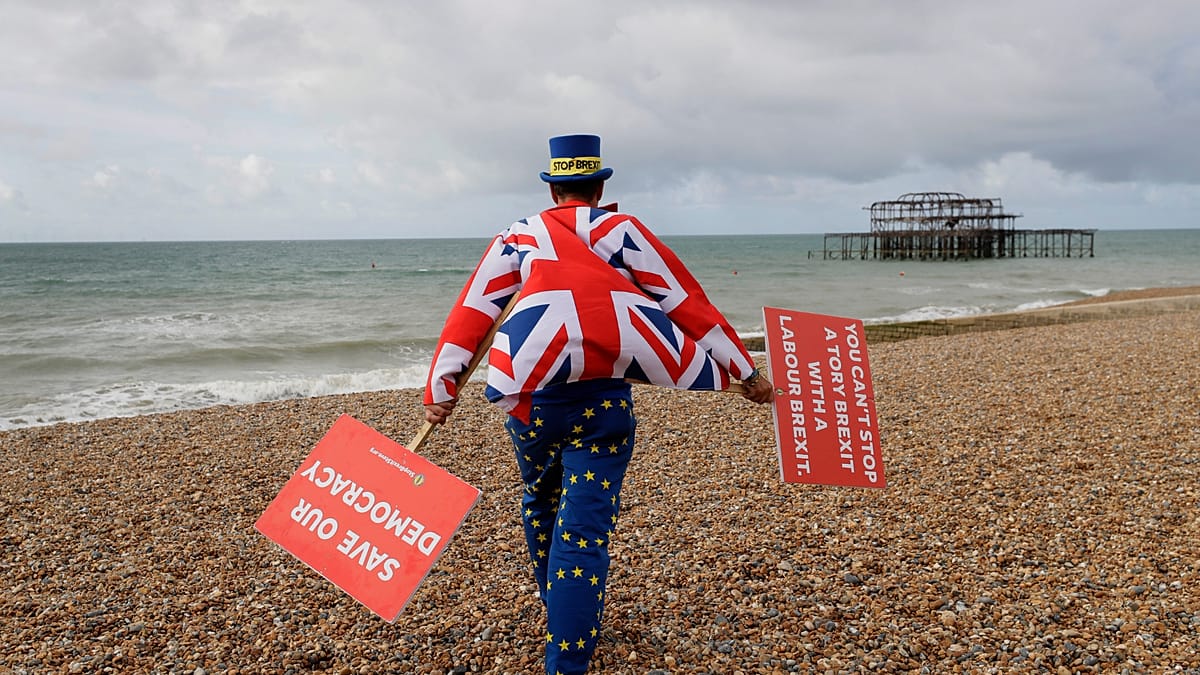
Ten years after the United Kingdom voted to leave the European Union, the economic verdict remains as contested as the political landscape is unstable. The anniversary arrives with Britain once again searching for a leader, following Sir Keir Starmer's resignation on Monday, and with the country's relationship with Europe still unresolved.
Two detailed assessments published this week, from Allianz Research and Deutsche Bank, reach a strikingly similar conclusion: the worst fears of Brexit's opponents did not materialise, but neither did the promised renaissance. Allianz captures the mood in three words: "resilience without revival."
The Political Fallout: A Decade of Instability
Starmer's departure, triggered by a collapse in Labour support and the rapid rise of the hard-right Reform UK, clears the way for what will be Britain's seventh prime minister in ten years, most likely former Greater Manchester mayor Andy Burnham. This political churn has become one of Brexit's most visible legacies. Allianz notes that the UK has had six prime ministers since the referendum, compared with four during the entire 1997–2016 period, while Deutsche Bank points to the economic costs of prolonged policy uncertainty.
As Londoners react to Starmer's resignation, the sense of fatigue is palpable. The country's leadership crisis mirrors the broader uncertainty that has defined the post-Brexit era.
Economic Resilience, But at a Cost
Much of the pre-referendum gloom never materialised. The UK Treasury's warning of an immediate recession proved wide of the mark: the economy kept growing, and unemployment fell to around 4% in the two years after the vote. House prices, which officials feared could fall by up to 18%, instead rose by roughly 7%.
However, beneath that surface durability, both banks identify real and lasting damage. Deutsche Bank, using a model that compares the UK with a synthetic "doppelganger" built from similar economies, estimates Brexit has left output roughly 4% smaller, employment around 2% lower, and consumer prices about 0.7% higher than they would otherwise have been. Allianz puts the GDP shortfall at between 2% and 4% and notes that goods trade with the EU is around 21% lower than it would have been.
Business investment stalled for years amid uncertainty, with productivity growth grinding close to a halt. Yet neither account is one of unrelieved decline. Britain has leaned harder into its services strengths: ICT exports to the EU have almost doubled, and London's financial centre still handles close to half of global interest-rate derivatives trading. Deutsche Bank points to genuine gains from regulatory autonomy in areas such as life sciences and AI, and to an improved current-account position as contributions to the EU budget fell away.
Looking Ahead: The Path to Reset
Deutsche Bank argues there is meaningful "low-hanging fruit" for improving the existing trade deal, estimating that closer cooperation with the EU on food standards, professional qualifications, and youth mobility could lift GDP by 0.4% to 0.8% over the next ten years. Allianz counters that many of Britain's deepest problems—weak productivity, high energy costs, and chronic underinvestment—were exposed by Brexit rather than caused by it.
As British public opinion shifts back toward the EU, the question of whether the next leader will seek a closer relationship with Brussels looms large. The anniversary also comes amid rising EU support across Europe, a reminder that the divorce has reshaped not just Britain but the continent as a whole.
For now, Britain's economic reckoning is neither the collapse its opponents feared nor the renaissance its champions promised. The country remains in a state of suspended animation, waiting to see what its seventh prime minister in a decade will do with a legacy that is still being written.