Marine pollution in the Mediterranean and Atlantic is reaching critical levels, and scientists warn that the most insidious threat lies beneath the surface. Among the debris littering the seabed, ghost fishing gear—abandoned or lost nets, lines, and traps—stands out as particularly dangerous. These remnants continue to ensnare marine life, slowly transforming parts of the ocean into an equipment graveyard that also endangers fishermen.
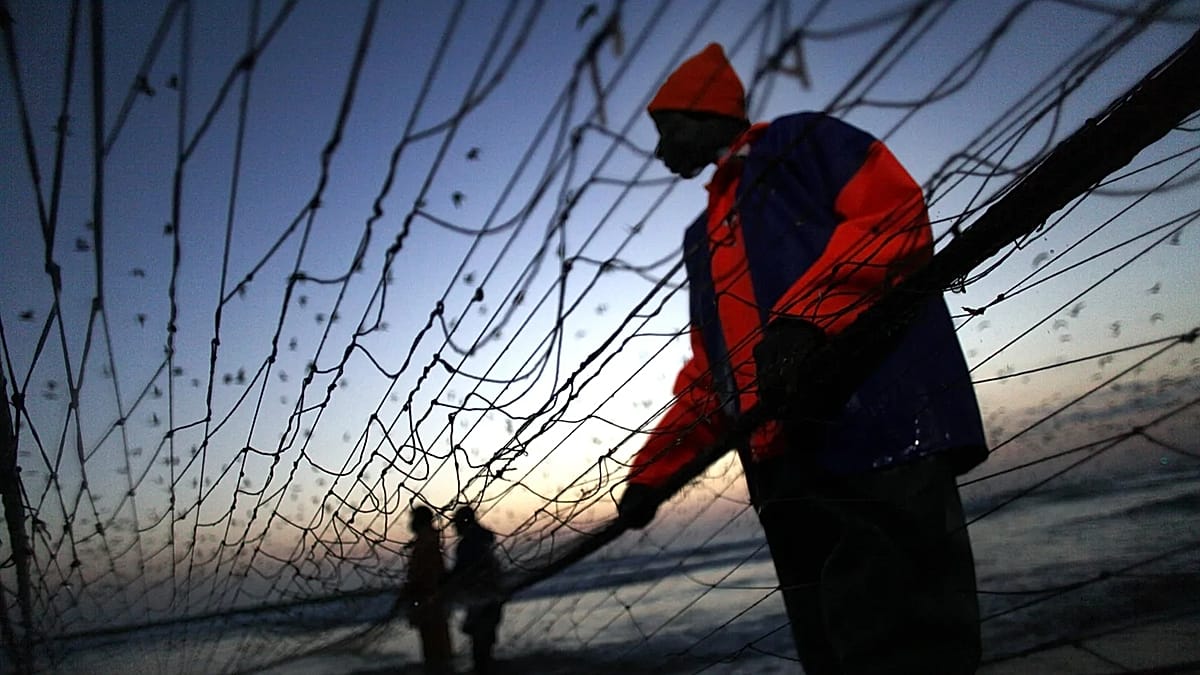
“Fishing nets can pose a safety problem for boats,” says Juan Pablo Pérez, a fisherman from Póvoa de Varzim, near Porto, in northern Portugal. His concern reflects a broader issue that the European Union is now addressing through the NETTAG+ project, an initiative that brings together scientists, engineers, and fishermen to prevent and recover lost gear.
Technological Solutions for a Hidden Problem
One of the project’s key innovations is the development of acoustic tags equipped with unique identifiers. These small devices are attached to fishing nets and can be tracked from the surface using a mobile application, even from distances exceeding two kilometres. “An acoustic localisation system, with small devices that attach to a net or fishing gear, and if that equipment is left on the seabed, I can then, from the surface, using sound communication, ask where that lost net is and find it,” explains Alfredo Martins, a researcher at the Institute for Systems and Computer Engineering, Technology and Science (INESC TEC) and a professor at the Porto Higher Institute of Engineering.
For gear already lost in deep waters, the project deploys a robotic system named IRIS. This underwater vehicle uses sonar to locate and map the seabed, enabling safer and more efficient recovery operations. “Basically, the robot is a vehicle that I can send somewhere, I can ask it to do a task of some complexity,” says Martins.
Fishermen as Partners, Not Just Stakeholders
From prevention to technological development, fishermen are central to the NETTAG+ effort. “Fishermen are not only involved in the first part of the project—prevention, rubbish collection, keeping the ocean healthy—but they are also involved in the technological solutions,” Martins notes. The team tests these technologies with local fishermen in Póvoa de Varzim under various sea conditions and with different types of fishing gear.
Sandra Ramos, a researcher at the Interdisciplinary Centre for Marine and Environmental Research (CIIMAR), emphasises the sector’s proactive role: “Fishermen want to work actively to solve marine litter, because they are the first to deal with this problem. They are the first to be impacted. That’s why we’ve had this participation; they’re not stakeholders in the project, they’re partners in the project, and their openness, from the very beginning when we started planning the solutions, even the most technological ones, has a lot to do with this concern of the sector in wanting to help solve this problem that torments them so much.”
This collaborative approach extends beyond technology. The project has developed a set of governance and policy solutions tailored for both large-scale and small-scale fishing contexts. While the technologies have been tested locally, the ambition is to implement them across Europe. “All of these solutions, particularly in terms of recommendations, are being sent not only to the European level, but also to the national level, to the institutions that manage fisheries,” explains Ramos. “There are general recommendations, but also ones specific to each country. That’s why we’re sending all this information and all this knowledge that the project has generated to the appropriate organisations.”
The NETTAG+ project also assesses the environmental impact of abandoned gear as a source of microplastics, dangerous chemicals, and pathogens. This comprehensive approach mirrors other European efforts to address marine pollution, such as the EU’s broader strategies on plastic waste and ocean health. As Europe grapples with the hidden costs of fishing waste, initiatives like this offer a blueprint for combining technology, local knowledge, and policy to protect marine ecosystems.