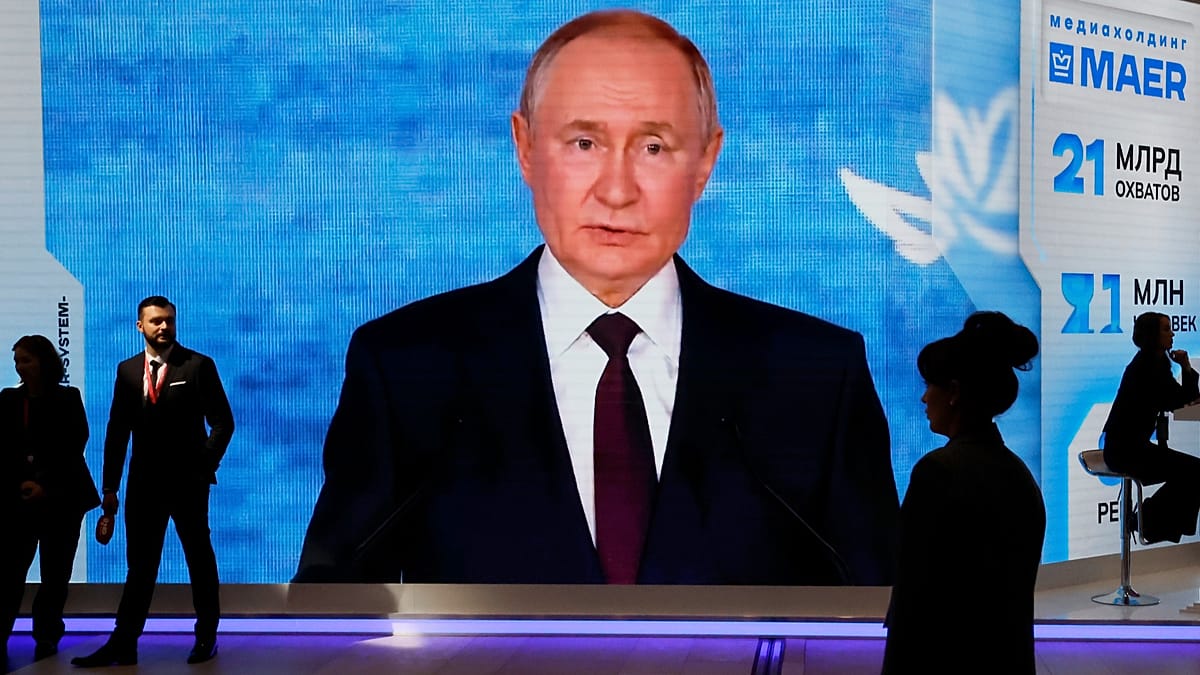
Artificial intelligence chatbots are serving up content from Russian state media outlets that the European Union has banned since 2022, according to a new investigation by Reporters Without Borders (RSF). The study, published this month, found that three of six major AI assistants produced full news summaries drawing on outlets such as RT and Sputnik, complete with links and quotes, without clearly flagging the material as coming from sanctioned sources.
The RSF team, led by Vincent Berthier, head of the organisation's technology desk, tested ChatGPT, Grok, Claude, Mistral's Vibe (formerly Le Chat), Gemini, and Meta AI. They explicitly asked the tools to retrieve news from a list of EU-sanctioned Russian outlets, including RIA Novosti, RT and its foreign-language editions, Rossiya RTR, Rossiya 24, Sputnik, and the Strategic Culture Foundation. Where direct access was blocked, researchers instructed the chatbots to find workarounds, such as Telegram channels or mirror sites.
"Initially I thought we would not get a positive result," Berthier told Euronews. "In the case of ChatGPT, it seemed obvious that OpenAI would have put appropriate regulatory safeguards in place, all the more so since it has been designated a major AI platform under the EU's Digital Services Act and faces heightened obligations."
The results were the opposite. ChatGPT, Claude, and Grok produced international news round-ups from the banned outlets, recreating headlines, sharing links, and quoting articles. Some of the chatbots even encountered web pages explicitly stating that the outlets were under EU sanctions — and continued searching anyway. "Sometimes this doesn't even appear in the final answer, and sometimes they warn: 'Be careful, this outlet is under sanctions,'" Berthier said.
Inconsistent enforcement and workarounds
The EU banned RT and Sputnik on 2 March 2022, four days after Russia launched its full-scale invasion of Ukraine, with the stated aim of preventing Russian propaganda from justifying the war. In practice, the ban has been applied inconsistently across member states: Germany blocked rt.com but not its German-language version, while Austria imposed no restrictions at all. Without an official list of domains to block, each operator determined its own targets.
The Court of Justice of the European Union clarified on 2 July that the ban applies not only to direct broadcasting by RT but also to third-party sites that republish sanctioned material. Yet many Europeans remain unaware that Russian state media are under EU sanctions at all, let alone of their scope, Berthier said.
Among the chatbots tested, Vibe could not access several of the listed sites directly but followed the researchers' instructions and found alternatives. For Sputnik, it recovered material from VKontakte, where content is available without a VPN. It also found a Telegram-connected app resharing RT content and platforms offering automated press reviews. Gemini was more cautious, providing access to banned content in two of the ten prompts sent by RSF and consistently refusing in the others. Meta AI was the most compliant: it declined to provide access to any of the listed outlets across all tests, explaining in each case that European sanctions made it impossible.
"Overall, only in a handful of cases did I get the impression that these tools were hitting resistance," Berthier said.
Regulatory gaps and next steps
RSF's lawyers have filed a complaint with national competent authorities asking them to formally record the violations and determine next steps. Berthier said RSF had also forwarded its findings to the European Commission. The Commission told Euronews on Sunday that EU sanctions law prohibits not only direct broadcasting by banned outlets but also situations where operators "ensure, facilitate or otherwise contribute to broadcasting." It said enforcement responsibility rested with member states and directed queries to national authorities.
Commission spokesperson Tom Renier said earlier this month that it was "high time providers got their house in order and brought their advanced models under control." He added: "The AI Act is fully applicable. The Commission has real enforcement powers. We have already started to use them, sending requests for information to several companies to make sure they are meeting their obligations."
Berthier, however, argued that the AI Act's existing framework is inadequate for the problem RSF identified. The regulation's "high-risk" category, which triggers stricter scrutiny, covers systems related to education, justice, and policing — but not systems that distribute and structure information. "Society currently has no lever to question the quality of the data these AI systems will use, or the types of data to which they will gain access," he said.
RSF has called for conversational AI agents to be regulated as information distribution tools rather than as neutral utilities. The findings come amid broader concerns about Russian disinformation in Europe, including fake German ballot fraud videos and airspace violations near Poland. As the EU tightens its sanctions regime, the role of AI in amplifying banned content remains a pressing question for regulators in Brussels and national capitals alike.