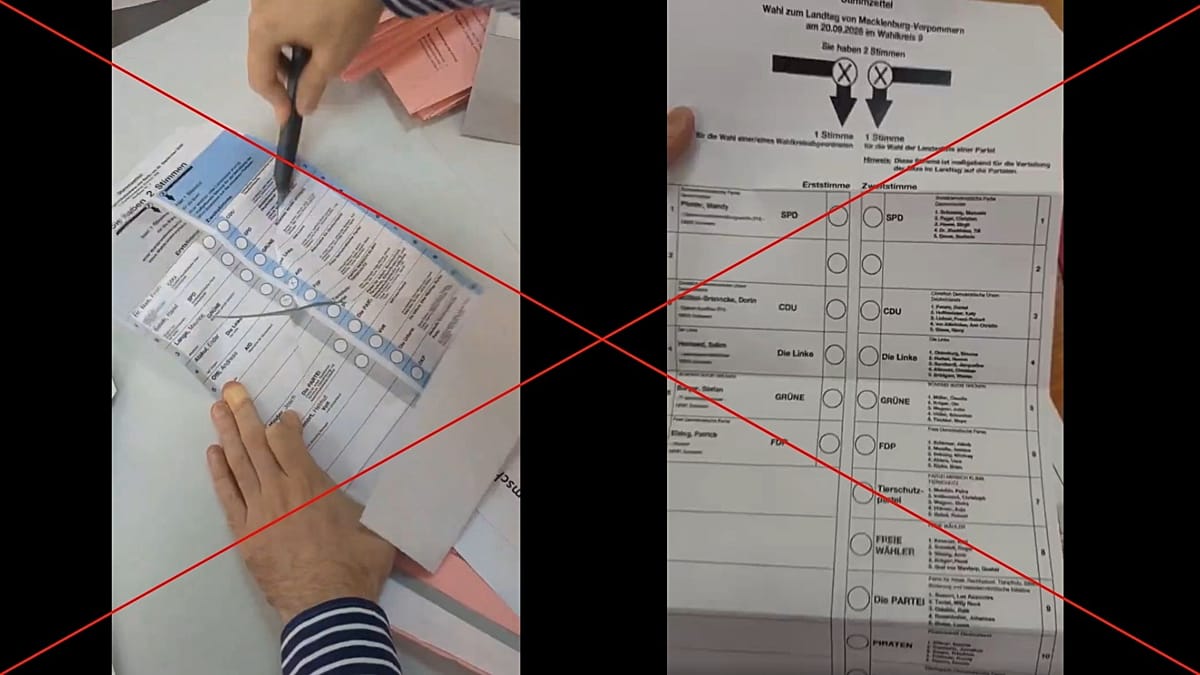
As Germans headed to the polls in Berlin and Mecklenburg-Western Pomerania, a wave of fabricated videos sought to cast doubt on the integrity of the vote. The clips, shared widely on X, alleged that postal ballots for the far-right Alternative for Germany (AfD) were being destroyed or that the party had been left off ballot papers entirely. German authorities and independent researchers have now tied the material to a pro-Russian influence operation known as Storm-1516.
Fake Berlin postal ballots under scrutiny
One video, viewed hundreds of thousands of times, showed a man opening postal-voting documents in Berlin and cutting up ballots marked for the AfD. The clip was amplified by Alina Lipp, a pro-Russian German blogger sanctioned by the EU in May 2025 for spreading disinformation about Russia's war in Ukraine. Lipp insisted on X that there was no proof the video was fake, helping it reach more than 630,000 views.
But election-monitoring site Wahlrecht.de identified multiple red flags. The purported postal packages contained no polling cards, which voters are required to return with their ballots. Neither the outer electoral envelopes nor the inner ballot envelopes were sealed. The packages also lacked the separate ballot papers used for Berlin's district councils, and the papers for the Berlin House of Representatives were folded differently from genuine ballots. In short, the material did not match official voting documents.
Fabricated ballots in Mecklenburg-Western Pomerania
A second set of videos claimed to show postal ballots in Mecklenburg-Western Pomerania without the AfD listed. In one clip, a man identifying himself as a pensioner from Rostock said he had received a suspicious ballot that omitted the party. The footage was picked up by multiple accounts, some explicitly accusing election officials of fraud. Similar posts purported to show ballots from constituencies 9, 11, and 33.
State election chief Christian Boden told German news agency dpa that the AfD did appear on genuine postal ballots. Election officials for the other constituencies confirmed the same. According to Boden, the forgeries were closely modelled on official sample ballots, with the AfD row simply deleted. The names of other candidates on the supposed constituency 11 ballot matched the official sample, but the AfD line was missing.
Storm-1516's familiar playbook
These videos are not an isolated incident. Similar false claims emerged before Germany's 2025 federal election, including a clip alleging the AfD was absent from ballots in Leipzig and another showing ballots being destroyed. German authorities attributed those videos to Storm-1516, a network that uses staged witnesses, fabricated videos, and fake news websites to inject false narratives into political discourse. Researchers say the latest clips follow the same pattern and bear the hallmarks of the same campaign.
The timing is notable. In December 2025, German intelligence publicly named Storm-1516 as a key tool in Moscow's efforts to destabilise European democracies. The network's tactics have been observed across the continent, from Russian elections abroad to AI-generated pundits on German YouTube. The goal, analysts say, is to erode public trust in democratic processes and amplify the grievances of populist parties like the AfD.
Despite the disinformation, the AfD finished first in Mecklenburg-Western Pomerania with 38.2 per cent of the vote. The false narrative casts the party and its supporters as victims of manipulation, a storyline that plays directly into the Kremlin's broader efforts to weaken European unity. As state elections deliver heavy losses for the CDU, the resilience of Germany's electoral system remains a key test for the continent.