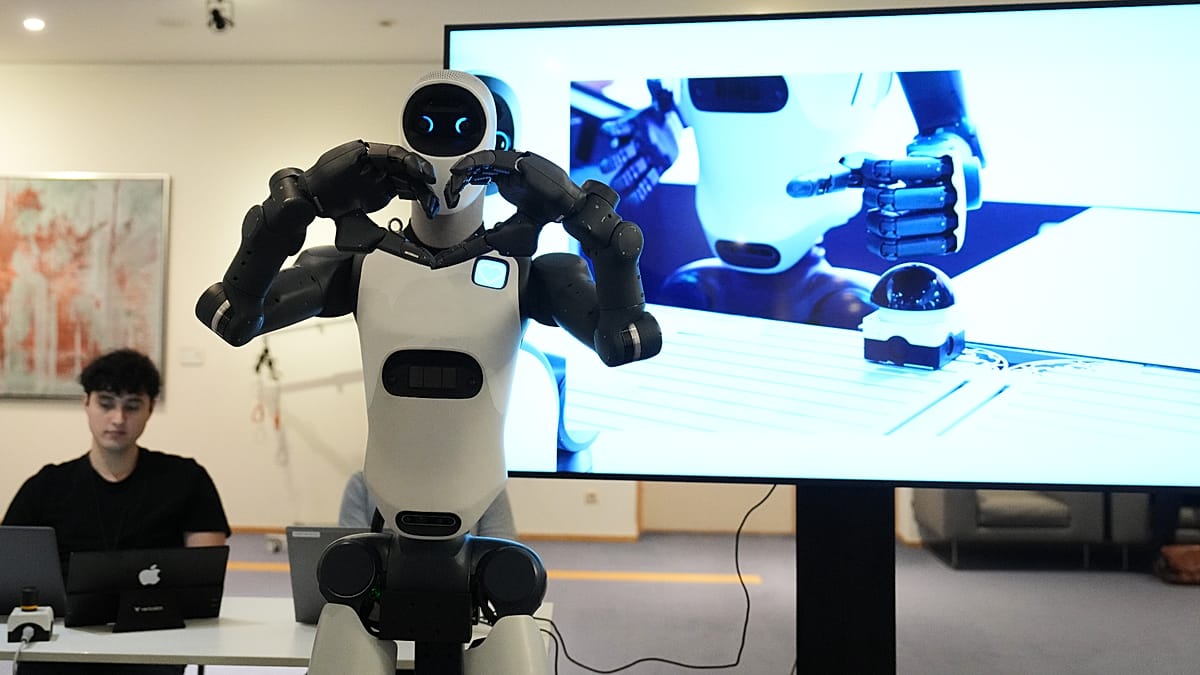
At the European Parliament in Brussels, a robotics showcase brought together developers and policymakers to demonstrate how artificial intelligence is reshaping everyday tasks. The event featured machines capable of delivering packages, working on factory floors, and assisting with household chores, offering a tangible glimpse of the continent's automation future.
From lab to life: what the robots did
Among the demonstrations, a delivery robot navigated the parliamentary corridors, avoiding obstacles and stopping at designated points, illustrating the potential for last-mile logistics in dense urban environments. Factory robots performed repetitive assembly tasks with precision, while a household robot showed how it could pick up objects, open drawers, and even respond to voice commands.
The showcase was organized to coincide with discussions in the European Parliament about the regulatory framework for AI, which has become a priority for the bloc. Lawmakers and industry representatives watched the machines operate, with several MEPs trying their hand at controlling the devices.
"This is not science fiction," said one of the engineers involved, speaking on condition of anonymity. "These systems are ready to be deployed, and the question is how we integrate them into our economies and societies."
Europe's robotics push
The event comes as the European Union seeks to position itself as a global leader in "trustworthy AI," balancing innovation with citizen protection. The bloc's AI Act, which entered into force in stages, sets rules for high-risk applications, and robotics is a key area of focus.
Brussels has also been investing in research and development through programs like Horizon Europe, which funds robotics projects across member states. From Germany's manufacturing heartland to France's research hubs, the continent is home to a vibrant ecosystem of startups and established firms.
However, the deployment of robots raises questions about labor markets and social cohesion. As machines take on more tasks, policymakers are grappling with how to ensure that workers are not left behind. The European Parliament has previously debated the need for a "robot tax" or universal basic income, though no concrete measures have been adopted.
"We need to think about the social contract," said a parliamentary aide who attended the showcase. "If robots do the work, what do people do? That's a political question, not just a technical one."
Beyond the demo: policy and practice
The showcase also highlighted the gap between technological capability and regulatory readiness. While some countries, like Sweden and the UK, have seen a rise in AI-written parliamentary texts, the practical use of robots in public institutions remains limited.
In the private sector, companies are moving faster. Logistics firms in the Netherlands and Germany are testing autonomous delivery vehicles, while French and Italian manufacturers are integrating collaborative robots, or "cobots," into their production lines. The household robot demonstrated in Brussels is already on sale in several European markets, though at a price point that limits its appeal.
The event also touched on the environmental angle. Robots can improve energy efficiency in factories and reduce waste in logistics, but their production and operation have a carbon footprint. The EU's Right to Repair rules, which aim to extend the life of electronics, could apply to robots as well, though the sector is still young.
As the European Parliament continues to shape AI policy, showcases like this serve as a reminder that the technology is not just a topic for debate but a reality that is already entering European homes and workplaces. The challenge for Brussels is to ensure that the benefits are widely shared and the risks are managed.
"We are at a turning point," said the engineer. "The robots are here. Now it's up to us to decide how we live with them."