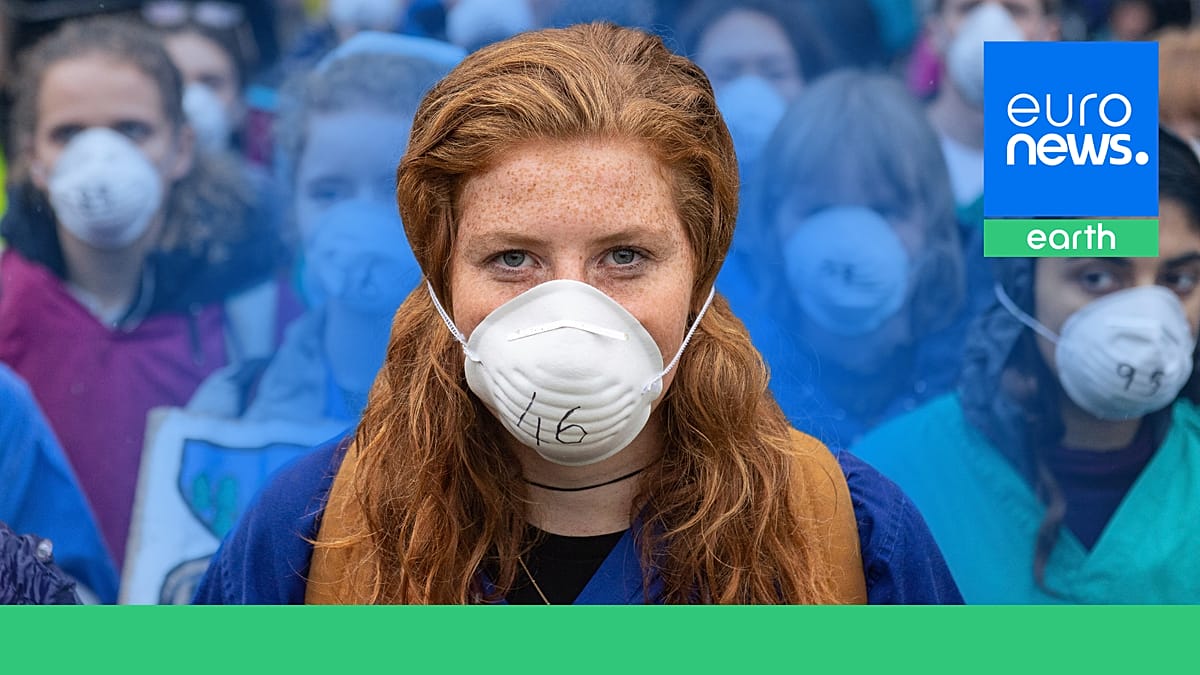
Air pollution remains one of Europe's most pressing public health challenges, responsible for millions of premature deaths and billions in economic losses. According to Breathe Cities, a global initiative supporting urban clean air policies, nearly eight million deaths worldwide in 2023 were linked to dirty air, with an estimated annual cost of €7.12 trillion—about six percent of global GDP.
Dr María Neira, former director of environment, climate change and health at the World Health Organization, warns that pollution is often invisible but reaches every organ in the body, including the brain. She points to growing evidence linking fine particulate matter to cognitive decline and diseases such as Parkinson's, Alzheimer's, and dementia.
Olympic runner Paula Radcliffe, who was diagnosed with exercise-induced asthma at 14, has experienced the effects firsthand. Competing in heavily polluted Beijing, she suffered headaches, nausea, and blurred vision. She also highlights that dirty air impairs children's brain development and school performance, a concern echoed by public health experts across the continent.
London's ULEZ shows measurable results
London has become a test case for aggressive clean air policies. An independent study by Imperial College London found that the Ultra Low Emission Zone (ULEZ), introduced in 2019, has reduced deaths linked to toxic air by around 40 percent. The scheme, which charges older, more polluting vehicles to enter the city, has been expanded and now covers most of Greater London.
The success has inspired other European cities, but challenges remain. In Sofia, Bulgaria, traffic and wood-burning heating are the main sources of pollution. Dr Kostadin Kostadinov of the Medical University of Plovdiv notes that by 2023, Sofia was estimated to have one of the highest rates of deaths attributable to air pollution in Europe.
Following a class action lawsuit brought by environmental groups and residents, Sofia introduced a low emission zone that restricts traffic and encourages cleaner domestic heating. Ivaylo Hlebarov, air quality consultant to Sofia Municipality, says there is already evidence that pollution levels are dropping. However, the zone operates only three months a year, a limitation he attributes to political decisions rather than technical constraints.
“Traffic-related nitrogen dioxide pollution shows little seasonal variation,” Hlebarov explains. “This zone should become a whole year round measure.” Bulgaria has some of Europe's highest rates of cardiovascular disease, stroke, and cancer—conditions strongly linked to air pollution, even though local research remains limited.
Political will is the main obstacle
Dr Neira argues that the technology to clean up Europe's air already exists. The real barrier is political will, particularly resistance from fossil fuel and transport industries as cities push for renewable energy and sustainable mobility. Climate change is expected to make the problem harder to solve, as higher temperatures can increase the formation of ground-level ozone and worsen air quality.
Across Europe, cities are experimenting with different approaches. From Paris's low emission zones to Berlin's cycling infrastructure, the tools are available. But as energy bills push Europeans to make difficult choices, the economic case for clean air becomes even more compelling.
The European Union has set ambitious targets to reduce air pollution by 2030, but implementation varies widely. While some member states have embraced change, others lag behind. The European Central Bank's recent public engagement shows that Europeans care about their environment, and the same energy could be channeled into demanding cleaner air.
For cities like Sofia, the path forward is clear: extend the low emission zone, invest in public transport, and support households in switching from wood-burning stoves to cleaner heating. For London, the next step is to ensure that the benefits of ULEZ are felt by all communities, not just those in the city center.
The evidence is overwhelming: dirty air kills and costs trillions. But as these cities prove, change is possible. The question is whether Europe's leaders have the courage to act.