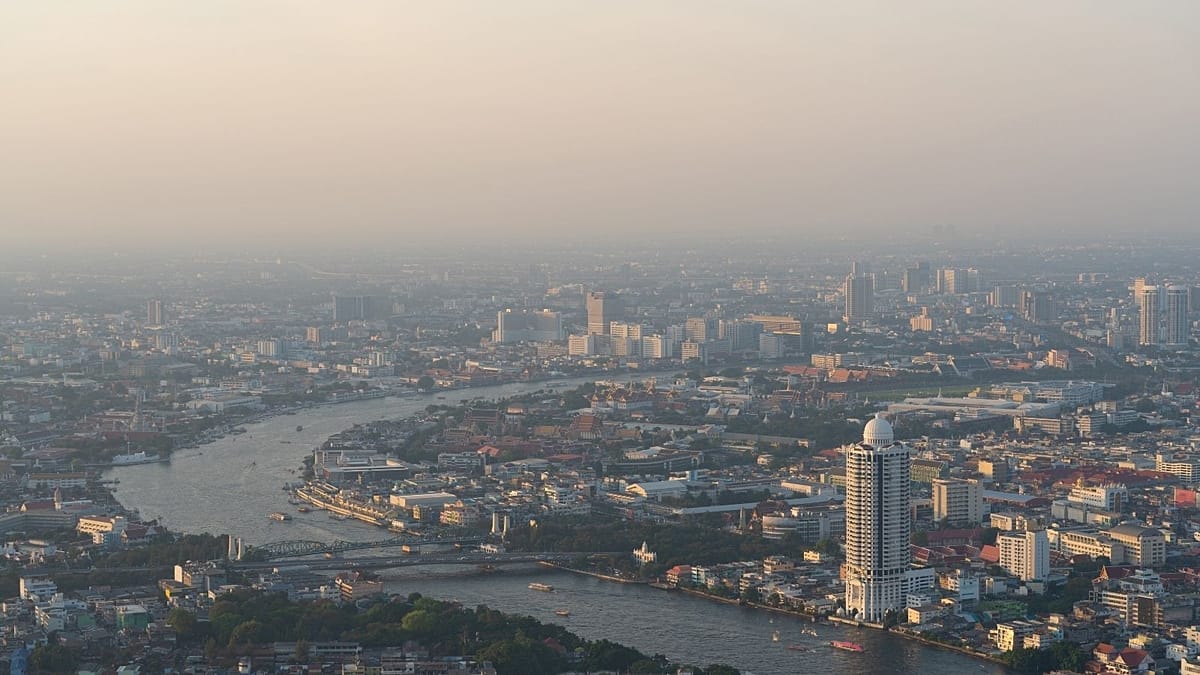
A sweeping new analysis suggests that breathing polluted air may raise the risk of suicidal thoughts and death by suicide, both in the short and long term. The findings, published in the Journal of Epidemiology & Community Health, add to a growing body of evidence that environmental quality shapes mental health in ways previously underappreciated.
Researchers reviewed more than 40 studies examining how various forms of pollution—air, noise, light, and water—relate to suicide mortality, attempts, and ideation. They found that short-term spikes in fine particulate matter (PM2.5 and PM10) and long-term exposure to nitrogen dioxide (NO2) and PM2.5 were consistently associated with elevated risks of suicide-related outcomes.
The scale of the issue is stark. Globally, over 720,000 people die by suicide each year. In the European Union alone, more than 48,000 deaths were attributed to intentional self-harm in 2023, according to the latest Eurostat data. These numbers underscore the urgency of understanding all contributing factors.
Why pollution might affect mental health
The authors note that suicide is rarely caused by a single factor. “While there is no one single cause for suicide, reasons have been described as multifaceted and include several individual and biological factors in addition to wider cultural and social factors,” they wrote. Environmental exposures, they argue, are an overlooked piece of that puzzle.
Mechanistically, air and water pollutants have been linked to neurological effects such as chronic inflammation and neurotoxicity, which can impair brain function and disrupt mood regulation and stress resilience. Similarly, traffic noise and artificial light at night can elevate stress hormones by disturbing circadian rhythms—a connection that has been explored in other recent research on light exposure.
Susana Al-Halabí, a psychology professor at the University of Oviedo in Spain who was not involved in the study, cautioned against overinterpreting causality. “The main contribution of the study is not to demonstrate that pollution is a causal factor in suicidal behaviour, but rather to remind us that psychological suffering always occurs within a particular context,” she said. She added that pollutants can also be markers of more vulnerable social environments—neighbourhoods with poorer living conditions, lower environmental quality, more everyday stress, or higher inequality.
This aligns with findings that neighbourhood deprivation is linked to faster brain ageing, suggesting that place-based factors matter deeply for mental health.
The authors call for further research into the cumulative effects of multiple environmental exposures. They stress that these are modifiable risk factors, not fixed ones. “These findings bring to attention the critical importance of recognising environmental exposures as modifiable risk factors within suicide prevention efforts,” they wrote.
For European policymakers, the implications are significant. The EU has set ambitious targets to cut air pollution under its Zero Pollution Action Plan, and this study reinforces the health rationale. As other research has shown, even low-level pollution can have measurable health impacts, including on sleep—another factor linked to mental well-being.
While the study does not prove that cleaning the air will directly reduce suicide rates, it strengthens the case for treating environmental quality as a core component of public health strategy. As the authors put it, suicide prevention must look beyond individual risk factors to the environments in which people live.