Miley Cyrus may have landed at LAX with just a dream and a cardigan, but for the rest of us, those three letters on a boarding pass are the quiet workhorses of modern travel. Once confined to luggage tags and ticket stubs, airport codes now appear on phone cases, wall art, and even shoelaces. They have become shorthand for cities and identities, yet few travellers stop to ask how they are assigned or why they matter.
The recent decision to rename Palm Beach International Airport after President Donald J. Trump, complete with the code DJT, has put airport codes in the spotlight again. It is a reminder that these seemingly arbitrary strings of letters are not just functional—they carry political and cultural weight.
What exactly is an airport code?
An airport code is a unique three-letter geocode assigned by the International Air Transport Association (IATA). There are roughly 11,300 codes in the IATA Airline Coding Directory, covering not only airports but also heliports, rail stations, and bus stations. Introduced in the 1930s as two-letter codes, they expanded to three letters in the 1940s as air travel boomed.
According to IATA, these codes are essential to the aviation and travel industries, ensuring that reservation systems, scheduling, ticketing, and cargo documentation all speak the same language. Without them, a flight from Frankfurt to Lisbon might be lost in translation.
How codes are chosen
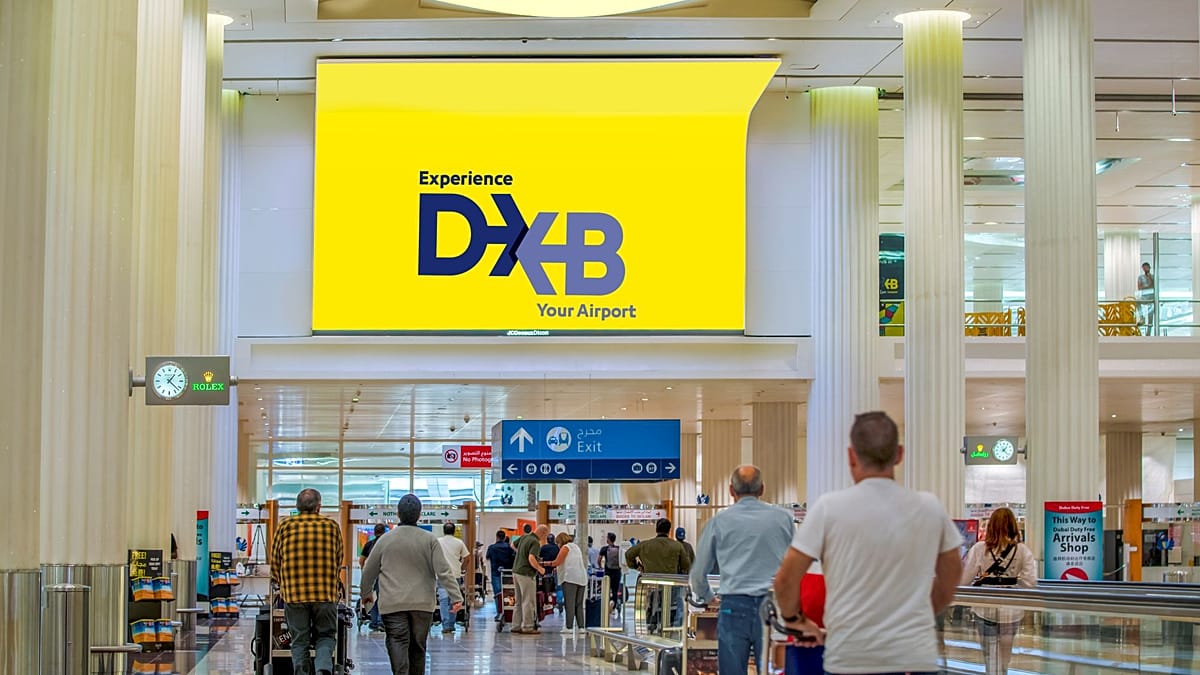
The standard rule is simple: take the first three letters of the city or airport name. Amsterdam Schiphol becomes AMS, Frankfurt becomes FRA, Dublin becomes DUB. But when the obvious choice is already taken, airports must improvise. Dubai International Airport, for example, uses DXB because DUB was already assigned to Dublin. That quirk turned out to be a branding gift—DXB is now as recognisable as JFK or LAX.
Some codes derive from the airport's name rather than the city. Paris Charles de Gaulle is CDG, Stockholm Arlanda is ARN. Others reflect history: John F. Kennedy International was originally Idlewild Airport with the code IDL, changing to JFK after the president's assassination in 1963.
Exceptions and oddities
Canada is the most notable outlier. Most major Canadian airports start with Y—YOW for Ottawa, YVR for Vancouver—because the codes were built around the presence of weather stations. The Y prefix was added to the old two-letter codes, creating a system that baffles outsiders but works perfectly for Canadians.
Codes can also change when airports themselves change. Bangkok's Don Mueang International was once BKK, but when Suvarnabhumi Airport opened in 2006, it took over the BKK code, leaving Don Mueang with DMK. Such shifts are rare, but they happen.
Why codes rarely change
IATA states that airport codes are considered permanent and almost never changed. Yet in the past 12 months, about 750 changes were recorded—mostly due to new airports, renamings, or administrative updates. The DJT code at Palm Beach is a high-profile example, but it is unlikely to set a trend. Most airports stick with their codes for decades, and travellers come to rely on them as fixed points in a fluid world.
For Europe, airport codes are woven into the continent's travel fabric. Istanbul's rise as Europe's busiest airport has made IST a household name, while longer waits at major hubs are prompting travellers to check codes more carefully. Even Athens' old airport is getting a new life, though its code, ATH, remains tied to the new facility.
So the next time you glance at your boarding pass, remember: those three letters are more than a random sequence. They are a global system that keeps the world moving, one flight at a time.